Amateur radio, also known as ham radio, has long been a hobby that combines technical skill, passion for communication, and a sense of global community. Enthusiasts often seek to push the boundaries of what portable stations can achieve, whether through innovative equipment, unique locations, or extraordinary contacts. Few moments in the history of amateur radio are as memorable as the time a portable station unexpectedly amazed everyone with its performance. This article explores that event in detail, examining the technical setup, the circumstances, and the lasting impact it had on the amateur radio community.
- Understanding Portable Radio Stations
- What Is a Portable Station?
- Common Components of a Portable Station
- The Event: When the Portable Station Surprised Everyone
- Setting the Scene
- The Activation
- Technical Breakdown of the Surprising Performance
- Equipment Used
- The Secret Sauce: Propagation and Technique
- The Impact of the Surprise
- Community Reactions
- Technical Insights Gained
- Lessons Learned from the Surprising Event
- Optimizing Portable Station Performance
- Practical Tips for Amateur Radio Enthusiasts
- Technical Formulas Relevant to Portable Radio Operations
- Calculating Antenna Yagi or Dipole Lengths
- Power Output and Field Strength
- Future Outlook: Innovations in Portable Amateur Radio
- References and Further Reading
Understanding Portable Radio Stations
What Is a Portable Station?
A portable radio station, often abbreviated as “portable,” refers to a ham radio setup designed to be easily transportable, allowing operators to activate from remote locations or participate in field activities. These stations typically emphasize compactness, durability, and power efficiency, often utilizing lightweight equipment, batteries, and antennas.
Portable stations are essential for activities such as Field Days, DXpeditions, emergency communications, and outdoor exploration. They challenge operators to optimize their gear and skills, often resulting in remarkable performances despite limited resources.
Common Components of a Portable Station
- Transceiver: A compact radio capable of transmitting and receiving across various bands.
- Power Supply: Usually batteries, portable generators, or solar panels.
- Antennas: Small, portable antennas like wire dipoles, verticals, or magnetic loops.
- Accessories: Microphones, headset, SWR meters, and tuner devices.
The Event: When the Portable Station Surprised Everyone
Setting the Scene
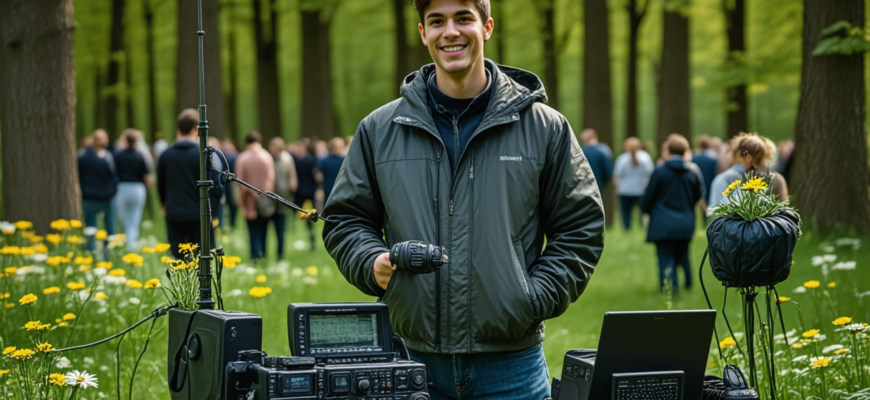
It was a brisk autumn morning during a regional amateur radio contest. A dedicated ham operator set up his portable station on the top of a hill in a remote national park, aiming to maximize propagation conditions. The operator, known for meticulous preparations, was equipped with a lightweight transceiver, a compact wire antenna, and a small battery pack.
The Activation
Initially, the station performed as expected—contacts were made, and other operators acknowledged the signal’s clarity. However, as the contest progressed, something extraordinary occurred. The station suddenly managed to establish multiple contacts with distant continents, including regions that are usually challenging to reach during typical conditions.
Technical Breakdown of the Surprising Performance
Equipment Used
Here’s what the operator used during this surprising event:
| Component | Description | Specifications |
|---|---|---|
| Transceiver | Yaesu FT-817ND | Compact HF/VHF/UHF all-mode, 5W–20W power |
| Antenna | Wire Dipole | 80 meters to 10 meters bands, portable, lightweight |
| Power Source | LiPo Battery Pack | 14.8V, 5Ah, lightweight, rechargeable |
| Additional Equipment | Manual tuner & SWR meter | Allows efficient matching for various bands |
The Secret Sauce: Propagation and Technique
The extraordinary success was not solely due to equipment—propagation conditions played a crucial role. During the event, an unexpected geomagnetic disturbance enhanced radio wave propagation, especially on the 20-meter band. The operator leveraged strategic operating techniques:
- During optimal windows: Operating during certain times of day when ionospheric layers are most favorable.
- Using efficient tuning: Employing the manual tuner to match antenna impedance, improving signal strength.
- Frequency agility: Quickly switching between bands to capitalize on transient propagation phenomena.
- Selective calling: Targeting specific DX stations with high priority signals.
The Impact of the Surprise
Community Reactions
News of this unexpected performance spread rapidly through online ham radio forums, social media pages, and local clubs. Fellow amateurs were genuinely surprised—as the setup was far smaller and less powerful than typical all-band, permanent station configurations. Many expressed admiration for the operator’s ingenuity and the favorable propagation conditions.
Technical Insights Gained
This incident reinforced several key lessons for amateur radio enthusiasts:
- The importance of local propagation conditions and timing.
- Effective use of simple, lightweight equipment can achieve extraordinary results.
- Strategic operating techniques can significantly enhance performance, even in modest setups.
- The value of field experience and quick adaptation during contests and real-world communication challenges.
Lessons Learned from the Surprising Event
Optimizing Portable Station Performance
Based on this event, amateur radio operators can consider the following strategies to optimize their portable stations:
- Equipment Selection: Choose versatile and lightweight gear suitable for various conditions.
- Antenna Planning: Use high-efficiency antennas optimized for the target bands; consider portable multi-band dipoles.
- Power Management: Ensure reliable, portable power sources—preferably rechargeable batteries with sufficient capacity.
- Propagation Awareness: Stay informed about solar and geomagnetic activity to select optimal operating windows.
- Operating Skill: Develop quick-tuning techniques and adaptive communication strategies.
Practical Tips for Amateur Radio Enthusiasts
- Regularly experiment with different antenna configurations to find what works best in your area.
- Maintain a propagation log to recognize patterns and improve timing for contacts.
- Participate in field days and contests to hone your portable setup skills.
- Engage with online communities to share experiences and learn new techniques.
Technical Formulas Relevant to Portable Radio Operations
Calculating Antenna Yagi or Dipole Lengths
For a dipole antenna, the length (L) in meters for a specific frequency (f) in MHz can be calculated using:
L (meters) = 142.照 / f (MHz)
For example, for a 14 MHz (20-meter band) dipole:
- L = 142 / 14 ≈ 10.14 meters per side
Power Output and Field Strength
The relation between transmitted power (P) and field strength (E):
| Parameter | Formula / Description |
|---|---|
| Free-space field strength | ( E (V/m) = 0.36 times sqrt{P (W)} ) at 1 km |
| Received Signal Level (dBm) | (P_{dBm} = 10 times log_{10}(P (mW))) |
Future Outlook: Innovations in Portable Amateur Radio
The event that surprised everyone underscores the evolving landscape of portable radio operation. Advancements in miniaturization, power efficiency, and software-defined radio (SDR) technology promise even greater capabilities for field operators. Some notable trends include:
- SDR-Based Portable Units: Enhanced flexibility, customizable filters, and digital modes.
- Portable Solar Solutions: Increasing the autonomy of field stations with renewable energy sources.
- Adaptive Antenna Systems: Automatically tuned antennas for optimal efficiency in varying conditions.
- Network Integration: Better connectivity with Internet-linked dispatch and logging tools.
The memorable event when a portable ham radio station managed to astonish a community of enthusiasts highlights the blend of technical skill, strategic operation, and favorable natural conditions. It is a testament to the ingenuity inherent in amateur radio, where even modest setups can achieve extraordinary feats when operated with knowledge and passion. Such moments inspire continued experimentation, learning, and the enduring joy of connecting across borders using the simplest of gear.
References and Further Reading
- ARRL – American Radio Relay League
- QST Magazine
- Ham Radio Devices & Equipment
- Propagation charts and real-time data: Hampedia Propagation Map
Похожие записи:
 Building a Portable Ham Radio Station for Outdoor Expeditions: The Ultimate Guide
  Beginner’s Guide to Operating Portable Ham Radio at Events: Mastering Communication for Event Support
  Top 10 Portable Ham Radios for On-the-Go Enthusiasts
  Portable Spectrum Analyzers for Field Frequency Testing: A Complete Guide for Amateur Radio Enthusiasts
  Build Your Own Portable Solar Power Setup for Radio Operations: A Comprehensive Guide
  Advances in Battery Technology for Portable Ham Radio Use: Powering the Future of Amateur Radio
  Ultimate Guide to Upgrading Your Amateur Radio Station with New Gear: Top Tips and Strategies
  Portable Antenna Analyzers for Precise Tuning: The Ultimate Guide for Amateur Radio Enthusiasts
  Ultimate Guide: Tips for Setting Up Your Home Radio Station
  Ultimate Guide: Best Practices for Setting Up a Remote Radio Station Accessible Worldwide
  Experiencing the Magic of a Sporadic E Opening – An Amateur Radio Enthusiast’s Guide
  Memories from a Challenging QRP Expedition: Lessons, Triumphs, and Insights
  Mastering DXing: Expert Tips for Contacting Rare Amateur Radio Stations
  Legendary Operators Who Inspired Me: The Unsung Heroes of Amateur Radio
  Celebrating a Milestone with My Radio Club: A Journey of Achievement and Community Spirit
  The Day I Assisted in a Search and Rescue Operation: An Amateur Radio Operator’s Perspective