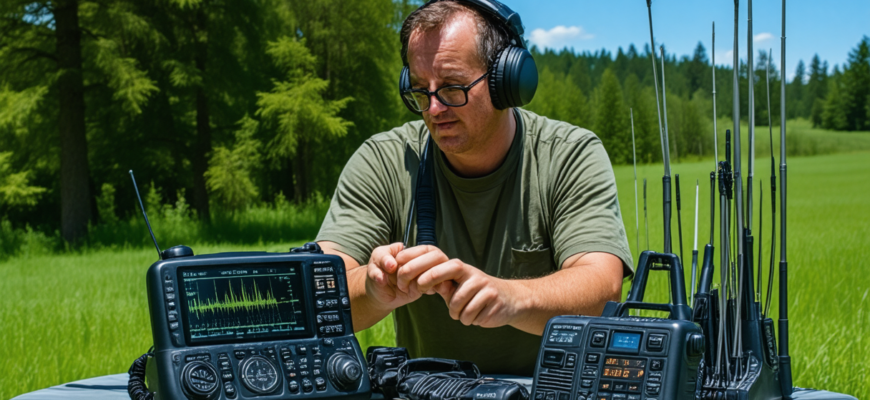
For amateur radio enthusiasts and technicians working in the field, accurately measuring radio frequency (RF) signals is essential. Whether tuning antennas, troubleshooting interference, or verifying signal integrity, portable spectrum analyzers have become indispensable tools. Unlike traditional lab-based instruments, these devices offer mobility, ease of use, and robust features tailored for field operations. This comprehensive guide explores the fundamentals of portable spectrum analyzers, their key features, applications in amateur radio, and tips for selecting the best device for your needs.
- What Is a Spectrum Analyzer?
- Why Use Portable Spectrum Analyzers in Field Operations?
- Key Features of Portable Spectrum Analyzers
- Frequency Range
- Sensitivity and Dynamic Range
- Selectivity and Resolution Bandwidth (RBW)
- Analog-to-Digital Conversion (ADC)
- Display and User Interface
- Connectivity and Data Storage
- Battery Life
- Popular Portable Spectrum Analyzers for Amateur Radio
- Applications of Portable Spectrum Analyzers in Amateur Radio
- 1. Antenna Tuning and Verification
- 2. Interference Detection and Troubleshooting
- 3. Signal Carrier Monitoring
- 4. Spectrum Management and Regulatory Compliance
- 5. Testing and Maintenance of Radio Equipment
- Choosing the Right Portable Spectrum Analyzer: Factors to Consider
- Using a Portable Spectrum Analyzer in the Field: Practical Tips
- 1. Preparation
- 2. Calibration
- 3. Signal Analysis
- 4. Data Collection and Documentation
- 5. Safety and Best Practices
- Future Trends in Portable Spectrum Analyzers
- References
What Is a Spectrum Analyzer?
A spectrum analyzer is an electronic device that measures the magnitude of an input signal versus frequency within the full frequency range of the instrument. It provides a visual representation called a spectrum display, illustrating the amplitude of signals at different frequencies. This allows users to identify signal presence, interference, harmonic content, and other spectral characteristics.
Traditional spectrum analyzers are large and expensive, primarily used in laboratories. However, technological advances have led to portable, handheld units that deliver similar functionalities in a compact form, perfect for field testing in amateur radio applications.
Why Use Portable Spectrum Analyzers in Field Operations?
- Mobility: Small, lightweight devices that can be easily carried to remote locations.
- Convenience: Quick setup and real-time measurements facilitate immediate troubleshooting.
- Cost-Effective: More affordable than large lab analyzers, allowing wider access for amateurs.
- Versatility: Suitable for a wide range of tasks, from antenna testing to interference detection.
Key Features of Portable Spectrum Analyzers
Frequency Range
The permissible frequency spectrum varies among models. For amateur radio, devices covering from a few MHz up to several GHz are ideal, depending on the bands used. Some analyzers extend beyond 6 GHz for advanced applications.
Sensitivity and Dynamic Range
High sensitivity allows detection of weak signals amid noise, while a broad dynamic range ensures the analyzer can handle both strong and weak signals without distortion. These features are crucial for accurate measurements in diverse field environments.
Selectivity and Resolution Bandwidth (RBW)
Efficient filtering capabilities enable the analyzer to distinguish between closely spaced signals. Narrow RBW settings help identify specific signals in crowded spectral environments.
Analog-to-Digital Conversion (ADC)
High-quality ADCs improve measurement accuracy, especially when analyzing weak signals or performing complex spectral analyses.
Display and User Interface
Clear, high-resolution displays with intuitive interfaces make it easier to interpret spectral data quickly, especially in dynamic field situations.
Connectivity and Data Storage
Modern analyzers often include USB, SD card, or wireless connectivity for data logging, remote control, and interfacing with other devices or PCs.
Battery Life
Extended battery life ensures uninterrupted operation during field tests. Many devices feature rechargeable batteries with several hours of continuous operation.
Popular Portable Spectrum Analyzers for Amateur Radio
| Model | Frequency Range | Display | Features | Approximate Price (USD) |
|---|---|---|---|---|
| Rigol DSA815-TG | 9 kHz – 1.5 GHz | 7-inch color display | Built-in tracking generator, lightweight, user-friendly interface | $2,000 |
| Tenious R8340 | 1 MHz – 3.4 GHz | Color LCD | High sensitivity, portable design, USB interface | $1,500 |
| Siglent SSA3021X | 9 kHz – 2.1 GHz | Color TFT screen | High dynamic range, user-friendly controls, versatile connectivity | $2,300 |
| MiniVNA Pro2 | 1 MHz – 3 GHz | Small portable device, no display | Specialized for antenna analysis, compatible with smartphones/tablets via app | $750 |
| Siglent SDS1202CX-E | 9 kHz – 1.2 GHz | 7-inch display | Dual-channel, deep memory, adaptable for RF diagnostics | $400 |
Applications of Portable Spectrum Analyzers in Amateur Radio
1. Antenna Tuning and Verification
Using a spectrum analyzer, amateurs can perform precise antenna measurements, determine the resonant frequency, and adjust the antenna to optimize performance. Accurate SWR measurements correlate to better transmission efficiency and less signal loss.
2. Interference Detection and Troubleshooting
In crowded RF environments, interference can severely impact radio operation. Spectrum analyzers help identify external signals, spurious emissions, or unwanted noise sources. Field detection allows for quick pinpointing and mitigation of interference sources, enhancing communication quality.
3. Signal Carrier Monitoring
Confirming carrier stability, measuring signal strength, and ensuring compliance with regulations are critical components of effective amateur radio operation. Portable analyzers enable real-time monitoring during portable contests or outdoor activities.
4. Spectrum Management and Regulatory Compliance
Amateurs striving to adhere to transmitting power limits and band regulations benefit from spectral analysis. It ensures operations stay within permissible spectral footprints, avoiding fines or license issues.
5. Testing and Maintenance of Radio Equipment
Field testing transmitters, receivers, and other RF components ensures reliable operation. Spectrum analyzers provide immediate feedback on equipment health and performance.
Choosing the Right Portable Spectrum Analyzer: Factors to Consider
- Frequency Range: Ensure the device covers the necessary bands you operate in, whether HF, VHF, UHF, or microwave.
- Portability: Size, weight, and power source determine ease of use outdoors.
- Display and User Interface: Opt for user-friendly interfaces with clear visuals for quick data interpretation.
- Connectivity Options: Features like USB, Wi-Fi, or Bluetooth facilitate data sharing and integration with computer software.
- Price and Budget: Balance desired features with affordability, especially for amateur radio hobbyists.
- Brand Reputation and Support: Choose reputable manufacturers with reliable customer service and ongoing firmware updates.
Using a Portable Spectrum Analyzer in the Field: Practical Tips
1. Preparation
- Charge the device fully before heading out.
- Update firmware and calibration data where applicable.
- Create a checklist of parameters to measure.
2. Calibration
Perform calibration with known reference signals or calibration kits to ensure measurement accuracy, especially important in field conditions where environmental factors may affect results.
3. Signal Analysis
- Start with a wide scan to locate signals of interest.
- Adjust bandwidths for detailed inspection of specific signals.
- Compare measurements against known specifications or previous data for consistency.
4. Data Collection and Documentation
Save spectral data for comparison over time or for sharing with team members. Use timestamps and annotate measurements for clarity.
5. Safety and Best Practices
- Operate in a stable environment, avoiding sudden shocks or vibrations.
- Ensure proper grounding and safety precautions when working near high-power RF sources.
- Follow manufacturer’s guidelines for operation and maintenance.
Future Trends in Portable Spectrum Analyzers
The field of portable RF testing continues to evolve rapidly. Emerging trends include:
- Integration with Smartphone Apps: Devices controlling RF measurement through intuitive interfaces on smartphones or tablets.
- Enhanced Sensitivity and Dynamic Range: Improving detection capabilities for extremely weak signals.
- Multi-Functionality: Combining spectrum analysis with other RF measurement tools like vector network analyzers or power meters.
- AI and Automated Analysis: Use of artificial intelligence to identify anomalies or optimize device settings.
- Longer Battery Life and Power Efficiency: Extending operational hours during field trips.
Portable spectrum analyzers are indispensable tools for amateur radio operators who perform field testing, troubleshooting, and antenna tuning. They bridge the gap between the laboratory-grade accuracy and the convenience of mobility, enabling practitioners to ensure optimal RF performance anywhere. Selecting the right analyzer involves considering frequency range, sensitivity, usability, and budget, tailored to specific operating needs. With technological advancements, these devices will become even more powerful, intuitive, and accessible, fostering better radio practices and more effective spectrum management for amateur radio enthusiasts worldwide.
References
- Amateur Radio Relay League (ARRL). Guide to RF Measurement Tools
- Rigol Technologies. DSA815-TG Spectrum Analyzer Specification Sheet
- Tenious. R8340 User Manual
- Siglent Technologies. Siglent SSA3021X Data Sheet
- MiniVNA. Pro2 Portable Antenna Analyzer Overview
Похожие записи:
 Portable Antenna Analyzers for Precise Tuning: The Ultimate Guide for Amateur Radio Enthusiasts
  Latest Developments in Spectrum Licensing and Frequency Allocations: A Comprehensive Overview for Amateur Radio Enthusiasts
  Essential Tools for Cable and Connection Maintenance: A Complete Guide for Amateur Radio Enthusiasts
  Top 10 Portable Ham Radios for On-the-Go Enthusiasts
  Integrating Software-Defined Radio into Your Daily Operations: A Comprehensive Guide for Amateur Radio Enthusiasts
  Comprehensive Review of the Latest Mobile Radio Apps and Software for Amateur Enthusiasts
  Top Choices for Budget-Friendly Amateur Radio Equipment: A Comprehensive Guide for Hobbyists
  Top Weather-Resistant Microphones for Outdoor Use: The Ultimate Guide for Amateur Radio Enthusiasts
  Building a Portable Ham Radio Station for Outdoor Expeditions: The Ultimate Guide
  Building a Simple, Low-Cost Antenna Tuner at Home: A Comprehensive Guide for Amateur Radio Enthusiasts
  Top Microphone and Speaker Combos for Clear Audio: The Ultimate Guide for Amateur Radio Enthusiasts
  How to Build Your Own Homemade QRP Transceiver: A Comprehensive Guide for Amateur Radio Enthusiasts
  Ultimate Guide to Upgrading Your Amateur Radio Station with New Gear: Top Tips and Strategies
  Wireless Hotspot and Networking Devices for Remote Stations: Enhancing Connectivity for Amateur Radio Enthusiasts
  Mastering Regulatory Changes: A Comprehensive Guide for Amateur Radio Enthusiasts
  Build Your Own Portable Solar Power Setup for Radio Operations: A Comprehensive Guide