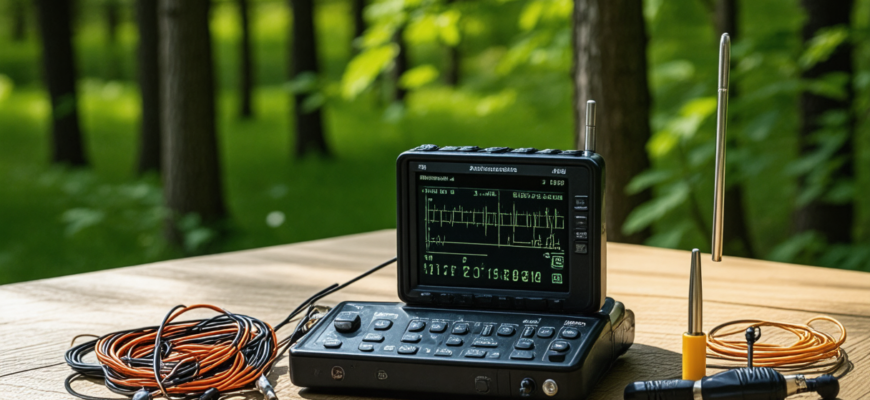
For amateur radio operators, having an efficient and well-tuned antenna is fundamental to achieving optimal communication performance. In recent years, portable antenna analyzers have emerged as essential tools, allowing hobbyists to fine-tune their antennas with high precision, whether at home or in the field. This comprehensive guide explores the world of portable antenna analyzers, their capabilities, benefits, and how to choose the right device for your amateur radio needs.
- Understanding Antenna Tuning and Its Importance
- What Is Antenna Tuning?
- Why Is Precise Tuning Crucial for Amateur Radio?
- Introduction to Portable Antenna Analyzers
- What Is a Portable Antenna Analyzer?
- Key Features of Modern Portable Antenna Analyzers
- Advantages of Using Portable Antenna Analyzers
- Mobility and Convenience
- High Precision and Reliability
- Time and Effort Savings
- Cost-Effective Solution
- How to Choose the Right Portable Antenna Analyzer
- Key Criteria to Consider
- Popular Models in 2024
- Technical Aspects of Antenna Analysis
- Understanding Impedance and Its Measurement
- Reflection Coefficient and Return Loss
- Practical Tips for Using Portable Antenna Analyzers
- Step-by-Step Guide to Tuning an Antenna
- Best Practices in Field Measurements
- Innovative Features Enhancing Field Tuning
- Advanced Calibration Algorithms
- Preset Reference Antennas and Automatic Storage
- Graphical Data Representation
- Case Studies: Success Stories of Amateur Radio Operators
- Field Tuning of a High-Gain Yagi Antenna
- Improving Mobile HF Radio Performance
- Future Trends in Portable Antenna Analysis
- Integration with Smartphone and Cloud Technologies
- Miniaturization and Enhanced Battery Technology
- AI-Powered Automated Tuning
- References and Further Reading
Understanding Antenna Tuning and Its Importance
What Is Antenna Tuning?
Antenna tuning involves adjusting the physical or electrical characteristics of an antenna to ensure it resonates at a specific frequency. Proper tuning minimizes the Standing Wave Ratio (SWR), leading to efficient power transfer from the transmitter to the antenna, and reduces signal loss, interference, and equipment stress.
Why Is Precise Tuning Crucial for Amateur Radio?
- Optimal Power Transfer: High SWR can cause power reflections, reducing transmission power and increasing the risk of damaging your equipment.
- Improved Signal Quality: Well-tuned antennas provide clearer and longer-distance communication.
- Protection of Equipment: Minimized reflected power reduces wear and tear on transmitters and amplifiers.
- Regulatory Compliance: Ensures operation within legal frequency and power limits.
Introduction to Portable Antenna Analyzers
What Is a Portable Antenna Analyzer?
A portable antenna analyzer is a compact electronic device designed to measure and analyze the electrical parameters of antennas and transmission lines. It provides critical data such as SWR, impedance, return loss, and resonant frequency, enabling users to make precise adjustments wherever they are.
Key Features of Modern Portable Antenna Analyzers
- Frequency Range — covering HF, VHF, UHF, and sometimes higher bands.
- Display and Interface — color screens, user-friendly menus, and sometimes touchscreen capabilities.
- Connectivity Options — USB, Bluetooth, or Wi-Fi for data transfer and analysis.
- Battery Life — extended operation in field conditions.
- Built-in Calibration — ensuring measurement accuracy over time.
Advantages of Using Portable Antenna Analyzers
Mobility and Convenience
Traditional laboratory equipment or stationary analyzers require cables and specialized setups, which are not practical for field use. Portable analyzers enable real-time testing and tuning outdoors, in remote locations, or during field operations.
High Precision and Reliability
Modern analyzers incorporate advanced algorithms and high-quality components, delivering highly accurate measurements critical for fine-tuning antennas.
Time and Effort Savings
With quick readouts and easy-to-interpret displays, users can swiftly identify issues and make adjustments, speeding up the tuning process significantly.
Cost-Effective Solution
Compared to traveling to service centers or employing multiple measurement devices, portable analyzers provide a comprehensive solution for ongoing antenna maintenance.
How to Choose the Right Portable Antenna Analyzer
Key Criteria to Consider
- Frequency Range: Ensure the analyzer covers the bands you operate in, including HF, VHF, UHF, etc.
- Accuracy and Resolution: Look for devices with high resolution and calibration capabilities.
- Display and User Interface: A clear, bright screen with intuitive controls increases ease of use.
- Connectivity: Options for data transfer enable logging and further analysis.
- Battery Life: For extended field operations, long battery life is essential.
- Build Quality and Portability: Compact, rugged designs withstand outdoor conditions.
- Price and Support: Balance between features and budget, with consideration for customer support and firmware updates.
Popular Models in 2024
| Model | Frequency Range | Display | Connectivity | Price Range |
|---|---|---|---|---|
| by Anritsu MS2090A | 1 MHz – 2 GHz | TFT Color Screen | USB, Bluetooth | High-End |
| RigExpert AA-55 ZOOM | 1 kHz – 54 MHz | Color LCD | USB, Bluetooth | Mid-Range |
| MiniVNA Tiny | 1 MHz – 900 MHz | OLED Screen | USB | Budget-Friendly |
| VNA-Q6 | 1 MHz – 900 MHz | LCD | USB | Affordable |
Technical Aspects of Antenna Analysis
Understanding Impedance and Its Measurement
Impedance (Z) describes the opposition an antenna offers to the flow of RF energy. It is a complex number, consisting of resistance (R) and reactance (X). For optimal operation, antennas should be tuned to have an impedance close to 50 ohms resistive.
Reflection Coefficient and Return Loss
The reflection coefficient (Γ) indicates how much power is reflected back from the antenna. The return loss (RL) quantifies this reflection:
| Parameter | Definition | Ideal Value |
|---|---|---|
| SWR | Standing Wave Ratio — ratio of maximum to minimum voltage along the line | 1:1 (perfect resonance) |
| Return Loss | Measure of reflected power in decibels (dB) | Greater than 20 dB |
| Impedance | Resistance and reactance of the antenna | 50 Ω resistive |
Practical Tips for Using Portable Antenna Analyzers
Step-by-Step Guide to Tuning an Antenna
- Connect the Analyzer: Attach the analyzer to the feed point of the antenna.
- Perform an Initial Measurement: Record the current SWR, impedance, and other parameters.
- Identify the Resonant Frequency: Find the frequency with the lowest SWR value.
- Adjust the Antenna: Use the physical adjustments such as lengthening, shortening, or adding matching components.
- Re-measure and Fine-Tune: Repeat measurements until the SWR is minimized at your desired operating frequency.
Best Practices in Field Measurements
- Avoid metallic objects nearby that may affect measurements.
- Ensure a secure and stable connection between the analyzer and antenna.
- Perform measurements at different times of day to account for environmental changes.
- Keep the device protected from moisture, dust, and physical shocks.
Innovative Features Enhancing Field Tuning
Advanced Calibration Algorithms
Modern analyzers incorporate automatic calibration routines, including open/short/load calibration, ensuring measurement accuracy over prolonged use.
Preset Reference Antennas and Automatic Storage
Some devices allow saving calibration data and measurement results for future reference, simplifying repeated tuning tasks.
Graphical Data Representation
Graph plots of SWR versus frequency are critical for visual analysis and quick identification of the resonant point.
Case Studies: Success Stories of Amateur Radio Operators
Field Tuning of a High-Gain Yagi Antenna
Using a portable analyzer, amateur radio operator John optimized his 3-element Yagi array at 14 MHz, achieving a SWR below 1.5:1 across the band, resulting in a 20% increase in signal clarity and reduced equipment stress.
Improving Mobile HF Radio Performance
Mary employed a compact analyzer to adjust her mobile whip antenna, tuning it precisely on the go during a contest, significantly enhancing her contact success rate.
Future Trends in Portable Antenna Analysis
Integration with Smartphone and Cloud Technologies
Next-generation analyzers will seamlessly connect with smartphones, offering enhanced visualization, logging, and remote analysis through cloud storage.
Miniaturization and Enhanced Battery Technology
Advances in materials will lead to even smaller, more durable devices with longer battery life, making field operations more convenient than ever.
AI-Powered Automated Tuning
Artificial Intelligence algorithms could eventually automate the entire tuning process, providing real-time suggestions and adjustments based on measurement data.
Portable antenna analyzers are indispensable tools for amateur radio hobbyists seeking precision, versatility, and convenience in antenna tuning. Their ability to provide immediate, accurate measurements in various environments dramatically enhances the quality of radio operations. By carefully selecting the right analyzer tailored to specific band requirements and operational conditions, users can optimize their antennas for peak performance and ensure the longevity of their equipment. As technology advances, these devices will become even more user-friendly, integrated, and intelligent, empowering amateur radio enthusiasts to explore new horizons of communication excellence.
References and Further Reading
- Ham Radio Self-Study Guides
- American Radio Relay League (ARRL)
- Antenna Analyzer Technical Resources
- Eham.net Forums and Reviews
Похожие записи:
 Building a Simple, Low-Cost Antenna Tuner at Home: A Comprehensive Guide for Amateur Radio Enthusiasts
  Top Microphone and Speaker Combos for Clear Audio: The Ultimate Guide for Amateur Radio Enthusiasts
  Building a Portable Ham Radio Station for Outdoor Expeditions: The Ultimate Guide
  Top Weather-Resistant Microphones for Outdoor Use: The Ultimate Guide for Amateur Radio Enthusiasts
  How to Build Your Own Homemade QRP Transceiver: A Comprehensive Guide for Amateur Radio Enthusiasts
  Top 10 Portable Ham Radios for On-the-Go Enthusiasts
  Ultimate Guide: Best Practices for Maintaining and Extending the Lifespan of Your Radio Equipment
  Top-Rated HF Transceivers for Experienced Operators: The Ultimate Guide
  Ultimate Guide to Lightning Protection Gear for Your Radio Setup
  Integrating Software-Defined Radio into Your Daily Operations: A Comprehensive Guide for Amateur Radio Enthusiasts
  Innovative Antenna Designs for Enhanced HF Performance
  Build Your Own Portable Solar Power Setup for Radio Operations: A Comprehensive Guide
  Mastering Regulatory Changes: A Comprehensive Guide for Amateur Radio Enthusiasts
  Top Choices for Budget-Friendly Amateur Radio Equipment: A Comprehensive Guide for Hobbyists
  Rugged Radios for Adventurers and Fieldwork: The Ultimate Guide to Reliable Communication
  Wireless Hotspot and Networking Devices for Remote Stations: Enhancing Connectivity for Amateur Radio Enthusiasts