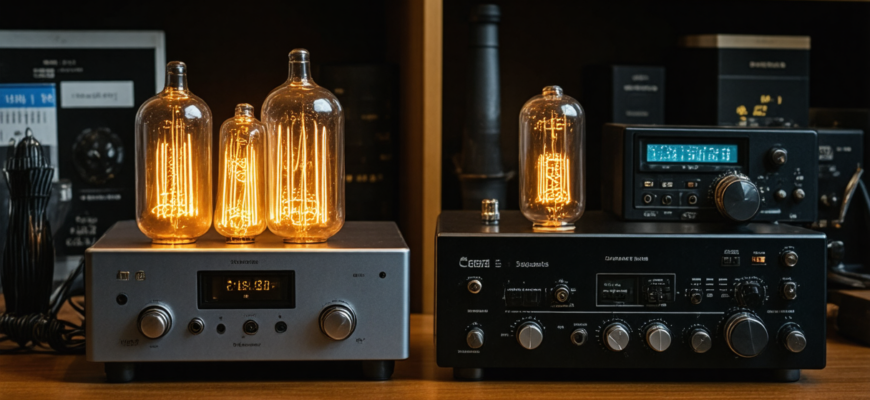
For amateur radio enthusiasts, choosing the right amplifier can significantly influence communication clarity, power output, and overall radio station performance. In the rapidly advancing landscape of audio amplification, both valve (vacuum tube) and solid state amplifiers continue to attract attention, each promising distinct sound qualities and technical advantages. This comprehensive review delves into the latest models of these amplifiers, offering a detailed comparison to help hobbyists make informed decisions. Whether you’re a seasoned operator seeking that vintage warmth or a modern user prioritizing efficiency and durability, understanding the nuances of these technologies is crucial. In this article, we explore design principles, technical specifications, performance metrics, and real-world user experiences to bridge the gap between theory and practice.
- Understanding Amplifier Technologies: Valve vs. Solid State
- What Are Valve (Vacuum Tube) Amplifiers?
- What Are Solid State Amplifiers?
- Design and Construction of the Latest Models
- Innovations in Valve Amplifiers
- Advancements in Solid State Amplifiers
- Technical Specifications and Performance Metrics
- Key Parameters in Amplifier Selection
- Sample Performance Data of Recent Amplifiers
- Sound Quality and User Experience
- Valve Amplifiers: The Warmth Effect
- Solid State Amplifiers: Precision and Power
- Real-World Performance: Comparing Latest Models
- Case Study: The New Valve Amplifier “VintageVoice V30”
- Case Study: The New Solid State Amplifier “PowerMax S-600”
- Pros and Cons: Valve vs. Solid State Amplifiers
- Advantages of Valve Amplifiers
- Disadvantages of Valve Amplifiers
- Advantages of Solid State Amplifiers
- Disadvantages of Solid State Amplifiers
- Choosing the Right Amplifier for Your Amateur Radio Station
- Assessing Your Needs
- Additional Factors to Consider
- Making an Informed Choice
- Additional Resources
Understanding Amplifier Technologies: Valve vs. Solid State
What Are Valve (Vacuum Tube) Amplifiers?
Valve amplifiers, often associated with vintage radio and high-fidelity audio equipment, utilize vacuum tubes to amplify signals. These tubes function by controlling electron flow within a sealed glass container, which results in a characteristic warm sound. Despite the advent of solid state devices, valve amplifiers remain popular among audio purists for their unique tonal qualities.
What Are Solid State Amplifiers?
Solid state amplifiers employ semiconductor components such as transistors and integrated circuits to amplify signals. Known for their compact size, efficiency, and durability, these amplifiers are widely used in contemporary radio equipment. They tend to produce a cleaner, more precise sound, with less distortion at higher power levels.
Design and Construction of the Latest Models
Innovations in Valve Amplifiers
- Newer tube designs with extended lifespan and stability
- Enhanced heat dissipation systems for prolonged operation
- Integrated modern features like impedance matching and adaptive biasing
Recently released valve amplifiers have integrated modern engineering to improve reliability without sacrificing their signature sound. For example, some models feature **ultra-linear configurations** and **specialized driver circuits** that result in richer harmonic content and reduced microphonic noise.
Advancements in Solid State Amplifiers
- Increased power output with minimal heat production
- Use of high-efficiency transistors like Class-D modules
- Advanced cooling systems, such as liquid cooling or heat pipes
The latest solid state amplifiers incorporate **digital signal processing (DSP)**, allowing precise adjustments and optimization of audio qualities. Many models also use **complementary push-pull configurations** for improving linearity and reducing distortion.
Technical Specifications and Performance Metrics
Key Parameters in Amplifier Selection
| Parameter | Description | Importance |
|---|---|---|
| Power Output (W) | Maximum power delivered to the load | Determines amplification capacity and coverage area |
| Total Harmonic Distortion (THD) | Measure of signal distortion during amplification | Lower THD indicates cleaner sound |
| Impedance Compatibility (Ohms) | Matching amplifier output impedance with antenna or load | Ensures efficient power transfer and prevents damage |
| Frequency Response (Hz) | Range of frequencies the amplifier can effectively handle | Broader response yields clearer audio across bands |
| Signal-to-Noise Ratio (dB) | How much background noise is present relative to the signal | Higher ratios mean cleaner signals |
Sample Performance Data of Recent Amplifiers
- Valve Model X200: 100W at 1.2% THD, Frequency Range: 20Hz-20kHz, SNR: 80dB
- Solid State Model Y-500: 150W at 0.05% THD, Frequency Range: 10Hz-30kHz, SNR: 95dB
Sound Quality and User Experience
Valve Amplifiers: The Warmth Effect
Many users favor valve amplifiers for their **rich harmonic content** and **smooth clipping** characteristics. This results in a more **musical and pleasing sound**, especially noticeable in high-fidelity transmission during voice modulation. The slight nonlinearities introduced by valves tend to produce a **pleasing distortion**, which is often described as “warmth” or “smoothness.” These qualities are highly valued in ham radio operation, especially during long contacts and contest sessions.
Solid State Amplifiers: Precision and Power
On the other hand, solid state models excel in delivering **clean, precise signals** with minimal coloration. Their fast transient response makes them ideal for **digital modes** and **high-power transmissions**. They tend to generate **less heat**, are more **robust** against voltage variations, and require less maintenance. For users prioritizing **reliable, consistent performance**, modern solid state amplifiers are often the top choice.
Real-World Performance: Comparing Latest Models
Case Study: The New Valve Amplifier “VintageVoice V30”
This model features a hybrid design combining modern transistor technology with classic valve circuits, resulting in a compromise between warmth and efficiency. Reviewers highlight its **smooth output**, **excellent build quality**, and **user-friendly controls**. However, it requires **more maintenance** owing to tube replacement and bias adjustment.
Case Study: The New Solid State Amplifier “PowerMax S-600”
Designed for high power and reliability, this model provides **600W output**, a **low distortion rate**, and **advanced cooling systems**. The amplifier’s **compact size**, combined with a **remote control interface**, has made it a favorite among contesters and digital mode operators. Some users note the lack of warmth compared to valve models but appreciate the **clarity and efficiency**.
Pros and Cons: Valve vs. Solid State Amplifiers
Advantages of Valve Amplifiers
- Distinct warm sound signature
- Enhanced harmonic richness
- Ideal for vintage or high-end hi-fi setups
Disadvantages of Valve Amplifiers
- Higher maintenance due to tube wear
- Lower efficiency and higher power consumption
- Bulkier size and weight
Advantages of Solid State Amplifiers
- High efficiency and power output
- Lower heat generation
- More robust and require less upkeep
Disadvantages of Solid State Amplifiers
- Less natural “warmth” in sound
- Potential for harsh clipping at high levels
- Less vintage appeal for audio purists
Choosing the Right Amplifier for Your Amateur Radio Station
Assessing Your Needs
- Type of communication: Voice, digital modes, or CW?
- Power requirements: How much output power is necessary based on your typical operating range?
- Sound quality preference: Do you prioritize a vintage warmth or modern clarity?
- Space and budget constraints: Compact units with affordable prices or high-end flagship models?
Additional Factors to Consider
- Impedance matching with antenna systems
- Cooling systems and noise levels
- Ease of operation and integration with existing equipment
- Availability of spare parts and service support
Making an Informed Choice
Both valve and solid state amplifiers continue to serve distinctive roles within the amateur radio community. The latest models push the boundaries of performance, reliability, and user convenience, making it easier than ever to upgrade or build a new station. While valve amplifiers evoke nostalgia and offer unparalleled tonal characteristics, solid state units deliver power and stability with minimal fuss. Ultimately, the decision hinges on individual priorities—whether it’s the soulful warmth of a valve or the robustness of a solid state device.
Careful consideration of technical specs, performance reviews, and personal preferences will ensure the selection of an amplifier that elevates your radio experience without compromise. Regular maintenance, proper operation, and understanding of each technology’s nuances enable enthusiasts to enjoy long-lasting, high-quality transmissions for years to come.
Additional Resources
- Comprehensive Guide to Amateur Radio Amplifiers
- Latest Reviews on Modern Amplifiers
- E ham: Forums and User Feedback
Похожие записи:
 Comprehensive Review of the Latest Transceiver Models on the Market: Innovations and Performance for Amateur Radio Enthusiasts
  Revolutionizing Communications: The Latest Software Updates Enhancing Digital Modes in Amateur Radio
  Effective Propagation Analysis Techniques Throughout the Year: Maximizing Ham Radio Performance
  Latest Developments in Spectrum Licensing and Frequency Allocations: A Comprehensive Overview for Amateur Radio Enthusiasts
  Top-Rated HF Transceivers for Experienced Operators: The Ultimate Guide
  Advances in Battery Technology for Portable Ham Radio Use: Powering the Future of Amateur Radio
  Top 10 Portable Ham Radios for On-the-Go Enthusiasts
  Emergency Communication Protocols for Ham Radio Operators: The Latest Updates and Best Practices
  Effective Troubleshooting Guide for Common Radio Hardware Issues in Amateur Radio
  Top Choices for Budget-Friendly Amateur Radio Equipment: A Comprehensive Guide for Hobbyists
  How to Build Your Own Homemade QRP Transceiver: A Comprehensive Guide for Amateur Radio Enthusiasts
  Top Picks for Emergency Radio Kits: Essential Gear for Every Preparedness Kit
  Mastering Digital Voice Conferences: How to Participate Effectively in the Modern Amateur Radio Era
  High-Gain Antennas for Long-Distance Communication: Unlocking Extended Reach in Amateur Radio
  Enhancing CW Skills with Cutting-Edge Training Software: Your Path to Radio Success
  Ultimate Guide: Best Practices for Maintaining and Extending the Lifespan of Your Radio Equipment