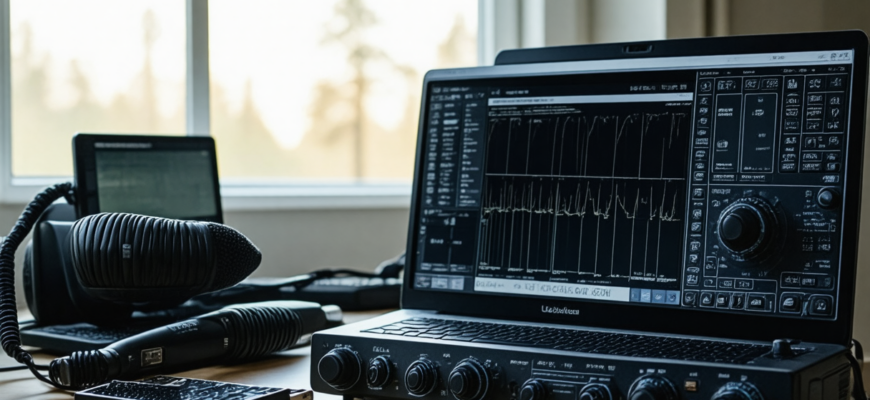
Amateur radio has long been a platform for innovation, experimentation, and global communication. As technology rapidly advances, software updates play a pivotal role in enhancing digital modes, making radio operations more efficient, reliable, and accessible. This comprehensive guide explores the latest software innovations, their features, and how they are transforming the landscape of digital amateur radio communications.
- Introduction to Digital Modes in Amateur Radio
- The Importance of Software in Digital Communications
- Key Digital Modes Influenced by Software Updates
- Latest Software Updates and Features for Digital Modes
- 1. WSJT-X Suite: The Foundation of Modern Digital Modes
- 2. JS8Call: Expanding Digital Communication with Messaging Capabilities
- 3. PSK31 and PRISM: Faster and More Reliable Data Transmission
- 4. WSPR: Advancing Weak Signal Propagation Reporting
- 5. RTTY and MMTTY: Digital Text Modes with a Modern Twist
- Integration with Modern Devices and Systems
- 1. Windows, macOS, and Linux Compatibility
- 2. Use of USB Sound Devices and SDRs
- 3. Automation and Control Software
- Innovations Driven by Community Feedback and Open-Source Development
- Future Trends in Digital Mode Software Development
- References
- Disclaimer
Introduction to Digital Modes in Amateur Radio
Digital modes are methods of transmitting and receiving radio signals encoded into digital data, replacing traditional analog signals. These modes enable higher quality signals, better noise immunity, and facilitate complex data exchanges such as text, images, and even GPS coordinates. The evolution of digital modes has been driven by the development of sophisticated software that enables amateurs to connect worldwide with minimal equipment.
The Importance of Software in Digital Communications
Software acts as the core engine behind digital modes, providing the necessary algorithms for modulation, demodulation, error correction, and data management. The continuous release of updates brings improvements in speed, usability, compatibility, and added functionalities, thus expanding the potential of amateur radio operators worldwide. Innovative software solutions have also addressed challenges like spectrum congestion, weak signal operation, and integration with modern devices.
Key Digital Modes Influenced by Software Updates
- FT8
- FT4
- JS8Call
- PSK31
- WSPR
- RTTY
- MSK144
Latest Software Updates and Features for Digital Modes
1. WSJT-X Suite: The Foundation of Modern Digital Modes
The WSJT-X software continues to lead the way in digital amateur radio by integrating multiple modes into one platform. Recent updates have expanded its capabilities and user-friendliness.
- Enhanced UI: Modernized interface with customizable layouts, making it easier to operate complex functions.
- New Modes Integration: Addition of FT4 for contesting and rapid exchanges, along with ongoing improvements to FT8 and JS8Call.
- Automatic Mode Detection: Software automatically identifies incoming signals and configures decoding processes, reducing operator guesswork.
- Improved Error Correction: Algorithms now better handle poor signal conditions, increasing decoding success rates.
2. JS8Call: Expanding Digital Communication with Messaging Capabilities
Building upon WSJT-X, JS8Call introduces a more conversational approach, resembling text messaging over radio frequencies. The latest updates focus on security and usability:
- Secure Messaging: New encryption features ensure privacy during exchange.
- Enhanced Routing: Improved digital routing protocols allow for better network stability and message delivery.
- Integrated Chat: Real-time chat window simplifies conversations, making digital radio accessible to newcomers.
3. PSK31 and PRISM: Faster and More Reliable Data Transmission
PSK31 remains popular for keyboard-to-keyboard communication, and recent software enhancements offer:
- Bandwidth Optimization: Minimized bandwidth usage for less spectrum congestion.
- Auto-Tuning & Spectral Scanning: Automatic adjustments to carrier frequency for stable operation.
- Compatibility Improvements: Support for various sound card devices and operating systems.
4. WSPR: Advancing Weak Signal Propagation Reporting
WSPR software updates have focused on increasing sensitivity, accuracy, and ease of use:
| Feature | Description |
|---|---|
| High-Precision Timing | Utilizes atomic clock synchronization for accurate signal timestamping. |
| Data Visualization | Enhanced propagation maps allow users to analyze signal paths globally. |
| Automated Transmission Scheduling | Simplifies setup by automating transmission cycles based on operator preferences. |
5. RTTY and MMTTY: Digital Text Modes with a Modern Twist
Radio Teletype (RTTY) remains relevant thanks to software updates that improve:
- Decoding Algorithms: Better handling of noisy signals.
- User Interface: More intuitive control panels and logging features.
- Automation: Macros and scripts for quick message exchanges.
Integration with Modern Devices and Systems
1. Windows, macOS, and Linux Compatibility
Modern software updates ensure cross-platform compatibility, allowing operators to use preferred operating systems without sacrificing functionality. This inclusivity broadens participation and simplifies setup processes.
2. Use of USB Sound Devices and SDRs
Software now supports a variety of sound card interfaces and Software Defined Radios (SDRs), providing improved modulation quality, bandwidth control, and device interoperability. This integration enhances overall signal clarity and decoding robustness.
3. Automation and Control Software
Automation tools allow remote operation, logging, and setup management. Popular control software like Ham Radio Deluxe and Log4OM have integrated digital mode support enhanced by recent software enhancements.
Innovations Driven by Community Feedback and Open-Source Development
The amateur radio community often contributes to software improvements. Open-source projects such as WSJT-X and JS8Call thrive on collaborative development, with frequent updates addressing bugs, adding features, and improving user experience. Additionally, community-driven initiatives often prioritize interoperability, security, and accessibility.
Future Trends in Digital Mode Software Development
- Machine Learning & AI: Implementing predictive decoding algorithms to enhance weak signal performance and automate signal classification.
- Enhanced Security: Developing more robust encryption and authentication methods for digital communication privacy.
- Integration with IoT Devices: Leveraging Internet of Things (IoT) technology for remote monitoring and operation of radio stations.
- Augmented Reality (AR) & Virtual Reality (VR): Exploring immersive interfaces for educational purposes and remote coordination.
The rapid evolution of software in amateur radio digital modes is revolutionizing how operators communicate, experiment, and connect globally. From more reliable modes offering higher data integrity to user-friendly interfaces and integration with modern devices, the latest software updates push the boundaries of what amateur radio can achieve. As open-source communities and technological advancements continue to grow, the future of digital modes promises even more innovative tools and opportunities for enthusiasts around the world.
References
- WSJT-X Official Website
- JS8Call Official Website
- PSK31 and PRISM
- WSPR Details and Software
- Latest in Amateur Radio Software
Disclaimer
This article is for informational purposes only. The features and functionalities of software mentioned are subject to updates and changes by their respective developers. Always refer to official sources for the most recent information.
Похожие записи:
 Emergency Communication Protocols for Ham Radio Operators: The Latest Updates and Best Practices
  Enhancing CW Skills with Cutting-Edge Training Software: Your Path to Radio Success
  Comprehensive Review of the Latest Transceiver Models on the Market: Innovations and Performance for Amateur Radio Enthusiasts
  Integrating Software-Defined Radio into Your Daily Operations: A Comprehensive Guide for Amateur Radio Enthusiasts
  Mastering Digital Voice Conferences: How to Participate Effectively in the Modern Amateur Radio Era
  Latest Developments in Spectrum Licensing and Frequency Allocations: A Comprehensive Overview for Amateur Radio Enthusiasts
  New Regulations Affecting Amateur Radio Licensing and Operation: What You Need to Know
  Effective Troubleshooting Guide for Common Radio Hardware Issues in Amateur Radio
  Integrating Internet-Linked Repeater Systems with Traditional Ham Gear: A Comprehensive Guide
  Advances in Battery Technology for Portable Ham Radio Use: Powering the Future of Amateur Radio
  How to Build Your Own Homemade QRP Transceiver: A Comprehensive Guide for Amateur Radio Enthusiasts
  Developing Effective Emergency Preparedness Plans with Ham Radio: A Comprehensive Guide for Amateur Radio Enthusiasts
  Using APRS for Real-Time Location Tracking and Messaging
  Mastering Regulatory Changes: A Comprehensive Guide for Amateur Radio Enthusiasts
  Effective Propagation Analysis Techniques Throughout the Year: Maximizing Ham Radio Performance
  Unlocking the Power of Connection: The Benefits of Joining Amateur Radio Contesting Communities