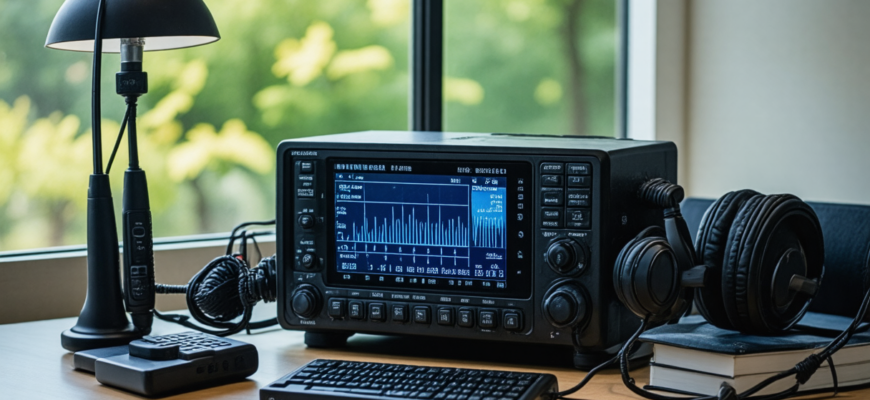
In the rapidly evolving landscape of amateur radio, transceivers stand as the cornerstone equipment, enabling enthusiasts to communicate across vast distances and explore the depths of radio technology. With technological advancements accelerating, manufacturers consistently release new models packed with innovative features, enhanced performance, and user-friendly interfaces. This comprehensive review aims to examine the latest transceiver models available on the market, analyzing their technical specifications, usability, and suitability for different levels of amateur radio operators.
- Introduction to Modern Amateur Radio Transceivers
- Key Features to Consider When Choosing a Transceiver
- Top Latest Transceiver Models of 2023
- 1. Yaesu FTdx101D
- Overview
- Technical Specifications
- Advantages & Disadvantages
- 2. Icom IC-7300
- Overview
- Technical Specifications
- Advantages & Disadvantages
- 3. Kenwood TS480SAT
- Overview
- Technical Specifications
- Advantages & Disadvantages
- Emerging Trends in Transceiver Technology
- 1. Software-Defined Radio (SDR) Dominance
- 2. Digital Signal Processing (DSP)
- 3. Connectivity and Remote Control
- 4. Compact and Portable Designs
- 5. Integration with Digital Modes and Networks
- Performance Comparison Table
- Choosing the Right Transceiver for Your Needs
- The Future of Amateur Radio Transceivers
- References and Further Reading
Introduction to Modern Amateur Radio Transceivers
Before delving into specific models, it is essential to understand what defines a modern amateur radio transceiver. These devices combine a transmitter and a receiver into a single unit, designed to operate across specified frequency ranges, typically within HF, VHF, and UHF bands. Modern transceivers often incorporate digital signal processing (DSP), software-defined radio (SDR) technology, and extensive connectivity options, making them highly versatile and adaptive to various operating modes.
Key Features to Consider When Choosing a Transceiver
Selecting the right transceiver depends on a set of core parameters and features tailored to the operator’s needs. Here are the primary factors to consider:
- Frequency Range: Determines the bands on which the transceiver can operate, such as HF, VHF, UHF, or all-in-one transceivers covering multiple bands.
- Power Output: Usually expressed in watts; higher power allows for longer-distance communication, but also consumes more energy.
- Modulation Modes: Supports SSB, CW, FM, digital modes like FT8, PSK, RTTY, etc.
- DSP and SDR Capabilities: Advanced filtering, noise reduction, and digital signal processing improve communication clarity and adaptability.
- Connectivity: USB ports, Bluetooth, Wi-Fi, Ethernet, and remote control options facilitate integration with computers and networks.
- User Interface: Intuitive menus, color displays, and customizable controls enhance the user experience.
- Size and Portability: Stationary desktop models versus portable handheld units cater to different operational environments.
Top Latest Transceiver Models of 2023
Below is an in-depth analysis of selected top transceiver models launched in 2023, representing the latest technological innovations and user preferences.
1. Yaesu FTdx101D
Overview
The Yaesu FTdx101D is a flagship HF/50MHz transceiver, renowned for its outstanding performance, advanced DSP features, and robust construction. It is designed for serious amateur radio operators who demand high fidelity and reliable operation during contests and DX expeditions.
Technical Specifications
| Parameter | Specification |
|---|---|
| Frequency Range | 0.030 – 54 MHz (including 6 meters) |
| Power Output | 100 W (settable from 5W to 100W) |
| Modulation Modes | SSB, CW, RTTY, AM, FM |
| DSP Features | High-performance DSP filtering, noise reduction, automatic notch |
| Display | Color touchscreen, high-resolution LCD |
| Connectivity | USB, Ethernet, remote control via Wi-Fi |
| Dimensions | ≈ 375 x 125 x 340 mm |
Advantages & Disadvantages
- Advantages: Exceptional receiving sensitivity, wide bandwidth filters, comprehensive connectivity options, high-level build quality.
- Disadvantages: Premium price point, large size suitable for stationary stations.
2. Icom IC-7300
Overview
The Icom IC-7300 is celebrated for pioneering the SDR technology in a compact and user-friendly package. It offers impressive performance across HF and 6 meters, favoring both novice and experienced operators who prioritize portability without sacrificing features.
Technical Specifications
| Parameter | Specification |
|---|---|
| Frequency Range | 1.8 – 30 MHz (HF and 6 meters) |
| Power Output | 100 W |
| Modulation Modes | SSB, CW, RTTY, AM, FM |
| DSP Features | Advanced digital filtering, noise reduction, auto notch |
| Display | Color LCD touchscreen |
| Connectivity | USB, LAN, remote control |
| Dimensions | ≈ 250 x 80 x 240 mm |
Advantages & Disadvantages
- Advantages: Compact design, user-friendly interface, excellent SDR performance, versatile mode support.
- Disadvantages: Limited frequency coverage (no VHF/UHF), slightly higher cost for additional accessories.
3. Kenwood TS480SAT
Overview
This versatile transceiver remains popular among amateur operators due to its solid construction, reliable performance, and affordability. It covers HF and 6 meters with multiple operating modes, suitable for portable and home setups.
Technical Specifications
| Parameter | Specification |
|---|---|
| Frequency Range | 1.8 – 54 MHz (including 6 meters) |
| Power Output | 100 W |
| Modulation Modes | SSB, CW, RTTY, AM, FM |
| DSP Features | IF filter, noise blanker, digital preselector |
| Display | Standard monochrome LCD |
| Connectivity | Serial port, microphone jack, external speaker |
| Dimensions | ≈ 300 x 115 x 350 mm |
Advantages & Disadvantages
- Advantages: Durable build, straightforward controls, consistent performance.
- Disadvantages: Absence of modern SDR features, slightly outdated interface.
Emerging Trends in Transceiver Technology
The latest transceiver models reflect significant technological trends shaping amateur radio today. Understanding these trends helps operators make informed choices based on future-proof features and innovative capabilities.
1. Software-Defined Radio (SDR) Dominance
SDR technology is transforming how transceivers process signals. Modern SDR units offer agility in filtering, demodulation, and signal processing, allowing precise control and customization. Many new models incorporate fully integrated SDR systems, providing higher sensitivity and selectivity.
2. Digital Signal Processing (DSP)
DSP enhances the clarity and quality of transmitted and received signals. Equipped with advanced DSP, transceivers can perform noise reduction, automatic notch filtering, and adaptive equalization, vastly improving user experience amid noisy conditions.
3. Connectivity and Remote Control
Modern transceivers increasingly support remote operation via LAN, Wi-Fi, or Bluetooth, allowing operators to control their stations remotely from computers or mobile devices. This flexibility is crucial for contesting, emergency communication, and integrated station setups.
4. Compact and Portable Designs
Portability remains a core trend, with many manufacturers releasing lightweight, battery-powered transceivers suitable for field operations, mobile use, and emergency scenarios.
5. Integration with Digital Modes and Networks
Digital modes like FT8, JS8, and digital voice are embedded into recent transceivers, supporting seamless switching between analog and digital communication modes. Network integration with systems such as D-STAR, System Fusion, or DMR enhances global connectivity.
Performance Comparison Table
| Model | Frequency Range | Power | DSP/SDR | Connectivity | Portability | Price (Approx.) |
|---|---|---|---|---|---|---|
| Yaesu FTdx101D | 0.030 – 54 MHz | 100 W | Yes / Full SDR | USB, Ethernet, Wi-Fi | Stationary | $5,500 |
| Icom IC-7300 | 1.8 – 30 MHz | 100 W | Yes / SDR included | USB, LAN | Compact | $1,200 |
| Kenwood TS480SAT | 1.8 – 54 MHz | 100 W | No / Traditional | Serial port, microphone | Stationary/Portable | $1,000 |
Choosing the Right Transceiver for Your Needs
Determining the optimal transceiver involves assessing your specific operational requirements, budget, and future plans. Here are foundational questions to guide your decision:
- What bands will you operate? Ensure the transceiver covers your preferred frequency ranges.
- What operating modes do you need? Confirm support for modes like CW, digital modes, SSB, FM, etc.
- Is portability important? Consider portable or mobile units versus stationary desk models.
- What is your budget? High-end models offer robust features but at a premium price; mid-range units balance features and affordability.
- Are you interested in future-proof features? Focus on units with SDR and network connectivity to stay current with technological trends.
The Future of Amateur Radio Transceivers
As technological innovations continue transforming the amateur radio landscape, the latest transceiver models exemplify a blend of power, precision, and connectivity. The integration of SDR, advanced DSP, and network capabilities allows for more flexible and resilient communication systems, opening new horizons for operators worldwide.
Choosing among these models depends heavily on individual needs, operational context, and budget. However, what remains clear is that modern transceivers are designed to meet the demands of both traditional radio enthusiasts and those venturing into digital innovation, ensuring that amateur radio remains vibrant and relevant for years to come.
References and Further Reading
For more detailed information on each model, users can visit the official manufacturer websites, review specialized amateur radio forums, and consult detailed product manuals. Staying updated with amateur radio publications and participating in local clubs can also provide valuable insights and firsthand experiences with the latest transceivers.
Похожие записи:
 How to Build Your Own Homemade QRP Transceiver: A Comprehensive Guide for Amateur Radio Enthusiasts
  Integrating Internet-Linked Repeater Systems with Traditional Ham Gear: A Comprehensive Guide
  Emergency Communication Protocols for Ham Radio Operators: The Latest Updates and Best Practices
  New Regulations Affecting Amateur Radio Licensing and Operation: What You Need to Know
  Advances in Battery Technology for Portable Ham Radio Use: Powering the Future of Amateur Radio
  Effective Troubleshooting Guide for Common Radio Hardware Issues in Amateur Radio
  Innovative Antenna Designs for Enhanced HF Performance
  Ultimate Guide: Best Practices for Setting Up a Remote Radio Station Accessible Worldwide
  Последние достижения в области цифровых средств связи в любительском радио: инновации и будущее