
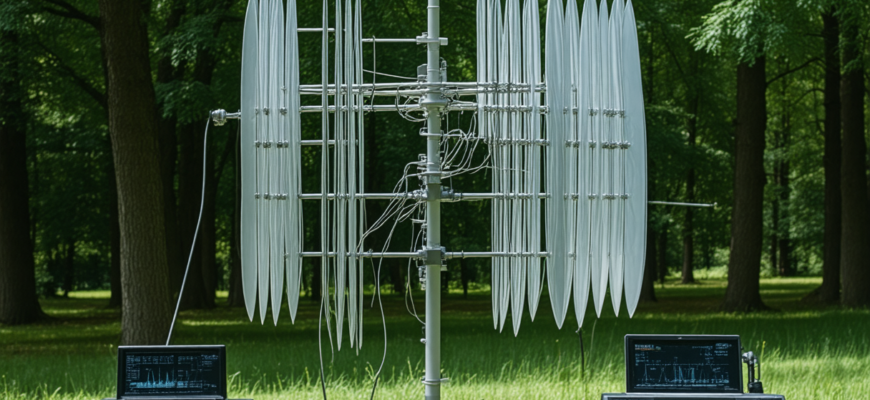
For amateur radio enthusiasts and professionals alike, achieving optimal performance on the high-frequency (HF) bands holds paramount importance. As the electromagnetic landscape evolves and the demand for better signal clarity, longer range, and reliable communication grows, innovative antenna designs emerge as a crucial factor in pushing the boundaries of what is technically possible. This comprehensive guide explores groundbreaking antenna configurations, technological advancements, and engineering principles that contribute to superior HF performance.
- The Significance of Antenna Design in HF Communications
- Fundamental Principles of HF Antenna Performance
- Understanding Propagation and Antenna Parameters
- Challenges in Existing HF Antenna Designs
- Emerging Trends in HF Antenna Design
- 1. Multiband and Broadband Antennas
- 2. Portable and Deployable Antenna Systems
- 3. Active and Phased Array Antennas
- 4. Use of Modern Materials and Perovskite Structures
- Innovative HF Antenna Designs
- 1. Magnetic Loop Antennas
- 2. Vertical Band-Loaded Dipoles
- 3. Folded Dipole and Inverted V Variations
- 4. Log-Periodic and Discone Antennas
- Design Considerations and Optimization Techniques
- Impedance Matching Strategies
- Simulation and Modeling Tools
- Material Selection and Environmental Resilience
- Case Studies: Innovative Antenna Projects
- 1. The Magnetic Loop Portable Antenna
- 2. Phased Array Beam Steering System
- 3. Broadband Vertical Monopole with Reactive Loading
- Future Directions and Innovations in HF Antennas
- Embracing Innovation for Superior HF Communication
- Summary Table of Innovative HF Antenna Types
- References and Further Reading
The Significance of Antenna Design in HF Communications
High-frequency radio communication relies heavily on the quality and efficiency of the antenna system. Unlike lower frequencies, where antennas tend to be larger and more straightforward, HF antennas require precise design considerations to ensure efficient radiation pattern, impedance matching, and environmental adaptability. Innovations in antenna engineering aim to optimize parameters such as gain, bandwidth, directivity, and portable deployment versatility.
Fundamental Principles of HF Antenna Performance
Understanding Propagation and Antenna Parameters
HF radio waves, typically spanning from 3 to 30 MHz, propagate through the ionosphere, allowing global communication beyond line-of-sight. Factors affecting antenna performance include:
- Gain: The measure of directivity and efficiency in focusing radio energy in a particular direction.
- Bandwidth: The range of frequencies over which the antenna maintains its performance characteristics.
- Impedance Matching: Ensuring the antenna’s impedance aligns with the transmitter’s, minimizing reflections and power loss.
- Radiation Pattern: The spatial distribution of radiated energy, influencing coverage and reach.
Challenges in Existing HF Antenna Designs
Traditional antennas such as horizontal dipoles, vertical monopoles, and inverted V antennas offer reliable performance but often lack adaptability, bandwidth, or portability needed for diverse operational scenarios. Innovations focus on overcoming these limitations by developing multi-functional, lightweight, and high-efficiency solutions.
Emerging Trends in HF Antenna Design
1. Multiband and Broadband Antennas
Modern HF active environments drive the need for antennas capable of operating efficiently across multiple bands or over wide frequency ranges. Notable designs include the G5RV, Fan Dipoles, and new broadband monopole systems that leverage innovative materials and geometries to achieve broader bandwidths without sacrificing gain.
2. Portable and Deployable Antenna Systems
Field operations, emergency communication, and portable contest setups benefit from antennas that are easy to deploy, lightweight, and weather-resistant. Examples include foldable wire antennas, telescopic verticals, and portable horizontal arrays with quick assembly features.
3. Active and Phased Array Antennas
Advances in circuitry and control systems have enabled active antennas with built-in amplifiers and phased array systems capable of electronically steering radiation beams without physically moving the antenna structure. This innovation enhances directivity, reduces interference, and improves signal-to-noise ratio.
4. Use of Modern Materials and Perovskite Structures
Material science contributes significantly to antenna efficiency. Flexible, low-loss dielectric materials, and perovskite-based substrates improve performance. These innovations allow for more compact, resilient, and efficient designs suitable for extreme environments.
Innovative HF Antenna Designs
1. Magnetic Loop Antennas
Magnetic loop antennas are gaining popularity due to their compact size and high efficiency, especially in limited spaces. These antennas operate at high Q-factors, offering narrow bandwidths suitable for CW (Continuous Wave) and SSB (Single Side Band) modes. Their sensitive tuning circuits allow for precise adjustment, ensuring optimal matching.
| Feature | Advantages | Limitations |
|---|---|---|
| Size | Compact, ideal for limited spaces | Limited bandwidth, requires precise tuning |
| Efficiency | High, especially at high Q | Susceptible to detuning due to nearby metal objects |
| Cost | Moderate, components are widely available | Complex tuning circuitry |
2. Vertical Band-Loaded Dipoles
This design combines the simplicity of a vertical monopole with broadband loading techniques. Using inductive or capacitive loading elements, these antennas achieve resonant operation across multiple bands, making them excellent for portable operations and multi-band use cases.
3. Folded Dipole and Inverted V Variations
Folded dipoles increase impedance and bandwidth, facilitating better matches with the transmitter. When configured as inverted V antennas, they provide elevated, broad coverage with minimal space; this is especially valuable in urban environments or restricted spaces.
4. Log-Periodic and Discone Antennas
Designed for ultra-wide bandwidth, these antennas accommodate both high and low HF frequencies. The log-periodic, with its repeating structure, allows for a broad operational experience, while the discone antenna excels in vertical omnidirectional coverage with low VSWR (Voltage Standing Wave Ratio). Both are suitable for versatile HF applications.
Design Considerations and Optimization Techniques
Impedance Matching Strategies
Proper impedance matching ensures maximum power transfer and minimizes reflections. Techniques include:
- Using own matching networks (LC circuits) tailored to operating bands.
- Implementing antenna tuners (Elecraft Tuner, MFJ Tuner) with automatic adjustment systems.
- Designing broadband antennas inherently matched over multiple frequencies.
Simulation and Modeling Tools
Computational electromagnetic software such as NEC (Numerical Electromagnetics Code), EZNEC, and CST Microwave Studio enable engineers to optimize antenna parameters before physical implementation. These tools help in analyzing:
- Radiation patterns
- SWR characteristics
- Bandwidth efficiency
- Effect of environmental objects
Material Selection and Environmental Resilience
Choosing appropriate materials—weather-resistant insulants, durable conductors, flexible substrates—helps maintain performance in various climates. Innovations like UV-resistant coatings and corrosion-resistant alloys ensure longevity.
Case Studies: Innovative Antenna Projects
1. The Magnetic Loop Portable Antenna
Designed for backpackers and field operators, this antenna features a ferrite core, adjustable capacitor, and lightweight frame, allowing quick setup and tuning across multiple HF bands. Its compact form factor makes it ideal for remote operation and emergency communication.
2. Phased Array Beam Steering System
Leveraging modern digital phase shifters and RF amplifiers, this system electronically directs RF energy towards desired directions, significantly improving signal clarity and reducing interference. Such arrays have been successfully deployed for contest stations and remote operations.
3. Broadband Vertical Monopole with Reactive Loading
This antenna operates efficiently over an octave or more, reducing the need for multiple antennas. Its design simplifies setup in constrained spaces while maintaining high gain and broad coverage.
Future Directions and Innovations in HF Antennas
The landscape of HF antenna development continues to evolve with advancements in materials, digital control systems, and a deeper understanding of electromagnetic interactions. Emerging trends include:
- Integration with software-defined radio (SDR) systems for adaptive antenna tuning.
- Use of metamaterials to manipulate electromagnetic waves for enhanced directivity.
- Development of self-healing and adaptive antennas that sense environmental conditions and automatically optimize performance.
Embracing Innovation for Superior HF Communication
The quest for improved HF antenna performance combines theoretical knowledge, material science, and practical engineering. As technology advances, amateur radio operators have unprecedented opportunities to deploy innovative designs that are more efficient, portable, and adaptable. Whether for long-range communication, contesting, or emergency response, embracing new antenna technologies can unlock higher performance, more reliable signals, and broader operational capabilities.
Summary Table of Innovative HF Antenna Types
| Type | Key Features | Ideal Use Cases |
|---|---|---|
| Magnetic Loop Antennas | Compact, high-Q, narrow bandwidth | Limited space, portable setups |
| Broadband Vertical Monopoles | Wide bandwidth, simple design | Multi-band, field operations |
| Phased Array Systems | Electronic beam steering, high directivity | Contesting, remote station control |
| Log-Periodic and Discone Antennas | Ultra-wide bandwidth | Versatile HF operations |
References and Further Reading
- Antennas for All Applications by John D. Kraus and Ronald J. Marhefka
- ARRL Antenna Book by the American Radio Relay League
- Modern Antenna Design by Kenneth B. Buhler
- Electromagnetic Simulation Tools: NEC, EZNEC, CST Microwave Studio
In investing in innovative antenna solutions, amateur radio operators not only enhance their own capabilities but also contribute to the collective knowledge and technological progress of the radio community. With continuous research and adaptation, the future of HF communications is poised for exciting breakthroughs that will redefine global connectivity.