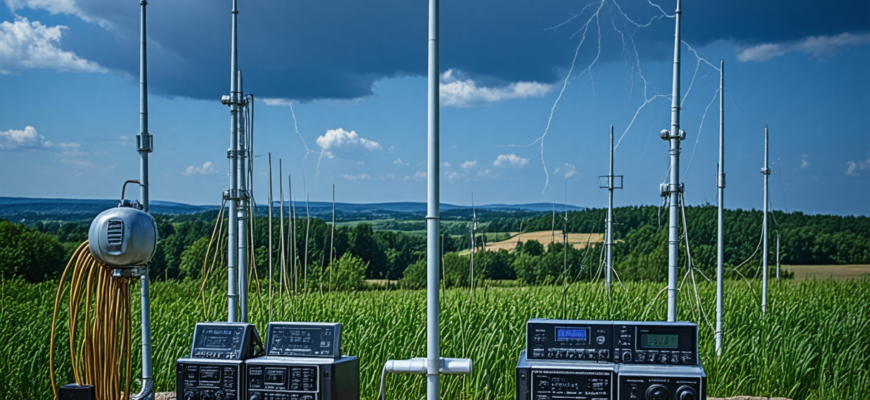
When setting up a radio station—whether for hobbyist communication, emergency services, or amateur radio pursuits—one of the most critical yet often overlooked aspects is safeguarding equipment against the unpredictable threat of lightning strikes. Lightning can cause irreversible damage to radio gear, interrupt communications, and pose safety risks. This comprehensive guide explores the best lightning protection gear tailored for your radio setup, providing detailed insights into components, installation tips, and best practices to ensure your radio station stays safe, functional, and resilient against electrical storms.
- Understanding the Threat: Why Lightning Protection Is Essential
- Types of Lightning Hazards for Radio Equipment
- Fundamental Principles of Lightning Protection
- Essential Lightning Protection Gear for Radio Stations
- 1. Grounding Systems
- 2. Surge Protective Devices (SPDs)
- 3. Lightning Arrestors and Air-Disconnect Switches
- 4. Guard Wires and Lightning Diverters
- Implementing an Effective Lightning Protection System
- Step-by-Step Installation Guide
- Best Practices and Safety Tips
- Commonly Used Lightning Protection Equipment: Models and Brands
- Formulas and Calculations for Lightning Protection
- Estimating Ground Resistance
- Voltage Clamping Ratio for Surge Protectors
- Regulatory Standards and Certification
- Shielding Your Radio Setup from Lightning
- Additional Resources
- Summary Table: Key Components for Lightning Protection
- Final Thoughts
Understanding the Threat: Why Lightning Protection Is Essential
Lightning is a natural electrical discharge that can carry millions of volts of energy. When a thunderstorm approaches, the electrical potential difference between the clouds and the ground increases significantly. If not properly managed, lightning can strike antennas, cables, equipment, or grounding systems, causing severe damage and safety hazards.
For amateur radio enthusiasts, the risk amplifies due to outdoor antennas often installed in open spaces, making them prime targets for lightning strikes. Even indirect strikes or nearby lightning can induce damaging voltage surges in coaxial cables and electronic components. Therefore, proper lightning protection is not just an option—it’s a necessity.
Types of Lightning Hazards for Radio Equipment
- Direct Lightning Strike: The lightning bolt hits the antenna or nearby structure directly, generating high-current surges.
- Induced Surges: Electric fields from a nearby lightning strike induce voltage spikes in antenna lines and equipment.
- Electromagnetic Pulses (EMP): Rapid changes in magnetic fields induce currents in cables and sensitive devices.
Fundamental Principles of Lightning Protection
The goal of lightning protection for radio setup is to divert or suppress dangerous electrical energy away from equipment and safely discharge it into the ground. This involves:
- Providing a low-resistance grounding system.
- Using surge protection devices (SPDs) to clamp voltage spikes.
- Implementing lightning arrestors at vulnerable points like antenna feeds.
- Ensuring proper cabling strategies and separation from conductive structures.
Essential Lightning Protection Gear for Radio Stations
1. Grounding Systems
Reliable grounding forms the foundation of lightning protection. The grounding system acts as a conduit, safely channeling lightning-induced currents into the earth. Key aspects include:
- Ground rods: Copper or copper-bite rods driven deep into the ground. Lengths typically range from 8 to 10 feet.
- Grounding conductors: Heavy-duty copper cables connecting all equipment and antenna systems to ground rods.
- Grounding bus bars: Central points where multiple ground connections converge.
Proper grounding reduces the risk of voltage buildup on equipment and minimizes the impact of surges. It’s essential to follow local electrical codes and standards to ensure safety and effectiveness.
2. Surge Protective Devices (SPDs)
SPDs, also known as lightning arrestors, are critical components that protect radio gear by limiting voltage surges. They are installed at various points, especially where cables enter or exit a building.
| Type | Description | Placement |
|---|---|---|
| Coaxial Surge Arrestors | Designed specifically for RF cables, they clamp high-voltage spikes, allowing normal signals to pass. | At antenna feed points and equipment inputs |
| AC Power Surge Protectors | Protect power supplies from voltage surges originating from electrical wiring. | On AC power lines feeding the station |
| Data Line Surge Protectors | Protect data cables (e.g., Ethernet) from transient surges. | Where data cables enter the station |
3. Lightning Arrestors and Air-Disconnect Switches
Lightning arrestors are devices installed inline with antenna cables to prevent high-voltage surges from reaching the equipment. They are often combined with grounding kits for maximum protection.
Air-disconnect switches are vital safety components, allowing control over antenna connections, so the antenna can be quickly disconnected during storms, preventing damage from indirect strikes or electromagnetic induction.
4. Guard Wires and Lightning Diverters
For large or tall antenna structures, installing lightning guard wires or diverters helps prevent lightning from striking the main antenna elements by providing a preferred pathway for lightning to reach the ground.
Implementing an Effective Lightning Protection System
Step-by-Step Installation Guide
- Assess your site: Identify the highest points, potential strike zones, and existing grounding potentials.
- Install grounding rods: Place multiple rods around antenna and station sites, interconnected with heavy copper conductors.
- Erect lightning rods (if applicable): Use air terminals or lightning rods at prominent points to attract lightning safely.
- Connect surge protectors: Install SPDs on coaxial feeds, AC lines, and any communication cables entering the station.
- Employ shielded cabling and proper routing: Keep cables away from conductive elements and route them in grounded conduits where feasible.
- Use disconnect switches: During a storm, disconnect antennas using switches or unplug cables to prevent surge entry.
Best Practices and Safety Tips
- Regularly inspect and maintain grounding and surge protection devices.
- Use high-quality, certified lightning arrestors designed for RF applications.
- Avoid grounding systems that are disconnected or corroded.
- Ensure all equipment chassis are connected to the grounding system.
- During thunderstorms, disconnect all antenna cables and turn off electronic devices if possible.
- Be aware of local lightning activity patterns and tailor your protection strategy accordingly.
Commonly Used Lightning Protection Equipment: Models and Brands
| Equipment Type | Popular Brands | Key Features |
|---|---|---|
| Coaxial Surge Arrestors | PolyPhaser, shackattak.com, Anderson Power Products | High energy handling capacity, low insertion loss, weatherproof |
| Grounding Accessories | Times Microwave, Pro-Flex, Clark Cable | Copper conductors, grounding blocks, clamps |
| Lightning Rods and Air Terminals | Erico, TranzL | Durable materials, adjustable height, lightning attractors |
| Disconnection Switches | Amphenol, West Mountain Radio, MFJ Enterprises | Remote-controlled, manual, weatherproof models |
Formulas and Calculations for Lightning Protection
Estimating Ground Resistance
To ensure effective grounding, the resistivity of the ground should be as low as possible. The resistance of a ground rod can be estimated using:
R = ρ / (2π L)
where:
- R — Resistance (Ohms)
- ρ — Soil resistivity (Ohm-meters)
- L — Length of the ground rod (meters)
*In practice*, multiple rods are connected in a grid formation to achieve lower resistance (< 5 Ohms recommended for lightning protection).
Voltage Clamping Ratio for Surge Protectors
The protection level of a surge protector is determined by its clamping voltage, which should be as low as possible without affecting normal operation:
- Maximum Clamping Voltage (Vclamp): The maximum voltage the SPD allows before diverting surge current.
- Typical range: 250V to 600V for RF applications.
Regulatory Standards and Certification
When selecting lightning protection gear, ensure products meet relevant standards:
- International Electrotechnical Commission (IEC) 61643 series
- UL 1449 (Underwriters Laboratories) for surge protective devices
- IEEE standards for grounding and lightning protection (IEEE std 142, 142, 805)
Shielding Your Radio Setup from Lightning
Ensuring robust lightning protection requires a comprehensive approach: effective grounding, high-quality surge protection devices, proper equipment installation, and good safety practices. While no system can promise complete immunity from lightning, implementing proven gear and following best practices significantly reduces risks, protects valuable equipment, and ensures uninterrupted communication during electrical storms. Regular maintenance, awareness of weather conditions, and proactive disconnection strategies form the final line of defense.
Additional Resources
- ARRL Guide to Lightning Protection
- IEEE Standards for Lightning and Surge Protection
- Books and online tutorials on amateur radio lightning safety
Summary Table: Key Components for Lightning Protection
| Component | Purpose | Examples |
|---|---|---|
| Grounding Systems | Reduce voltage potential, safely channel lightning currents | Ground rods, grounding conductors, bus bars |
| Surge Protective Devices (SPDs) | Clamp voltage spikes, protect electronics | Coaxial arrestors, power surge protectors |
| Lightning Arrestors | Divert lightning strikes away from equipment | PolyPhaser, IEC-approved arrestors |
| Lighting Diverters | Provide preferred lightning strike pathways | Air terminals, shield wires |
| Disconnect Switches | Isolate antennas during storms | Remote switches, manual disconnects |
Final Thoughts
Protecting a radio station from lightning involves careful planning, quality equipment, and consistent maintenance. By investing in a comprehensive lightning protection system incorporating durable grounding, effective surge devices, and safety procedures, amateurs can enjoy reliable station operation even during severe weather events. Safety and preparedness are paramount—because the right gear, installed correctly, can make all the difference between a safe radio station and costly equipment damage.
Похожие записи:
 Build Your Own Portable Solar Power Setup for Radio Operations: A Comprehensive Guide
  Ultimate Guide: Best Practices for Maintaining and Extending the Lifespan of Your Radio Equipment
  Ultimate Guide: Best Practices for Setting Up a Remote Radio Station Accessible Worldwide
  Building a Portable Ham Radio Station for Outdoor Expeditions: The Ultimate Guide
  Top Picks for Emergency Radio Kits: Essential Gear for Every Preparedness Kit
  Top-Rated HF Transceivers for Experienced Operators: The Ultimate Guide
  Integrating Internet-Linked Repeater Systems with Traditional Ham Gear: A Comprehensive Guide
  Effective Troubleshooting Guide for Common Radio Hardware Issues in Amateur Radio
  Top Choices for Budget-Friendly Amateur Radio Equipment: A Comprehensive Guide for Hobbyists
  High-Gain Antennas for Long-Distance Communication: Unlocking Extended Reach in Amateur Radio
  Building a Simple, Low-Cost Antenna Tuner at Home: A Comprehensive Guide for Amateur Radio Enthusiasts
  Effective Tips for Organizing Successful Ham Radio Contests: A Comprehensive Guide
  How to Build Your Own Homemade QRP Transceiver: A Comprehensive Guide for Amateur Radio Enthusiasts
  Mastering Regulatory Changes: A Comprehensive Guide for Amateur Radio Enthusiasts
  Integrating Software-Defined Radio into Your Daily Operations: A Comprehensive Guide for Amateur Radio Enthusiasts
  In-Depth Analysis of the Latest Valve and Solid State Amplifiers: Which One Truly Elevates Your Radio Experience?