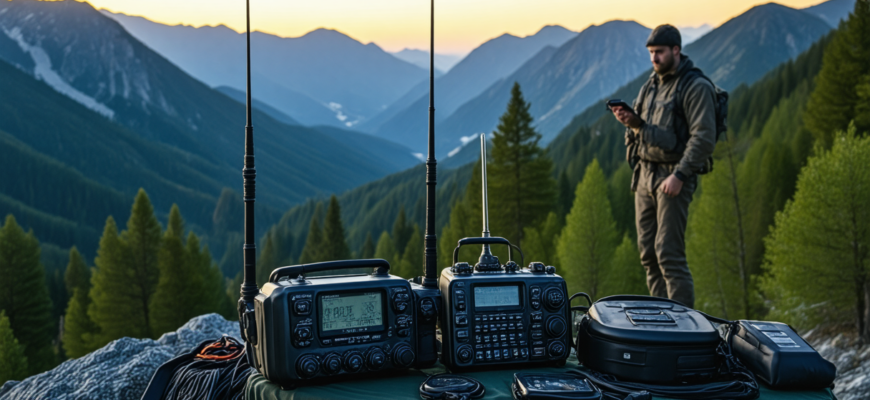
For amateur radio enthusiasts, the thrill of outdoor expeditions is unmatched. Venturing into remote areas, mountains, forests, or wilderness offers unique opportunities to communicate beyond typical urban confines. To make the most of these adventures, building a reliable, portable ham radio station becomes essential. This comprehensive guide explores how to create a compact, efficient, and durable portable ham radio station that can accompany any outdoor expedition, ensuring seamless communication regardless of your location.
- Understanding the Fundamentals of Portable Ham Radio Stations
- What Is a Portable Ham Radio Station?
- Why Build Your Own Portable Station?
- Key Components of a Portable Ham Radio Station
- Essential Hardware Elements
- Supporting Equipment
- Designing Your Portable Ham Radio Station
- Step 1: Define Your Operating Goals
- Step 2: Selecting the Right Transceiver
- Step 3: Power Supply Strategies
- Step 4: Antenna Selection and Deployment
- Step 5: Compact and Portable Mounting Solutions
- Building and Assembling the Portable Ham Radio Station
- Step 1: Creating a Robust Case
- Step 2: Assembling Power and Connections
- Step 3: Setting Up the Antenna
- Step 4: Conducting Test Runs
- Operational Tips for Outdoor Expeditions
- Preparation and Planning
- Efficient Use of Equipment
- Safety and Environmental Responsibility
- Optimizing Your Portable Ham Radio Station for Long-Term Use
- Regular Maintenance and Upgrades
- Documentation and Record-Keeping
- Sample Configuration for an Efficient Portable Ham Radio Station
- Example Setup:
- Key Takeaways for Building Your Portable Ham Radio Station
- Additional Resources and References
- Final Thoughts
Understanding the Fundamentals of Portable Ham Radio Stations
What Is a Portable Ham Radio Station?
A portable ham radio station is a compact, lightweight setup designed for mobile operation in outdoor environments. Unlike stationary stations installed in homes or dedicated facilities, portable stations prioritize mobility, durability, and ease of setup. They enable communication over various distances, from local QSOs to long-distance contacts using HF, VHF, or UHF bands.
Why Build Your Own Portable Station?
- Customization: Tailor the station to your specific needs and preferences.
- Cost-effective: DIY solutions often cost less than commercial portable rigs.
- Learning experience: Building the station deepens understanding of radio technology and operation.
- Reliability: Custom-built setups can be optimized for robustness and durability in outdoor conditions.
Key Components of a Portable Ham Radio Station
Essential Hardware Elements
| Component | Description | Considerations |
|---|---|---|
| Transceiver | The core radio device for transmitting and receiving signals. | Choose a compact, power-efficient model suitable for portable use, like QRP transceivers. |
| Power Supply | Provides electrical energy for operation. | Options include batteries, portable power banks, or small generators. |
| Antenna | Transmits and receives radio signals. | Varies based on bands; must be lightweight, durable, and easy to deploy. |
| Antenna Tuner | Adjusts the antenna’s impedance for optimal signal. | Optional, but improves transmission quality. |
| Microphone & Headset | For voice communication. | Portable and comfortable for extended use. |
| Accessories | Includes coaxial cables, connectors, mounting tools, etc. | Should be rugged for outdoor conditions. |
Supporting Equipment
- Portable antenna mast – For elevating antennas.
- Carrying case or backpack – For transport and protection.
- Name tags and labels – For ease of setup in the field.
Designing Your Portable Ham Radio Station
Step 1: Define Your Operating Goals
Determine the primary purpose of your expedition station. Are you focusing on local contacts over VHF/UHF? Or aiming for long-distance HF communication? Clarifying your objectives helps guide component choices and setup complexity.
Step 2: Selecting the Right Transceiver
Based on your goals, select a compatible transceiver. Popular choices for portable operations include:
- KX2/KX3 by Elecraft – Compact HF transceivers with low power consumption.
- Yaesu FT-817/ND – Versatile all-band, portable transceivers.
- Icom IC-705 – Modern, lightweight transceiver with high-performance features.
Consider power requirements, bandwidth, and ease of operation when choosing your transceiver.
Step 3: Power Supply Strategies
For outdoor expeditions, reliable power is paramount. Options include:
- Lithium-ion or Lithium-polymer batteries – Lightweight, rechargeable, high capacity.
- Portable power banks – Suitable for short trips.
- Small portable generators – For extended expeditions requiring higher power.
Battery capacity calculations can be made using:
Total Power Needed (Wh) = Transceiver Power (W) x Operating Time (h)
Ensure your power source can supply the total energy required with a margin for safety.
Step 4: Antenna Selection and Deployment
Choosing the right antenna depends on operating bands and environment:
- Vertical antennas – Easy to deploy, good for HF and VHF.
- Wire dipoles – Lightweight, flexible, suitable for HF.
- Loading coils and matching units – To match impedance for optimal transmission.
For vertical antennas, using a collapsible mast makes setup easier. Always prioritize durability and ease of assembly.
Step 5: Compact and Portable Mounting Solutions
Designing mounting and support solutions is crucial. Possible options include:
- Portable tripod stands.
- Clamps and adjustable mounts.
- Foldable or telescopic masts for quick setup.
Building and Assembling the Portable Ham Radio Station
Step 1: Creating a Robust Case
Use rugged backpacks, waterproof cases, or customized impact-resistant containers. Inside, organize components neatly using foam padding and compartments to prevent damage during transportation.
Step 2: Assembling Power and Connections
Wire your transceiver to the power source ensuring proper polarity and secure connections. Use high-quality coaxial cables and connectors rated for outdoor use. Test all connections before heading out.
Step 3: Setting Up the Antenna
Identify suitable locations with minimal obstructions. Use lightweight mast supports to elevate antennas for better range. Follow safety guidelines, such as avoiding overhead power lines.
Step 4: Conducting Test Runs
Perform field tests to check transmission quality, antenna performance, and power setup. Fine-tune antenna matching and verify communication links.
Operational Tips for Outdoor Expeditions
Preparation and Planning
- Weather considerations: Protect equipment from rain, wind, and extreme temperatures.
- Legal compliance: Obtain necessary licenses and understand local restrictions.
- Communication protocols: Use standard calling procedures and emergency communication plans.
Efficient Use of Equipment
- Operate at optimal power levels to conserve battery life.
- Utilize digital modes like JS8 or FT8 to extend reach and improve signal robustness.
- Maintain clear frequency coordination to avoid interference.
Safety and Environmental Responsibility
- Ensure stable setups to prevent equipment damage or injury.
- Respect nature and local communities.
- Carry out all trash and avoid disturbing wildlife.
Optimizing Your Portable Ham Radio Station for Long-Term Use
Regular Maintenance and Upgrades
Inspect equipment for wear and tear. Clean connectors, check power supplies, and update firmware as needed. Consider modular designs that allow easy upgrades or repairs.
Documentation and Record-Keeping
Maintain logs of contacts, equipment setups, and lessons learned. This helps improve future expeditions and troubleshooting.
Sample Configuration for an Efficient Portable Ham Radio Station
Example Setup:
- Transceiver: Icom IC-705
- Power source: 10,000mAh lithium-polymer battery pack
- Antenna: Portable vertical multi-band antenna
- Mount: Lightweight telescopic mast (3 meters)
- Accessories: Coaxial cable, matching unit, carry case, mini tripod
Key Takeaways for Building Your Portable Ham Radio Station
- Focus on lightweight, durable, and efficient components tailored to your expedition needs.
- Prioritize ease of setup and breakdown.
- Ensure reliable power sources and high-quality antennas for optimal communication.
- Practice safety and environmental consciousness during field operations.
- Continuously learn and refine your setup through experience and updates.
Additional Resources and References
Final Thoughts
Building a portable ham radio station for outdoor expeditions combines technical knowledge, practical skills, and a passion for discovery. With careful planning, component selection, and diligent practice, any amateur radio operator can establish a reliable emergency or recreational communication link in even the most remote settings. As technology continues to evolve, so will the possibilities for portable, efficient, and sophisticated radio stations, making outdoor ham radio adventures more accessible and enjoyable than ever before.
Похожие записи:
 Ultimate Guide: Best Practices for Setting Up a Remote Radio Station Accessible Worldwide
  How to Build Your Own Homemade QRP Transceiver: A Comprehensive Guide for Amateur Radio Enthusiasts
  Advances in Battery Technology for Portable Ham Radio Use: Powering the Future of Amateur Radio
  Developing Effective Emergency Preparedness Plans with Ham Radio: A Comprehensive Guide for Amateur Radio Enthusiasts
  Effective Troubleshooting Guide for Common Radio Hardware Issues in Amateur Radio
  Effective Tips for Organizing Successful Ham Radio Contests: A Comprehensive Guide
  Comprehensive Review of the Latest Transceiver Models on the Market: Innovations and Performance for Amateur Radio Enthusiasts
  Innovative Antenna Designs for Enhanced HF Performance
  Using APRS for Real-Time Location Tracking and Messaging
  Emergency Communication Protocols for Ham Radio Operators: The Latest Updates and Best Practices
  Integrating Internet-Linked Repeater Systems with Traditional Ham Gear: A Comprehensive Guide
  New Regulations Affecting Amateur Radio Licensing and Operation: What You Need to Know
  Enhancing CW Skills with Cutting-Edge Training Software: Your Path to Radio Success
  Latest Developments in Spectrum Licensing and Frequency Allocations: A Comprehensive Overview for Amateur Radio Enthusiasts
  Последние достижения в области цифровых средств связи в любительском радио: инновации и будущее