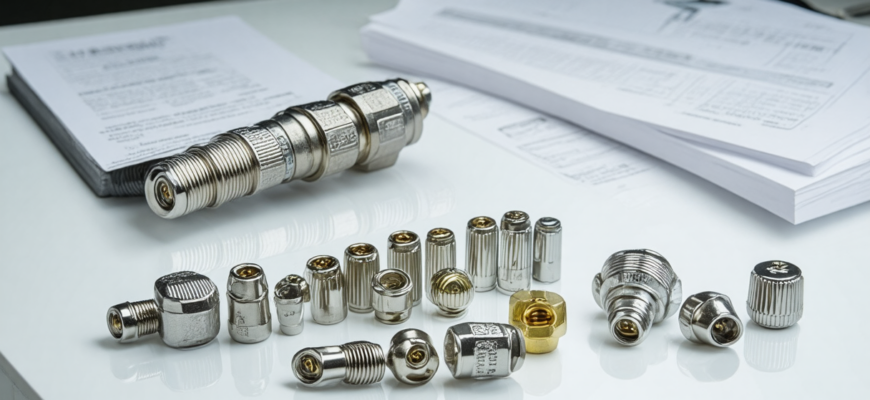
Radio frequency (RF) systems form the backbone of modern wireless communication, broadcasting, and amateur radio operations. A critical component ensuring efficient signal transmission and reception is the array of connectors and adapters used in RF setups. Selecting the right connectors and adapters can significantly impact signal integrity, system reliability, and ease of installation. This comprehensive guide explores the most popular and reliable RF connectors and adapters, delves into their technical specifications, and offers practical advice for amateur radio enthusiasts and professionals alike.
- Understanding RF Connectors and Adapters
- Key Factors in Selecting RF Connectors and Adapters
- Popular RF Connectors Used in Amateur Radio and Professional Systems
- 1. SMA Connectors
- 2. BNC Connectors
- 3. N-Type Connectors
- 4. FME Connectors
- 5. TNC Connectors
- RF Adapters and Their Types
- 1. Gender Adapters
- 2. Type Adapters
- 3. Impedance Matching Adapters
- Technical Specifications and Formulas
- Impedance and Reflection Coefficient
- SMA Connector Insertion Loss
- Practical Tips for Installing RF Connectors and Adapters
- Choosing the Right Connectors and Adapters
- Glossary of RF Connector Terms
- Summary Table of Common RF Connectors
- Final Thoughts
Understanding RF Connectors and Adapters
RF connectors are specialized components designed to connect coaxial cables to electronic devices, antennas, or other cables, maintaining impedance continuity and minimizing signal loss. Adapters, on the other hand, are devices that enable the connection of different types or sizes of connectors, facilitating compatibility between diverse equipment and configurations.
Choosing the appropriate connector or adapter depends on multiple factors, including frequency range, power handling capacity, environmental conditions, and Mechanical durability. Ensuring compatibility and optimal performance ultimately results in clearer signals, reduced interference, and enhanced system lifespan.
Key Factors in Selecting RF Connectors and Adapters
| Factor | Description |
|---|---|
| Frequency Range | Ensure the connector can operate effectively within your system’s frequency spectrum, ranging from a few kHz to several GHz. |
| Impedance | Most RF systems use 50Ω or 75Ω impedance; select connectors matching your system specifications. |
| Power Handling | Choose connectors rated for the maximum RF power your system transmits to prevent damage and maintain safety. |
| Mechanical Durability | Consider environmental factors such as vibration, moisture, and temperature when selecting rugged or weatherproof connectors. |
| Ease of Installation | Some connectors are easier to install, replace, or connect in tight spaces; factor this into your decision. |
| Cost | Balance performance with budget constraints without compromising core system requirements. |
Popular RF Connectors Used in Amateur Radio and Professional Systems
1. SMA Connectors
SMA (SubMiniature version A) connectors are widely used at microwave frequencies, typically up to 18 GHz, although some versions can operate beyond this range. Known for their compact size and reliable performance, SMA connectors are common in amateur radio, test equipment, and small form factor devices.
- Pros: Compact, good performance at high frequencies, reliable connection.
- Cons: Slightly vulnerable to damage due to small size, requires precise handling.
2. BNC Connectors
BNC (Bayonet Neill–Concelman) connectors are one of the most common RF connectors, suitable for frequencies up to 4 GHz. Known for quick bayonet coupling, they are easy to use and commonly employed in test equipment, broadcast, and amateur radio systems.
- Pros: Quick connect/disconnect, sturdy construction, suitable for moderate frequencies.
- Cons: Larger than SMA, limited frequency range for high-frequency applications.
3. N-Type Connectors
N-Type connectors are designed for higher power handling and frequencies up to 11 GHz (some are rated up to 18 GHz). They feature threaded coupling and are robust, making them ideal for outdoor and rugged environments.
- Pros: High power capacity, excellent durability, good for outdoor and high-power RF systems.
- Cons: Slightly larger than SMA or BNC, requiring more space.
4. FME Connectors
FME (For Mobile Equipment) connectors are miniature RF connectors primarily used in low-power applications, such as mobile antennas and small devices. They operate at frequencies up to 2 GHz and are valued for their small size and ease of use.
5. TNC Connectors
TNC (Threaded Neill–Concelman) connectors resemble BNC connectors but feature threaded coupling, providing a more secure connection suitable for outdoor applications and higher frequencies up to 11 GHz.
RF Adapters and Their Types
Adapters serve to connect different types, sizes, or gender of RF connectors, providing the flexibility necessary in complex RF systems. Here are the most common types:
1. Gender Adapters
- Male-to-male adapters: Connect two female connectors.
- Female-to-female adapters: Connect two male connectors.
2. Type Adapters
- SMA to BNC adapters: For transitioning between systems with different connector types.
- N-Type to SMA adapters: Used when combining equipment with varying impedance or connector types.
3. Impedance Matching Adapters
These adapters ensure impedance continuity, preserving signal integrity over the connection. Choosing the right impedance-matched adapter prevents signal reflections and loss.
Technical Specifications and Formulas
Impedance and Reflection Coefficient
Impedance matching is vital in RF systems. Thereflection coefficient (( Gamma )) measures how much signal is reflected due to impedance mismatch:
[ Gamma = frac{Z_L – Z_0}{Z_L + Z_0} ]
- ( Z_L ): Load impedance
- ( Z_0 ): Characteristic impedance (usually 50Ω or 75Ω)
A smaller magnitude of ( Gamma ) indicates better impedance matching and less signal reflection.
SMA Connector Insertion Loss
The insertion loss, which impacts the signal strength, can be estimated as:
[ L_{insertion} approx 0.05 times f text{ (GHz)} text{dB} ]
This formula indicates that at higher frequencies, even small losses can impact overall system performance, highlighting the importance of high-quality connectors.
Practical Tips for Installing RF Connectors and Adapters
- Use Proper Tools: Employ torque wrenches and crimp tools designed for the specific connector type to ensure proper attachment without damaging the component.
- Maintain Cleanliness: Dirt, dust, or corrosion can severely degrade signal quality. Clean connectors with appropriate solvents before connections.
- Avoid Over-tightening: Over-tightening connectors can damage threads and affect performance. Follow manufacturer specifications.
- Check for Compatibility: Always verify that connectors and adapters match in impedance, gender, and frequency range to prevent signal loss.
- Use Weatherproofing: When deploying outdoors, employ weatherproofing techniques like sealing boots or dielectric grease to prevent moisture ingress.
Choosing the Right Connectors and Adapters
In RF systems, the quality of connectors and adapters directly correlates with overall system performance. The selection process should be guided by technical requirements, environmental conditions, and budget constraints. SMA connectors shine in high-frequency, compact applications, while N-Type connectors are preferred for high-power outdoor setups. BNC and TNC connectors offer simplicity and reliability for moderate frequencies, making them staples in amateur radio setups.
Adapters expand system flexibility, allowing seamless integration of diverse equipment. Always prioritize impedance matching, durability, and ease of installation to ensure a stable, high-quality RF communication experience. By understanding the technical nuances and practical considerations outlined in this guide, amateur radio operators and RF engineers can optimize their setups for the best possible signal integrity and system longevity.
Glossary of RF Connector Terms
- Impedance: Resistance to RF signals, typically 50Ω or 75Ω.
- Reflection Coefficient (( Gamma )): Measure of signal reflection caused by impedance mismatch.
- Insertion Loss: The loss in signal power resulting from inserting a connector or cable in the RF path.
- Return Loss: The amount of signal reflected back in the system; higher return loss indicates better matching.
Summary Table of Common RF Connectors
| Connector Type | Frequency Range | Power Handling | Size | Typical Applications |
|---|---|---|---|---|
| SMA | up to 18 GHz | up to 500 W | Small | High-frequency test equipment, amateur radio, microwave communications |
| BNC | up to 4 GHz | up to 500 W | Medium | Broadcast, test instruments, amateur radio |
| N-Type | up to 11 GHz (sometimes 18 GHz) | up to several kW | Larger | Outdoor, high-power RF systems, base stations |
| TNC | up to 11 GHz | up to 250 W | Similar to BNC, threaded | Outdoor, mobile applications |
| FME | up to 2 GHz | low power | Very small | Mobile antennas, small devices |
Final Thoughts
Implementing the right array of RF connectors and adapters is vital in optimizing system performance and reliability. Whether upgrading an existing setup or building an entirely new RF communication chain, thorough knowledge of specifications and practical handling techniques ensures minimal signal loss, high durability, and long-term efficiency. Staying informed about the latest developments in connector technology and adhering to best practices can make a marked difference in amateur radio endeavors and professional RF applications alike.
Похожие записи:
 Portable Antenna Analyzers for Precise Tuning: The Ultimate Guide for Amateur Radio Enthusiasts
  Integrating Internet-Linked Repeater Systems with Traditional Ham Gear: A Comprehensive Guide
  Ultimate Guide: Best Practices for Maintaining and Extending the Lifespan of Your Radio Equipment
  Top Microphone and Speaker Combos for Clear Audio: The Ultimate Guide for Amateur Radio Enthusiasts
  Ultimate Guide to Upgrading Your Amateur Radio Station with New Gear: Top Tips and Strategies
  Top-Rated HF Transceivers for Experienced Operators: The Ultimate Guide
  Top Weather-Resistant Microphones for Outdoor Use: The Ultimate Guide for Amateur Radio Enthusiasts
  Essential Tools for Cable and Connection Maintenance: A Complete Guide for Amateur Radio Enthusiasts
  Ultimate Guide to Lightning Protection Gear for Your Radio Setup
  Building a Portable Ham Radio Station for Outdoor Expeditions: The Ultimate Guide
  Rugged Radios for Adventurers and Fieldwork: The Ultimate Guide to Reliable Communication
  Effective Troubleshooting Guide for Common Radio Hardware Issues in Amateur Radio
  Building a Simple, Low-Cost Antenna Tuner at Home: A Comprehensive Guide for Amateur Radio Enthusiasts
  Ultimate Guide: Best Practices for Setting Up a Remote Radio Station Accessible Worldwide
  Top Choices for Budget-Friendly Amateur Radio Equipment: A Comprehensive Guide for Hobbyists
  High-Gain Antennas for Long-Distance Communication: Unlocking Extended Reach in Amateur Radio