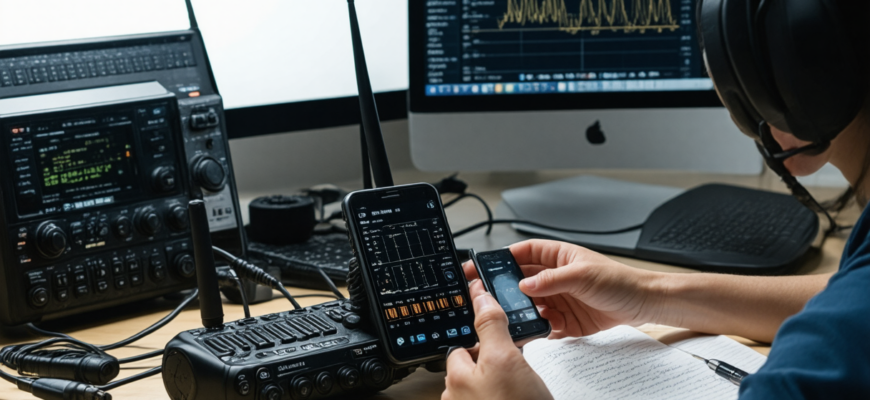
In the rapidly evolving world of amateur radio, staying connected and utilizing the most efficient tools is essential for enthusiasts and professionals alike. The proliferation of smartphones and portable devices has led to a surge in mobile radio applications and software designed specifically for amateur radio operators. These tools help with communication, logging, emergency preparedness, and even signal analysis, all from the convenience of a mobile device. This article offers a detailed, unbiased review of the latest mobile radio apps and software, exploring their features, usability, compatibility, and how they serve the needs of today’s radio amateurs.
- Why Mobile Radio Apps Are Transforming Amateur Radio
- Key Features to Consider in Mobile Radio Apps
- Top Mobile Radio Apps and Software for Amateur Radio Operators
- 1. Ham Radio Deluxe Mobile
- Overview and Features
- Pros and Cons
- 2. Zello PTT Walkie Talkie
- Overview and Features
- Pros and Cons
- 3. SDR Touch
- Overview and Features
- Pros and Cons
- 4. EchoLink
- Overview and Features
- Pros and Cons
- 5. Log4OM Mobile
- Overview and Features
- Pros and Cons
- Emerging Trends in Mobile Radio Software
- 1. Integration of AI and Signal Processing
- 2. Digital Mode Expansion
- 3. Use of Cloud Services
- Compatibility and Hardware Integration
- Choosing the Best Mobile Radio App for Your Needs
- Final Thoughts
Why Mobile Radio Apps Are Transforming Amateur Radio
Traditionally, amateur radio operators relied on bulky hardware and technical manuals to communicate across distances. With the advent of digital technology, software-defined radios (SDRs), and mobile app integrations, the landscape has shifted dramatically. Mobile radio apps provide multifunctional tools, from tuning and logging contacts to digital modes and real-time signal analysis. The convenience of having these features on a smartphone or tablet not only enhances operational flexibility but also opens new possibilities for emergency communications, contesting, and casual chatting.
Key Features to Consider in Mobile Radio Apps
Before delving into specific applications, it’s essential to understand the primary features that make a mobile radio app effective for amateur use:
- User Interface & Usability: Intuitive design and ease of navigation.
- Compatibility: Supports various radio models and digital modes.
- Digital Mode Support: PSK31, FT8, JT65, DMR, D-STAR, System Fusion, and more.
- Integration with Hardware: Connection with SDR receivers, transceivers, and external interfaces via Bluetooth, Wi-Fi, or USB.
- Logging Capabilities: Easy recording of contact details, QSL management, and contest logging.
- Signal Analysis Tools: Spectrum analyzers, waterfall displays, and noise reduction features.
- Offline Functionality: Ability to operate without internet connection when needed.
- Update and Support: Regular updates and active developer support.
Top Mobile Radio Apps and Software for Amateur Radio Operators
1. Ham Radio Deluxe Mobile
Overview and Features
Ham Radio Deluxe (HRD) is a well-known suite among amateur radio enthusiasts. Its mobile version brings digital mode support, logging, and control capabilities into a streamlined app designed for Android and iOS platforms. It works seamlessly with many radio transceivers, integrating with external hardware through Wi-Fi or Bluetooth.
- Supports multiple digital modes, including FT8, FT4, PSK31, and RTTY.
- Wireless control of transceivers.
- Advanced logging with QSL management and contest features.
- Real-time signal analysis with spectrum waterfall.
- Built-in contacts database.
Pros and Cons
- Excellent digital mode support and hardware control.
- Intuitive interface but may require initial setup assistance.
- Best suited for operators who already use Ham Radio Deluxe on PC.
2. Zello PTT Walkie Talkie
Overview and Features
Zello turns your smartphone into a real-time voice communication walkie-talkie, ideal for event coordination, emergency response, and casual use. Its push-to-talk (PTT) system offers instant communication akin to traditional radios.
- Instant voice transmission over the internet or cellular data.
- Channels for multiple groups.
- No setup required—just install and start talking.
- Supports offline messages and message queuing.
Pros and Cons
- Exceptional for team coordination and emergency communication.
- Dependent on internet connectivity.
- Not a traditional radio app but complements radio operations well.
3. SDR Touch
Overview and Features
Designed for SDR enthusiasts, SDR Touch provides real-time spectrum analysis, demodulation, and recording features on Android devices. It supports a variety of SDR hardware, making it a versatile tool for signal monitoring and experimentation.
- Supports most common SDR hardware, including Airspy, RTL-SDR, and SDRplay.
- Waterfall display and spectrum analysis tools.
- Multiple modes supported – AM, FM, SSB, CW, and digital modes.
- Recording and playback capabilities.
Pros and Cons
- Provides professional-level signal analysis.
- Requires compatible SDR hardware.
- High customization possible for advanced operators.
4. EchoLink
Overview and Features
EchoLink is a popular application that enables licensed amateurs to connect with other operators globally over the internet. It supports voice communication and integration with traditional radio repeaters.
- Global network of amateur radio stations.
- Supports audio, chat, and conference modes.
- Easy setup for existing EchoLink accounts.
- Offline logging and scheduling.
Pros and Cons
- Extends the reach of a local station globally.
- Requires license verification.
- Dependent on internet stability.
5. Log4OM Mobile
Overview and Features
Log4OM is a comprehensive logging software with a mobile extension that enables operators to log contacts on the go. It supports modern digital modes, contest logging, and QSL management.
- Synchronization with desktop versions.
- Customizable logs and reports.
- Supports DX clusters and real-time propagation data.
- QSL manager and award tracking.
Pros and Cons
- Seamless synchronization for desktop and mobile use.
- Ideal for contesters and DX hunters.
- Requires initial setup and configuration.
Emerging Trends in Mobile Radio Software
1. Integration of AI and Signal Processing
Artificial intelligence is increasingly integrated into radio apps for noise reduction, signal enhancement, and automatic mode recognition. Apps are now capable of helping users identify signals faster and operate more efficiently, especially amidst interference.
2. Digital Mode Expansion
With digital modes gaining popularity, apps are expanding their support for modes like FT8, JS8, and digital voice, enabling operators to operate remotely or on devices with limited hardware capabilities.
3. Use of Cloud Services
Cloud integration allows real-time backup, data sharing, and remote access to logs and configurations, making mobile operation more flexible than ever.
Compatibility and Hardware Integration
| App Name | Supported Hardware | Digital Modes | Platforms |
|---|---|---|---|
| Ham Radio Deluxe Mobile | Many transceivers, external interfaces | FT8, PSK31, RTTY, more | Android, iOS |
| SDR Touch | Airspy, RTL-SDR, SDRplay | AM, FM, SSB, CW, Digital | Android |
| EchoLink | All licensed transceivers via internet | Voice, chat | Android, iOS |
| Log4OM Mobile | None directly, cloud-based | All supported modes in desktop | Android, iOS |
Choosing the Best Mobile Radio App for Your Needs
When selecting a mobile radio application or software, key considerations should include device compatibility, operational needs (e.g., digital modes, logging, signal analysis), hardware support, and ease of use. Enthusiasts involved in contesting may prefer robust logging and contest tools, while those focused on digital modes might seek apps with extensive mode support and easy hardware integration.
Emerging technologies like AI-assisted signal processing and cloud-based data management are enhancing the capabilities of mobile apps, making amateur radio more accessible and efficient. The ever-expanding ecosystem of apps and software guarantees that amateur radio enthusiasts can remain connected, experiment, and operate with unprecedented convenience, regardless of their experience level.
Final Thoughts
The landscape of mobile radio applications continues to evolve rapidly, driven by technological innovations and a passionate user base. Staying informed about these tools enables operators to leverage the latest features and maintain effective communication, especially during emergency situations or remote operations. As the world becomes more interconnected through digital solutions, the integration of traditional radio with modern apps shapes the future of amateur radio into a more flexible, versatile, and exciting hobby.
By exploring the top apps discussed in this review, amateur radio enthusiasts can find tools tailored to their specific requirements, enhance their operating experience, and stay at the forefront of digital communication technology.
Похожие записи:
 Comprehensive Review of the Latest Transceiver Models on the Market: Innovations and Performance for Amateur Radio Enthusiasts
  Comprehensive Review of Radio Programming Software for Beginners
  Integrating Software-Defined Radio into Your Daily Operations: A Comprehensive Guide for Amateur Radio Enthusiasts
  Revolutionizing Communications: The Latest Software Updates Enhancing Digital Modes in Amateur Radio
  Latest Developments in Spectrum Licensing and Frequency Allocations: A Comprehensive Overview for Amateur Radio Enthusiasts
  Comprehensive Review of 3D Printing Solutions for Custom Radio Parts: Innovating Amateur Radio DIY Projects
  Top Choices for Budget-Friendly Amateur Radio Equipment: A Comprehensive Guide for Hobbyists
  Wireless Hotspot and Networking Devices for Remote Stations: Enhancing Connectivity for Amateur Radio Enthusiasts
  Portable Antenna Analyzers for Precise Tuning: The Ultimate Guide for Amateur Radio Enthusiasts
  Mastering Regulatory Changes: A Comprehensive Guide for Amateur Radio Enthusiasts
  Developing Effective Emergency Preparedness Plans with Ham Radio: A Comprehensive Guide for Amateur Radio Enthusiasts
  How to Build Your Own Homemade QRP Transceiver: A Comprehensive Guide for Amateur Radio Enthusiasts
  Top Microphone and Speaker Combos for Clear Audio: The Ultimate Guide for Amateur Radio Enthusiasts
  Enhancing CW Skills with Cutting-Edge Training Software: Your Path to Radio Success
  Top Accessories to Maximize Your Performance in Digital Mode Amateur Radio Operations
  Emergency Communication Protocols for Ham Radio Operators: The Latest Updates and Best Practices