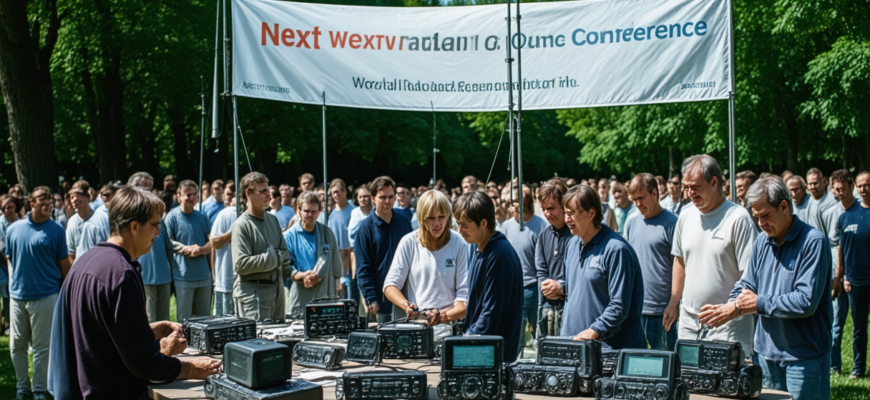
The world of amateur radio is constantly evolving, driven by technological advances, regulatory changes, and the passionate participation of enthusiasts worldwide. One of the most significant events in this community is the World Radio Conference (WRC), a global gathering that shapes the future of radio communications, sets international standards, and fosters collaboration among countries. As anticipation builds for the upcoming WRC, amateur radio operators and enthusiasts eagerly await the official announcement of its dates. This comprehensive article explores the importance of the WRC, the history behind it, how the dates are set, and what participants can expect from this pivotal event.
- Understanding the Significance of the World Radio Conference
- What Is the World Radio Conference?
- The Role of WRC in Amateur Radio
- A Brief History of the World Radio Conference
- Origins and Evolution
- Major Outcomes and Changes
- When and How Is the Next WRC Scheduled?
- Decision-Making Process for the Conference Dates
- Current Status and Official Announcement
- What to Expect from the Next World Radio Conference
- Key Topics and Agenda Items
- Important Dates for Participants
- How Amateur Radio Operators Can Prepare for WRC-27
- Stay Informed and Engage
- Participate in National and Regional Forums
- Advocate for the Preservation of Amateur Bands
- Technical and Strategic Considerations for the Future
- Emerging Technologies Impacting Future Conferences
- Mathematical Models and Spectrum Planning
- Marking the Calendar for WRC-27
- Additional Resources
Understanding the Significance of the World Radio Conference
What Is the World Radio Conference?
The World Radio Conference (WRC) is a triennial international gathering organized by the International Telecommunication Union (ITU), a specialized UN agency responsible for coordinating global radio spectrum and satellite orbital resources. The conference convenes representatives from ITU member states, industry stakeholders, and technical experts to discuss and revise the Radio Regulations—the international framework governing radio communication. Topics covered include spectrum allocation, technical standards, satellite communications, and emerging technologies.
The Role of WRC in Amateur Radio
While the WRC primarily addresses broad spectrum policy issues, its decisions have direct consequences for amateur radio operators worldwide. Adjustments in frequency allocations, emission standards, and operational procedures often stem from WRC outcomes. Consequently, amateur radio communities closely follow WRC agendas and proposals, participating in consultations and advocating for their interests through national regulatory agencies.
A Brief History of the World Radio Conference
Origins and Evolution
The first WRC took place in 1947, in London, marking the beginning of regular international discussions on radio regulation. Over the decades, the conference has evolved to accommodate rapid technological changes, spectrum demands, and geopolitical shifts. Notable conferences include WRC-97, which addressed digital broadcasting, and WRC-15, which covered IoT and 5G spectrum issues.
Major Outcomes and Changes
- Frequency reallocations: Adjustments that often impact amateur bands, such as 2-meter and 70-centimeter allocations.
- Introduction of new standards: For digital modes, satellite services, and broadband.
- Global cooperation frameworks: Ensuring equitable spectrum access and interference management.
When and How Is the Next WRC Scheduled?
Decision-Making Process for the Conference Dates
The scheduling of the WRC involves multiple stages monitored by the ITU. Typically, the process includes:
- Preliminary planning: ITU establishes the preliminary calendar and proposals.
- Member consultations: Countries and stakeholders submit proposals and feedback.
- Final approval: The Plenipotentiary Conference of the ITU adopts the official schedule, including dates and venues.
Current Status and Official Announcement
As of October 2023, the ITU has announced that WRC-27 will be held in 2027. The precise dates are typically finalized about two years before the event and are publicly disclosed through official ITU channels, including their website, press releases, and member communications. For WRC-27, the conference is scheduled to take place in Geneva, Switzerland, during the second half of 2027, most likely between August and October. This timeframe provides ample opportunity for global preparation and participation.
What to Expect from the Next World Radio Conference
Key Topics and Agenda Items
The agenda for each WRC is developed several years in advance, focusing on technologies and issues at the forefront of radio science. For WRC-27, expected major topics include:
- Expanding spectrum for 5G and beyond: Ensuring broadband access and IoT connectivity.
- Satellite communication: Allocations for non-geostationary satellites, small satellites, and mega-constellations.
- Digital broadcasting transition: Spectrum management for digital TV and radio services.
- Protection of amateur radio bands: Safeguarding the interests and operational rights of amateurs.
- Emerging wireless technologies: Addressing the needs of drones, autonomous vehicles, and wireless power transfer.
Important Dates for Participants
While the official dates are yet to be announced, amateur radio clubs, associations, and enthusiasts should keep track of the following milestones:
- Call for proposals: Usually issued at least 3-4 years before the conference.
- Preparation period: Includes research, advocacy, and submission of contributions, spanning roughly 2-3 years prior to the event.
- Pre-registration: Opens approximately 1-2 years in advance for participants to reserve their attendance and prepare documentation.
- Official conference dates: The confirmed days when the conference opens and closes, expected in late 2027.
How Amateur Radio Operators Can Prepare for WRC-27
Stay Informed and Engage
The first step for amateur radio enthusiasts is staying updated through the official ITU website and industry news outlets. Participation in national regulatory consultations and submitting comments or proposals ensures that the amateur community’s voice is heard. Organizations such as the IARU (International Amateur Radio Union) play a vital role in representing amateur interests at the global level.
Participate in National and Regional Forums
Many countries hold consultations and workshops related to spectrum management and amateur radio regulations. Engaging in these events provides valuable insights into upcoming changes and opportunities to influence policy. Additionally, amateur radio clubs often organize seminars on WRC topics, fostering community knowledge and advocacy skills.
Advocate for the Preservation of Amateur Bands
One of the critical concerns as spectrum demands grow is protecting operating rights for amateur radio operators. By collaborating with national regulators and demonstrating the scientific and educational value of amateur radio, communities can help safeguard their bands and operational privileges during the difficult negotiation processes at the WRC.
Technical and Strategic Considerations for the Future
Emerging Technologies Impacting Future Conferences
As technology continues to advance, new challenges and opportunities will arise. For example, the proliferation of satellite constellations for global internet coverage presents spectrum management dilemmas. Similarly, developments in cognitive radio and dynamic spectrum access could reshape how frequencies are allocated and regulated.
Mathematical Models and Spectrum Planning
Effective spectrum management involves complex calculations and models. Some fundamental formulas used in spectrum planning include:
| Type of Calculation | Purpose |
|---|---|
| Maximum Power Density | [ P_{max} = frac{E_{max}^2}{Z} ] where ( P_{max} ) is the maximum power density, ( E_{max} ) is the maximum electric field strength allowed, and ( Z ) is the characteristic impedance of free space (approximately 377 ohms). |
| Guard Band Calculation | [ B_g = B_{total} – (B_{primary} + B_{secondary}) ] where ( B_g ) is the guard band, ( B_{total} ) is the total bandwidth allocated, and ( B_{primary}, B_{secondary} ) are the bandwidths of adjacent channels. |
| Spectrum Efficiency | [ eta = frac{text{Data throughput (bps)}}{text{Bandwidth (Hz)}} ] This formula measures how effectively a given bandwidth is used for data transmission. |
Marking the Calendar for WRC-27
The announcement of the dates for the upcoming World Radio Conference is a pivotal moment for the global amateur radio community. This event not only influences international spectrum policies but also impacts the operational freedoms and technological development within the hobby. By staying informed, active, and engaged, amateur radio enthusiasts can ensure that their voices are heard during critical negotiations and that their interests are protected in the evolving landscape of wireless communication.
As WRC-27 approaches, make sure to regularly consult official sources such as the ITU website and join your national amateur radio organizations. Prepare to participate in the discussions, contribute to proposals, and be part of shaping the future of radio communication for generations to come. The next conference promises to be a milestone—mark your calendar and get ready for active involvement!
Additional Resources
- ITU World Radio Conference Official Page
- International Amateur Radio Union (IARU)
- American Radio Relay League (ARRL)
- Local amateur radio clubs and national regulatory agencies
Stay tuned for updates on the WRC-27 schedule, agenda items, and how to participate. The future of amateur radio depends on an informed and proactive community eager to adapt and innovate in the face of new challenges and opportunities.
Похожие записи:
 Latest Developments in Spectrum Licensing and Frequency Allocations: A Comprehensive Overview for Amateur Radio Enthusiasts
  New Dxpedition Dates for the Summer Announced: What Amateur Radio Enthusiasts Need to Know
  Official Announcement for the International QRP Sprint: Everything You Need to Know
  Memories of a Radio Swap Meet Day: A Nostalgic Journey into the World of Ham Radio
  Understanding Ham Radio Frequencies and Bands: A Comprehensive Guide for Amateur Radio Enthusiasts
  Join the Virtual Contest Workshops This Weekend: Your Ultimate Guide for Amateur Radio Enthusiasts
  License Upgrade Seminar Announced for Beginner Operators: Your Path to Advanced Amateur Radio Certification
  Comprehensive Review of the Latest Mobile Radio Apps and Software for Amateur Enthusiasts
  Mastering Regulatory Changes: A Comprehensive Guide for Amateur Radio Enthusiasts
  Join the Upcoming Online Ham Radio Lecture Series: Your Comprehensive Guide to Amateur Radio Mastery
  Exclusive Awards and Recognitions for the Annual Digital Communications Contest: Celebrating Excellence in Amateur Radio
  Portable Spectrum Analyzers for Field Frequency Testing: A Complete Guide for Amateur Radio Enthusiasts
  Getting Started with Digital Modes like FT8 and PSK31: A Complete Guide for Amateur Radio Enthusiasts
  Wireless Hotspot and Networking Devices for Remote Stations: Enhancing Connectivity for Amateur Radio Enthusiasts
  Integrating Software-Defined Radio into Your Daily Operations: A Comprehensive Guide for Amateur Radio Enthusiasts
  Understanding Your Radio’s Firmware and How to Update It: A Comprehensive Guide for Amateur Radio Enthusiasts