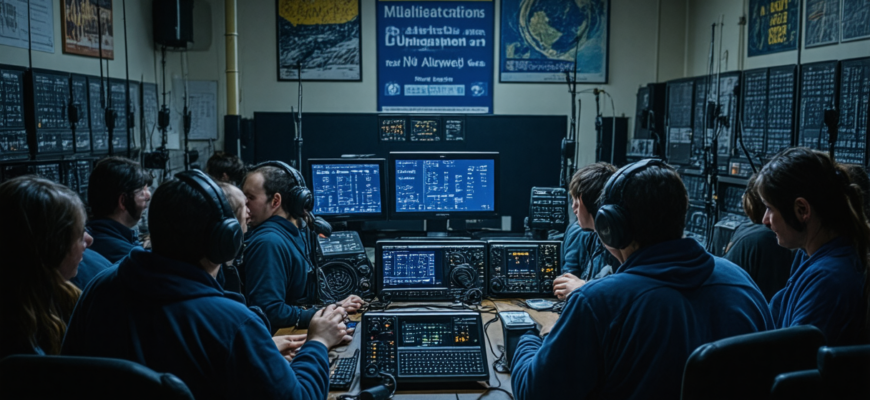
Amateur radio enthusiasts worldwide are always in pursuit of new ways to challenge their skills, expand their experience, and foster camaraderie within the community. Major contests serve as prime opportunities for operators to showcase their technical prowess, operating efficiency, and radio knowledge. Recently, a significant update has been announced that could dramatically impact how the contest is participated in: the new allowance of multistation operations in the upcoming national contest. This article delves into the details of this development, explores its implications, and provides comprehensive guidance for participating operators.
- Understanding the Basics: What Is a Multistation Operation?
- Definition and Context
- Why Are Multistation Operations Significant?
- Historical Overview: Rules and Restrictions in Past Contests
- Pre-2023 Guidelines
- Exceptions and Special Cases
- The New Rule Changes: Permitting Multistation Operations
- Official Announcements and Contests Affected
- Key Details of the New Regulations
- Implications for Amateur Radio Operators
- Opportunities Presented by Multistation Operation
- Challenges and Considerations
- Technical Guidelines for Multistation Operations
- Station Setup and Configuration
- Operational Strategies
- Step-by-Step Guide: Preparing for Multistation Participation
- Step 1: Assemble a Competent Team
- Step 2: Technical Setup and Testing
- Step 3: Planning the Operating Strategy
- Step 4: Legal Compliance and Documentation
- Step 5: Active Contest Participation
- Impact on Contest Scoring and Categories
- Scoring System and Multistation Operations
- Category Selection and Entry Types
- Best Practices and Tips for Success
- Future Perspectives: How Multistation Operations Will Influence Amateur Radio Contests
- Increased Competition and Innovation
- Broader Participation and Community Building
- Technical Advancements
- References and Further Reading
Understanding the Basics: What Is a Multistation Operation?
Definition and Context
A multistation operation in amateur radio refers to a setup where multiple transceivers, receivers, or stations are operated simultaneously, often connected to a central logging system. This configuration allows operators to cover multiple bands and modes more efficiently, significantly enhancing their ability to contact more stations within the contest period. Prior to recent rule changes, many contests limited or restricted the use of multistation setups to promote fairness and equal opportunity among competitors. However, the new directives are set to redefine these boundaries.
Why Are Multistation Operations Significant?
- Increased Contact Rates: Multiple stations operating simultaneously can quadruple or even multiply contact rates, directly affecting overall scores.
- Enhanced Coverage: Multiple bands and modes can be leveraged concurrently, increasing the chances to log unique and rare stations.
- Operational Efficiency: Properly coordinated multistation setups reduce downtime and optimize use of contest time.
Historical Overview: Rules and Restrictions in Past Contests
Pre-2023 Guidelines
Historically, most national and international amateur radio contests imposed strict rules against multistation operation. These regulations aimed to level the playing field, ensuring individual operators or single-station teams competed on equal footing. Violations often resulted in penalties or disqualification.
Exceptions and Special Cases
Some contests, often at regional levels, permitted multistation operation under specific conditions, or in dedicated categories designed to encourage teamwork and technical innovation. Still, these were exceptions rather than the rule, and many operators viewed them as niche opportunities.
The New Rule Changes: Permitting Multistation Operations
Official Announcements and Contests Affected
In recent regulatory updates, the governing body of the national amateur radio contest has announced that multistation operation will be formally permitted starting from the upcoming contest cycle. This change applies to specific categories, such as the multi-operator, multi-transmitter (M/MT) class, and is designed to foster more dynamic and competitive event participation.
Key Details of the New Regulations
| Aspect | Previous Policy | Current Policy |
|---|---|---|
| Number of stations allowed | Single station / Single operator | Multiple stations / Transmitters allowed, under category-specific rules |
| Category types affected | Single operator, portable, or single-station | Multi-operator, multi-transmitter |
| Operating constraints | No simultaneous operation across multiple radios | Allowed with proper coordination and adherence to contest rules |
| Penalties for violations | Disqualification or penalties for unauthorized multistation operation | Same as previous, but with clear guidelines and verification options |
Implications for Amateur Radio Operators
Opportunities Presented by Multistation Operation
The allowance opens up numerous possibilities for both seasoned contesters and newcomers. Operators can now:
- Form teams to operate cooperatively with dedicated stations handling different bands or modes
- Improve overall contest scores by maximizing contact rates across multiple frequencies
- Engage in more intricate and strategic contest strategies, such as band hopping and coordinated logging
- Cultivate learning of station management, contest logging software, and team coordination
Challenges and Considerations
While exciting, multistation operation introduces new complexities. Operators must carefully consider:
- Logistics and Coordination: Synchronizing multiple stations requires meticulous planning and communication.
- Technical Setup: Ensuring that all equipment and antennas are properly configured to avoid interference and ensure compliance.
- Legal and Regulatory Compliance: Adhering strictly to contest rules to avoid penalties.
- Fair Play: Maintaining transparency and sportsmanship to uphold the integrity of the contest.
Technical Guidelines for Multistation Operations
Station Setup and Configuration
To effectively participate in a multistation operation, operators should consider the following technical aspects:
- Networking: Use of reliable LAN, Wi-Fi, or internet links for communication between stations.
- Synchronization: Employing contest logging software capable of integrating logs from multiple stations in real-time.
- Frequency Management: Coordinating band usage to prevent interference between stations.
- Antenna Placement: Strategic antenna setup to minimize mutual interference and optimize signal quality.
Operational Strategies
Success in multistation contests often hinges on effective operational plans:
- Division of Roles: Assign specific bands or modes to each station to maximize coverage.
- Communication Protocols: Establish clear communication channels, including designated callsigns or signals for coordination.
- Logging Methodology: Use specialized contest logging software supporting multiple stations, such as N1MM+, Logger32, or equivalent.
- Total Time Management: Balance between aggressive contesting and maintaining station health and reliability.
Step-by-Step Guide: Preparing for Multistation Participation
Step 1: Assemble a Competent Team
Successful multistation operations require a dedicated team with clear roles, including station operators, technical support, and log coordinators. Prioritize experience, teamwork, and familiarity with contest rules.
Step 2: Technical Setup and Testing
Ensure all equipment is compatible and thoroughly tested before the contest. Conduct trial runs to identify and resolve potential issues such as interference, logging errors, or connectivity problems.
Step 3: Planning the Operating Strategy
Develop a detailed operating plan covering:
- Frequency and mode allocations
- Team communication protocols
- Break periods and station rotations
- Backup plans for technical failures
Step 4: Legal Compliance and Documentation
Review the contest rules to confirm adherence, document station setups, and prepare necessary paperwork or logs for submission.
Step 5: Active Contest Participation
During the contest, coordinate seamlessly, keep logs updated accurately, and adjust strategies based on real-time conditions.
Impact on Contest Scoring and Categories
Scoring System and Multistation Operations
The scoring system in amateur radio contests typically awards points based on contacts and multiplier factors such as unique stations, bands, or modes. Multistation operation can lead to higher contact counts, but the contest rules specify how these are weighted and scored. Usually, categories such as M/MT are designed explicitly for multistation entries, often with separate scoring or bonus opportunities.
Category Selection and Entry Types
- Single-Operator: No multistation allowed.
- Multi-Operator, Single Transmitter (M/IT): Multiple operators operate a single station.
- Multi-Operator, Multi-Transmitter (M/MT): Multistation operation permitted and encouraged.
Best Practices and Tips for Success
- Pre-Contest Planning: Develop clear operational plans, test equipment, and review rules thoroughly.
- Effective Communication: Use dedicated channels such as VoIP or radio liaison to coordinate in real-time.
- Maintain Flexibility: Be ready to adapt based on real-time conditions such as band congestion or technical issues.
- Post-Contest Review: Analyze logs, evaluate strategies, and identify areas for improvement.
Future Perspectives: How Multistation Operations Will Influence Amateur Radio Contests
Increased Competition and Innovation
Allowing multistation operation is poised to elevate the competitive spirit among amateur radio enthusiasts. Teams can push the boundaries of their technical skills and operational efficiency, fostering innovation in station design, logging, and signal management.
Broader Participation and Community Building
By providing opportunities for team-based operations, the contest encourages collaboration across different groups, clubs, or regions. This can lead to a more inclusive and dynamic contest environment.
Technical Advancements
The need for sophisticated networking, logging, and interference mitigation promotes technological development and knowledge sharing within the amateur radio community.
The recent decision to permit multistation operations in the upcoming national amateur radio contest marks a significant evolution in the competitive landscape. While it brings exciting opportunities for higher scores, team collaboration, and technological innovation, it also necessitates careful planning, strict adherence to rules, and dedicated effort. As seasoned operators and new entrants embrace this new era, the contest promises to become more dynamic, engaging, and rewarding for all participants. Embracing the challenge of multistation operation will undoubtedly lead to memorable experiences and even greater achievements within the vibrant world of amateur radio.
References and Further Reading
- ARRL Contest Rules
- Contest Strategy and Best Practices
- N1MM+ Contest Logger Software
- Ham Radio Resources and Community
For further updates and detailed guidelines, regularly consult the official contest announcements and the governing body’s publications.
Похожие записи:
 Exciting New Local Contest Series Launching Next Month for Amateur Radio Enthusiasts
  New Contest Rules Published for the Fall QSO Party: What Ham Radio Operators Need to Know
  Join the Virtual Contest Workshops This Weekend: Your Ultimate Guide for Amateur Radio Enthusiasts
  Get Ready for the Upcoming 10 Meter Contest: The Ultimate Guide for Amateur Radio Enthusiasts
  New Contest Logging Software Launch Event Scheduled: The Future of Amateur Radio Competition Management
  Sharing My Experience at a National Ham Convention: Insights, Tips, and Highlights
  Exclusive Awards and Recognitions for the Annual Digital Communications Contest: Celebrating Excellence in Amateur Radio
  Integrating Software-Defined Radio into Your Daily Operations: A Comprehensive Guide for Amateur Radio Enthusiasts
  The Day I Helped Set Up a Remote Station for a Contest
  Lessons Learned from a Tough QSL Card Exchange: Enhancing Your Ham Radio Operations
  Top Accessories to Maximize Your Performance in Digital Mode Amateur Radio Operations
  Exciting News: Complete Results of the Recent SSB Fun Run Announced
  Build Your Own Portable Solar Power Setup for Radio Operations: A Comprehensive Guide
  Mastering Emergency Operations: Essential Tips for Responsible Amateur Radio Communication
  Official Announcement for the International QRP Sprint: Everything You Need to Know
  Award Ceremony Celebrates Last Quarter’s Top Contestant: Recognizing Excellence in Amateur Radio