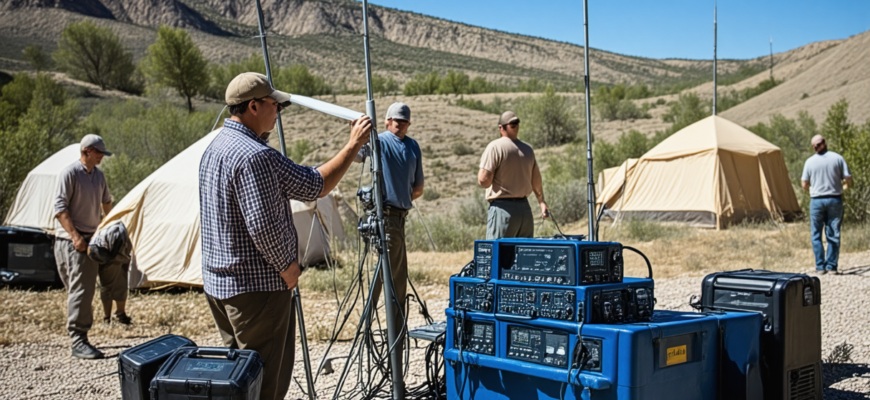
Participating in amateur radio contests has always been an exhilarating experience, blending technical skills with the thrill of communication and competition. But the logistical side of such events can often be complex, especially when setting up remote stations in challenging locations or under tight time constraints. This article chronicles a detailed account of a memorable day spent assisting in the installation and configuration of a remote radio station specifically for a major contest. From initial preparations to final testing, this narrative dives deep into the technical intricacies, challenges encountered, and the ultimate satisfaction of contributing to a successful contest operation.
- Introduction to Remote Station Operation in Amateur Radio
- Preparations Before the Setup
- Assessing the Location and Requirements
- Hardware Components
- Software and Network Infrastructure
- The Setup Day: Step-by-Step Process
- Morning: Initial Equipment Delivery and Setup
- Midday: Hardware Configuration and Network Setup
- Afternoon: Software Integration and Testing
- Challenges Faced and Solutions Implemented
- Challenge 1: Ensuring Stable Internet Connectivity
- Challenge 2: Managing Antenna Controls Remotely
- Challenge 3: Power Reliability
- Final Testing and Operational Readiness
- Operating the Remote Station During the Contest
- Post-Contest Evaluation and Lessons Learned
- The Significance of Remote Station Setup in Amateur Radio Contests
- Additional Resources and References
- Final Thoughts
Introduction to Remote Station Operation in Amateur Radio
Remote station operation has revolutionized the way amateur radio operators participate in contests and DX endeavors. By leveraging internet connectivity and sophisticated radio control software, operators can manage their stations from virtually anywhere in the world. This approach offers flexibility, access to high-power antennas in optimal locations, and the ability to operate during unfavorable weather or personal constraints.
However, setting up a remote station involves meticulous planning, technical expertise, and understanding of both radio hardware and network infrastructure. It demands a seamless integration of hardware components, software platforms, and reliable internet connectivity to ensure smooth operation during critical contest hours.
Preparations Before the Setup
Assessing the Location and Requirements
The first step involved scouting the ideal location for setting up the remote station. Factors considered included:
- Proximity to reliable power sources
- Availability of high-speed internet connectivity
- Accessibility for equipment transport
- Minimal electromagnetic interference (EMI)
Based on these criteria, a remote site situated in a rural area with fiber-optic internet and stable electricity was selected. The goal was to establish a station capable of handling high traffic during the contest, with robust hardware and contingency measures.
Hardware Components
The core hardware for the remote station included:
- Radio Transceiver: A high-performance HF transceiver compatible with remote control software, such as the ICOM IC-7300
- Antennas: Multi-band antennas including a dipole array and verticals to cover various contest bands
- Computer System: A dedicated server-grade PC with high-speed internet interface and control software
- Remote Control Interfaces: CAT control interfaces, GPIO connectors for antenna switching, and remote power switching devices
- Power Supply: Uninterruptible Power Supplies (UPS) and backup generators for redundancy
- Network Equipment: Secure Wi-Fi extenders and Ethernet switches to ensure stable connectivity
Software and Network Infrastructure
- Remote control software such as Ham Radio Control or VSPE (Virtual Serial Port Emulator)
- Logging and contest software like N1MM++, configured for remote operation
- VPN setup for secure remote access to the station network
- Monitoring tools for server health, internet connectivity, and hardware status
The Setup Day: Step-by-Step Process
Morning: Initial Equipment Delivery and Setup
Bright and early, the technical team arrived at the remote site with all the equipment meticulously packed and organized. The first hours were dedicated to physically installing the antennas, running necessary cables, and configuring the power supply infrastructure. To ensure safety and compliance with local regulations, all wiring was double-checked, and proper grounding was established for the antennas and equipment racks.
Antennas were installed on reinforced masts with guy wires for stability. Multi-band elements were aligned for optimal performance. The high-grade coaxial cables were routed through weatherproof conduits to protect against environmental factors. Meanwhile, the computer system and network hardware were housed in a weather-resistant shelter for durability.
Midday: Hardware Configuration and Network Setup
Once the physical setup was complete, attention shifted to configuring the radio transceiver. The transceiver was connected via CAT control interface to the computer system. Proper COM port configurations, baud rates, and control parameters were set following manufacturer’s guidelines.
Next, the internet connection was tested. In this case, fiber-optic broadband provided ample bandwidth with low latency, essential for real-time control. The network devices were configured to prioritize station traffic and prevent disconnections during the contest. VPN access was established with strong encryption to safeguard the station against unauthorized intrusion.
Afternoon: Software Integration and Testing
In the afternoon, all software was installed and integrated. The remote control software was linked to the transceiver, enabling operators to manipulate radio functions remotely—such as frequency tuning, mode switching, and power adjustments. The logging software, N1MM++, was configured for remote operation, with all contest rules and exchange formats pre-set.
Extensive testing was performed to verify remote connectivity, control responsiveness, and hardware stability. Simulated QSOs (contacts) were conducted to ensure the entire system operated flawlessly. Troubleshooting included adjusting antenna tuning using antenna analyzers, optimizing network settings, and calibrating control software parameters.
Challenges Faced and Solutions Implemented
Challenge 1: Ensuring Stable Internet Connectivity
While fiber optics generally ensure reliable internet, occasional interruptions due to maintenance or technical issues can occur. To mitigate this, a dual connection setup was implemented—backup LTE mobile internet was kept inactive but ready to switch over automatically if the primary line failed. Software watchdogs monitored connection health and triggered failovers seamlessly.
Challenge 2: Managing Antenna Controls Remotely
Remote antenna switching and tuning are critical during contests. To prevent misoperation, the control system included limit switches, error detection algorithms, and manual override options. Additionally, operator training sessions ensured familiarity with emergency procedures.
Challenge 3: Power Reliability
Power stability is vital during high-stakes activity. UPS units with sufficient capacity were deployed, along with a backup generator. Automatic transfer switches ensured uninterrupted operation during power outages.
Final Testing and Operational Readiness
As evening approached, final system checks confirmed all hardware and software components worked harmoniously. The station was now ready for live contest operation. A mock contest session was held to simulate real-time activities, verify response times, and refine procedures. The team documented troubleshooting steps and best practices to streamline the real event.
Operating the Remote Station During the Contest
During the contest, operators accessed the station via secure VPN from their respective locations. The control software provided a virtual console to adjust frequencies, switch modes, and manage antenna direction if necessary. Contest software automatically logged contacts and updated scoreboards. The setup allowed for efficient, high-volume contact rates while maintaining station safety and hardware longevity.
Post-Contest Evaluation and Lessons Learned
After the event, a thorough debrief was conducted. Key points included:
- The importance of redundant internet connections and real-time monitoring
- The value of pre-contest rehearsals to identify unforeseen issues
- Effective hardware and software integration minimizes operational stress
- Maintaining detailed documentation accelerates troubleshooting and training
Feedback from operators highlighted the durability of the hardware setup and ease of remote operation thanks to intuitive software interfaces. Some areas for improvement included fine-tuning antenna control algorithms and enhancing backup power solutions.
The Significance of Remote Station Setup in Amateur Radio Contests
The successful setup and operation of a remote station for an amateur radio contest exemplify the synergy between technical expertise, meticulous planning, and operational discipline. It opens new horizons for operators, allowing participation regardless of geographical or personal constraints. Moreover, it fosters innovation within the amateur radio community, encouraging the development of sophisticated control systems, reliable network solutions, and resilient hardware configurations.
From the initial assessment and hardware installation to live operation and post-event analysis, each phase underscores the importance of preparedness, adaptability, and continuous learning. For enthusiastic amateurs eager to push the boundaries of their station capabilities, mastering remote station setup offers a rewarding challenge and a gateway to new communication horizons.
Additional Resources and References
| Resource | Description |
|---|---|
| ARRL Webinars | Technical webinars covering remote station operation and contesting strategies |
| Ham Radio Software Forums | Community discussions on software tools like N1MM++, HamRadioDeluxe, and control interfaces |
| Manufacturer Manuals | Detailed guides for antennas, transceivers, and control hardware |
| ARRL Antenna Handbook | Comprehensive resource on antenna design and installation |
| Remote Station Kits | Preconfigured hardware packages and DIY solutions for remote operations |
Final Thoughts
Setting up a remote station for amateur radio contests is a complex but highly rewarding endeavor. It demands a blend of technical knowledge, careful planning, and problem-solving skills. As technology advances, remote operations will continue to evolve, making contests more accessible and engaging for operators worldwide. Embracing these innovations not only elevates individual experience but also enriches the collective spirit of the amateur radio community.
Похожие записи:
 Ultimate Guide: Best Practices for Setting Up a Remote Radio Station Accessible Worldwide
  Wireless Hotspot and Networking Devices for Remote Stations: Enhancing Connectivity for Amateur Radio Enthusiasts
  The Time My Portable Station Surprised Everyone: A Spectacular Moment in Amateur Radio
  How a Lost Radio Helped Reconnect a Community: The Power of Amateur Radio
  Ultimate Guide to Upgrading Your Amateur Radio Station with New Gear: Top Tips and Strategies
  Building a Portable Ham Radio Station for Outdoor Expeditions: The Ultimate Guide
  Ultimate Guide: Tips for Setting Up Your Home Radio Station
  Integrating Internet-Linked Repeater Systems with Traditional Ham Gear: A Comprehensive Guide
  Comprehensive Review of the Latest Mobile Radio Apps and Software for Amateur Enthusiasts
  How to Use Repeater Networks for Better Coverage: A Complete Guide for Amateur Radio Enthusiasts
  Using APRS for Real-Time Location Tracking and Messaging
  Top Accessories to Maximize Your Performance in Digital Mode Amateur Radio Operations
  Harnessing Your Smartphone as a Radio Control and Logging Device: A Comprehensive Guide for Amateur Radio Enthusiasts
  Celebrating a Milestone with My Radio Club: A Journey of Achievement and Community Spirit
  Effective Tips for Organizing Successful Ham Radio Contests: A Comprehensive Guide
  The Future of Amateur Radio with Emerging Technologies