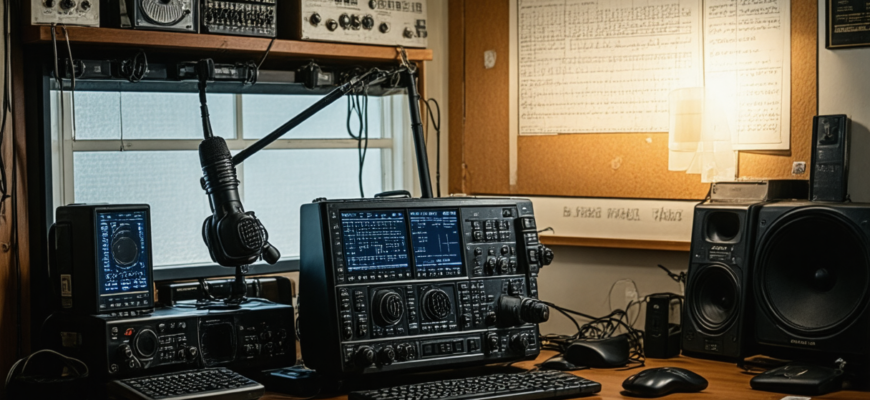
Establishing a home radio station is a rewarding pursuit for amateur radio enthusiasts. Whether you’re a seasoned hobbyist or just beginning your journey into the world of radio communications, setting up an efficient and functional station is essential for successful operations. This comprehensive guide provides practical tips, technical insights, and best practices to help you design and assemble your personal radio station at home.
- Understanding the Basics of a Home Radio Station
- Step-by-Step Guide to Setting Up Your Home Radio Station
- 1. Selecting the Right Location
- 2. Planning the Station Layout
- 3. Choosing and Installing the Antenna
- Factors to Consider When Selecting an Antenna
- Common Types of Antennas
- 4. Proper Grounding and Electrical Safety
- 5. Setting Up the Transceiver and Accessories
- 6. Optimizing Signal Transmission and Reception
- 7. Legal and Regulatory Considerations
- Technical Calculations and Formulas for Home Station Design
- Feed Line Loss Calculation
- Antenna Impedance Matching (SWR Calculation)
- Tools and Accessories to Enhance Your Home Radio Station
- Maintenance and Upgrades
Understanding the Basics of a Home Radio Station
Before diving into the technical details, it is crucial to understand what constitutes a home radio station. Essentially, it comprises several key components:
- Transceiver: The core device that transmits and receives radio signals.
- Power Supply: Converts mains power into appropriate voltage and current for station equipment.
- Antenna: Facilitates the transmission and reception of radio waves.
- Accessories and Cables: Include microphones, keyers, grounding wiring, and coaxial cables.
- Operating Desk/Space: A dedicated area for equipment placement and operation.
Designing an efficient setup involves careful consideration of each component to ensure optimal performance, safety, and comfort.
Step-by-Step Guide to Setting Up Your Home Radio Station
1. Selecting the Right Location
The first critical step is choosing a suitable space within your home. Factors to consider include:
- Electrical Safety and Reliability: Ensure the location has a stable power supply with proper grounding.
- Minimizing Interference: Keep the station away from sources of electromagnetic interference (EMI) such as microwave ovens, wireless routers, or fluorescent lighting.
- Accessibility and Comfort: A space that allows comfortable long-term operation, with adequate lighting and ventilation.
- Vibration and Noise: Avoid areas with high foot traffic or vibrations that could affect sensitive equipment.
2. Planning the Station Layout
Creating an organized layout enhances operational efficiency. Consider the following layout principles:
- Equipment Placement: Place the transceiver at eye level for easy operation, with accessories within arm’s reach.
- Electrical Outlets: Install sufficient outlets with surge protection and grounding.
- Cooling and Ventilation: Ensure adequate airflow to prevent overheating, especially if operating high-power transmitters.
- Work Surface: Use a sturdy desk or table that can accommodate all equipment and leave space for easy wiring and adjustments.
3. Choosing and Installing the Antenna
Antennas are a vital part of a successful station, and their selection depends on your operating goals, available space, and frequency bands.
Factors to Consider When Selecting an Antenna
- Frequency Band: Match the antenna to the bands you intend to operate on.
- Radiation Pattern: Determine whether a directional or omnidirectional antenna best suits your needs.
- Space Constraints: Vertical antennas require less space; wire antennas may need more room.
- Installation Height: Higher installations generally improve signal propagation.
Common Types of Antennas
- Dipole Antenna: Popular, easy to construct, suitable for various bands.
- Vertical Antenna: Good for general coverage, ideal for limited spaces.
- Yagi-Uda Antenna: Highly directional, best for long-distance communication.
- HF Wire Antennas: Such as Tännen antennas for shortwave bands.
4. Proper Grounding and Electrical Safety
Proper grounding is critical for safety, interference mitigation, and equipment protection. Implement the following best practices:
- Grounding Rods: Install a grounding rod driven into the earth and connect all equipment grounds to it.
- Lightning Protection: Use surge protectors and lightning arrestors for all external antennas and power lines.
- Insulation and Cabling: Utilize high-quality coaxial cable with proper connectors, and ensure all wiring is insulated and organized.
5. Setting Up the Transceiver and Accessories
Selecting the right transceiver depends on your operating goals, budget, and familiarity with radio equipment. Consider the following tips:
- Makes and Models: Popular brands include Yaesu, Icom, Kenwood, and Elecraft. Research suitable models for your needs.
- Microphones and Keyers: Choose high-quality microphones for voice communication and keyers or paddles for CW.
- Interfacing: Ensure compatibility with your computer for digital modes and logging software.
- Software Defined Radio (SDR): Consider SDR options for more versatile and flexible operation.
6. Optimizing Signal Transmission and Reception
To improve signal quality, apply the following techniques:
- Use Adequate Coaxial Cables: Losses can be minimized with high-quality, low-loss cables.
- Implement Proper Antenna Tuning: Match antenna impedance with the transmitter for efficient power transfer.
- Maintain Clear Line of Sight: Keep antenna cables organized and avoid unnecessary bends or kinks.
- Use Filters and Attenuators: Reduce interference and over-power situations.
7. Legal and Regulatory Considerations
Ensure compliance with local regulations regarding frequencies, power levels, licensing, and safety. Important points include:
- Licensing: Obtain the necessary amateur radio license from the regulatory authorities.
- Operating Restrictions: Adhere to prescribed frequency bands and power output limits.
- Identification: Always identify transmissions according to local regulations.
- Record Keeping: Maintain logs of contacts and station activity.
Technical Calculations and Formulas for Home Station Design
Feed Line Loss Calculation
The loss in coaxial cable can be estimated using:
Loss (dB) = attenuation per meter × length of cable (meters)
Example: For a 10-meter run of coax with 0.15 dB/m attenuation:
| Parameter | Value |
|---|---|
| Attenuation per meter | 0.15 dB/m |
| Length of cable | 10 m |
| Total loss | 0.15 × 10 = 1.5 dB |
Antenna Impedance Matching (SWR Calculation)
The Standing Wave Ratio (SWR) indicates mismatch between transmitter and antenna. It can be calculated as:
SWR = (1 + |Γ|) / (1 - |Γ|)
where Γ (reflection coefficient) is given by:
Γ = (ZL - Z0) / (ZL + Z0)
– ZL: Antenna impedance
– Z0: Characteristic impedance of coax (usually 50Ω)
For optimal power transfer, SWR should be close to 1:1.
Tools and Accessories to Enhance Your Home Radio Station
| Tool/Accessory | Description | Benefits |
|---|---|---|
| SWR Meter | Measures Standing Wave Ratio | Ensures proper antenna tuning |
| RF Adapter Kit | Various adapters for different connectors | Facilitates connections between equipment |
| Coaxial Cable Tester | Checks cable continuity and impedance | Prevents installation problems |
| Power Supply with Regulation | Provides stable voltage and current | Protects equipment from power surges |
| Grounding Kit | Includes grounding rods, wires, clamps | Enhances safety and reduces interference |
Maintenance and Upgrades
Maintaining your home radio station involves regular inspections, cleaning, and updates. Keep all connections tight and free of corrosion, verify antenna conditions, and update software and firmware for digital equipment. As your skills grow, consider upgrading components like antennas, transceivers, and antennas to expand operational capabilities.
Setting up a home radio station is a rewarding project that combines technical knowledge, planning, and hands-on work. By following systematic steps—selecting the proper location, planning the layout, choosing quality equipment, ensuring safety, and optimizing signal transmission—radio amateurs can create a highly effective station tailored to their needs. Continuous learning, adherence to legal requirements, and regular maintenance will ensure long-term success and enjoyment of the amateur radio hobby.
Embark on your radio journey with confidence, knowing that a well-designed station can open doors to diverse communication opportunities and enriching contacts around the world.
Похожие записи:
 Ultimate Guide: Best Practices for Setting Up a Remote Radio Station Accessible Worldwide
  Ultimate Guide to Upgrading Your Amateur Radio Station with New Gear: Top Tips and Strategies
  Building a Portable Ham Radio Station for Outdoor Expeditions: The Ultimate Guide
  Building a Simple, Low-Cost Antenna Tuner at Home: A Comprehensive Guide for Amateur Radio Enthusiasts
  Ultimate Guide to Lightning Protection Gear for Your Radio Setup
  Effective Tips for Organizing Successful Ham Radio Contests: A Comprehensive Guide
  How to Choose Your First Amateur Radio Transceiver: Essential Tips for Beginners
  Ultimate Guide to the Best Connectors and Adapters for RF Systems
  Ultimate Guide: Best Practices for Maintaining and Extending the Lifespan of Your Radio Equipment
  Portable Antenna Analyzers for Precise Tuning: The Ultimate Guide for Amateur Radio Enthusiasts
  Essential Tools for Cable and Connection Maintenance: A Complete Guide for Amateur Radio Enthusiasts
  Mastering DXing: Expert Tips for Contacting Rare Amateur Radio Stations
  Top Weather-Resistant Microphones for Outdoor Use: The Ultimate Guide for Amateur Radio Enthusiasts
  Top-Rated HF Transceivers for Experienced Operators: The Ultimate Guide
  Rugged Radios for Adventurers and Fieldwork: The Ultimate Guide to Reliable Communication
  Effective Troubleshooting Guide for Common Radio Hardware Issues in Amateur Radio