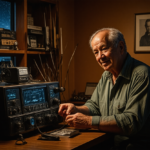
For many amateur radio enthusiasts, making their first contact on the high-frequency (HF) bands is a rite of passage—a moment that marks the beginning of a lifelong journey into the expansive world of radio communication. When this milestone occurs for a septuagenarian, it becomes not just a personal achievement but a celebration of perseverance, curiosity, and passion that spans decades. This article explores the significance of a first HF contact in later life, the journey leading up to it, and the profound joy it brings to both the individual and the community.
- Understanding the Importance of HF Radio in Amateur Radio
- What are HF Bands?
- Why Are HF Contacts Considered a Landmark?
- The Journey Toward the First HF Contact in Later Life
- Initial Curiosity and Motivation
- Learning and Preparation
- Challenges Faced by Older Operators
- The Significance of the First HF Contact for a Septuagenarian
- Personal Milestones and Emotional Impact
- Bringing the Community Together
- Technical Aspects of Making a First HF Contact
- Preparing Your Equipment
- Understanding Propagation and Timing
- Essential Operating Procedures
- Celebrating the First Contact: Traditions and Ideas
- QSL Cards and Digital Confirmations
- Special Event Stations
- Community Celebrations
- Benefits of Achieving a First HF Contact Later in Life
- Intellectual and Social Enrichment
- Promoting Inclusion and Diversity in Amateur Radio
- Encouraging Technological Adaptation
- Case Studies: Inspiring Stories of Septuagenarians in Ham Radio
- Story 1: The Retiree Who Reconnected with the World
- Story 2: The First DX Contact in Their Nineties
- References and Resources
- Final Thoughts
Understanding the Importance of HF Radio in Amateur Radio
What are HF Bands?
High-frequency (HF) radio bands encompass frequencies from 3 MHz to 30 MHz. These bands are renowned for their ability to carry signals over long distances via skywave propagation, bouncing signals off the ionosphere. This characteristic allows amateur radio operators to communicate across continents, making HF an integral part of global amateur radio activities.
Why Are HF Contacts Considered a Landmark?
- Expanded Communication Range: HF contacts enable communication beyond local or regional areas, often spanning thousands of kilometers.
- Technical Skill Development: Operating on HF requires understanding propagation, antenna tuning, and radio physics, enriching operator expertise.
- Enhanced Personal Achievement: Making that first successful long-distance contact symbolizes a significant achievement in an amateur’s journey.
The Journey Toward the First HF Contact in Later Life
Initial Curiosity and Motivation
Many septuagenarians begin exploring amateur radio out of long-standing curiosity or a desire to reconnect with their youth. For some, it’s rekindling a childhood fascination with radio technology; for others, it’s a new hobby that offers mental stimulation and social interaction.
Learning and Preparation
The path to a first HF contact often involves studying technical manuals, joining local ham radio clubs, and practicing operating procedures. The process can span years, especially when balancing other aspects of life, family, and work commitments. Key steps include:
- Obtaining the amateur radio license applicable to their country.
- Acquiring suitable HF transceivers and antennas.
- Learning about propagation, antenna tuning, and operating etiquette.
- Participating in contesting and special event stations to gain practical experience.
Challenges Faced by Older Operators
Older amateurs may encounter physical and technical challenges, such as hearing loss, reduced dexterity, or unfamiliarity with modern software. However, these obstacles can be overcome with adaptive equipment, patience, and support from enthusiastic communities. The combination of wisdom and experience often compensates for any physical limitations, leading to rewarding accomplishments.
The Significance of the First HF Contact for a Septuagenarian
Personal Milestones and Emotional Impact
Achieving the first HF contact can evoke feelings of triumph, nostalgia, and joy. Many report a sense of connection not only with distant operators but also with their own past experiences and aspirations. For septuagenarians, this moment often symbolizes a lifetime of curiosity finally realized, embodying resilience and lifelong learning.
Bringing the Community Together
Such milestones frequently unite local ham radio clubs, friends, and family members who celebrate the achievement. It’s common to see commemorative QSL cards, social media posts, or radio club announcements highlighting this special moment.
Technical Aspects of Making a First HF Contact
Preparing Your Equipment
To successfully reach out on HF, operators need the right setup. Key components include:
- Transceiver: A reliable HF-capable radio.
- Antenna: Suitable for the desired band, such as a dipole, vertical, or multiband antenna.
- Power Supply: Stable power source to ensure consistent transmission.
- Accessory Gear: Tuner, filters, and headset for clearer communication.
Understanding Propagation and Timing
Propagation conditions vary based on solar activity, time of day, and season. Best times for long-distance HF contacts are typically during periods of high solar activity and around dawn or dusk zones. Planning the contact during these windows increases the likelihood of success.
Essential Operating Procedures
Operators should familiarize themselves with standard operating protocols, such as:
- Calling CQ (listening for responses).
- Using correct call signs and signal reports.
- Understanding Q codes and procedural etiquette.
- Logging contacts meticulously for awards or personal records.
Celebrating the First Contact: Traditions and Ideas
QSL Cards and Digital Confirmations
Sending and receiving QSL cards remains a cherished tradition, serving as tangible proof of the contact and memorabilia. In modern times, electronic confirmation systems like Logbook of The World (LoTW) facilitate quick and environmentally friendly acknowledgment.
Special Event Stations
Often, first HF contacts are made with special event stations dedicated to commemorations, anniversaries, or humanitarian causes, adding significance to the achievement.
Community Celebrations
Local clubs may organize ceremonies, award presentations, or social gatherings to honor the milestone. Sharing experiences through social media also amplifies the joy and inspires others.
Benefits of Achieving a First HF Contact Later in Life
Intellectual and Social Enrichment
Engaging in HF communication fosters ongoing learning, mental stimulation, and social interaction. It connects seniors to a global community, reducing feelings of isolation and promoting lifelong curiosity.
Promoting Inclusion and Diversity in Amateur Radio
Celebrating the achievements of older amateurs emphasizes that radio is an inclusive hobby welcoming all ages. It demonstrates that passion and persistence transcend age, inspiring newcomers at every stage of life.
Encouraging Technological Adaptation
Modern digital modes such as FT8, PSK31, and RTTY provide alternative pathways for less physically demanding operation. Embracing these modes complements traditional voice and CW communication, broadening possibilities for older operators.
Case Studies: Inspiring Stories of Septuagenarians in Ham Radio
Story 1: The Retiree Who Reconnected with the World
An 72-year-old retired engineer started amateur radio as a way to stay engaged. After months of study and practice, he made his first HF contact with a station in Australia. His story highlights perseverance and the joy of lifelong learning.
Story 2: The First DX Contact in Their Nineties
At age 93, a dedicated ham achieved a rare DX contact on 20 meters, connecting with a station in South Africa. This accomplishment showcases that age is no obstacle to technological achievement.
Making the first HF contact later in life is an extraordinary achievement that embodies curiosity, perseverance, and the unifying spirit of amateur radio. For septuagenarians, it signifies not only a technical milestone but also a celebration of lifelong passions and the joy of connecting with the world. As the amateur radio community continues to grow diverse and inclusive, stories of senior operators inspire new generations to explore the limitless possibilities of radio communication. Whether through traditional voice, Morse code, or digital modes, the radio waves remain a bridge to global camaraderie and personal fulfillment at any age.
References and Resources
| Resource | Description |
|---|---|
| ARRL | Leading amateur radio organization offering licensing, operating tips, and community support. |
| QRZ.com | Comprehensive call sign database and forums for amateurs worldwide. |
| Logbook of The World (LoTW) | Digital system for confirming QSOs and tracking awards. |
| Amateur Radio License Manuals | Educational materials for understanding radio operation and regulations. |
Final Thoughts
Age should never be a barrier to discovery and achievement. Celebrating a septuagenarian’s first HF contact reminds us all that curiosity and persistence truly make the world of amateur radio vibrant and inclusive. The radio waves are open to everyone eager to listen, learn, and connect—regardless of age.
Похожие записи:
 Commemorating a Personal Radio Milestone: Celebrating Your Achievements in Amateur Radio
  Celebrating a Milestone with My Radio Club: A Journey of Achievement and Community Spirit
  The Joy of Making Contact During a Rare Propagation Event
  Sharing the Story of My First Satellite Contact: An Amateur Radio Journey
  Unforgettable QSO with a Celebrity Radio Operator: A Deep Dive into Memorable Ham Radio Experiences
  Exclusive Awards and Recognitions for the Annual Digital Communications Contest: Celebrating Excellence in Amateur Radio
  Celebrating the Club Station Anniversary: A Special Event with Unique Sounds and Exciting Activities
  Memories of a Radio Swap Meet Day: A Nostalgic Journey into the World of Ham Radio
  Sharing My Experience at a National Ham Convention: Insights, Tips, and Highlights
  How a Simple Antenna Repair Sparked a Long-lasting Friendship – An Amateur Radio Journey
  Unlocking the Power of Connection: The Benefits of Joining Amateur Radio Contesting Communities
  Memories from a Challenging QRP Expedition: Lessons, Triumphs, and Insights
  The Inspiring Journey of Dedication and Victory: Achieving the KD9 Award in Amateur Radio
  How Radio Saved a Friend in Need: A Remarkable Story of Amateur Radio’s Power
  The Joy of Handing Down My Radio Equipment to a New Ham
  Legendary Operators Who Inspired Me: The Unsung Heroes of Amateur Radio