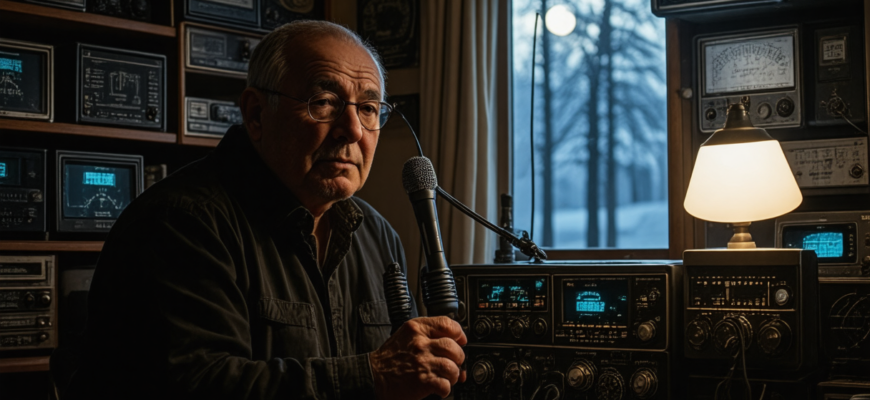
Communications technology has revolutionized the way humans connect — but sometimes, it’s the simplest and most established tools that prove to be the most reliable in critical moments. Among these tools, amateur radio, or ham radio, continues to serve as a beacon of hope and a practical lifeline during emergencies. This article explores a compelling story demonstrating how amateur radio played a crucial role in saving a friend’s life, highlighting the importance and effectiveness of radio communication in real-world crises.
- Understanding Amateur Radio: An Overview
- What Is Amateur Radio?
- The Significance of Amateur Radio in Emergencies
- The Story of How Radio Saved a Friend in Need
- The Background
- The Critical Role of Amateur Radio
- The Communication Chain and Coordination
- The Outcome: A Life Saved
- Analyzing Why Amateur Radio Made Such a Difference
- Reliability and Independence from Infrastructure
- Flexibility and Portable Operation
- Community and Volunteer Spirit
- Technical Aspects That Made the Rescue Possible
- How to Get Started in Amateur Radio for Emergencies
- Licensing and Regulations
- Essential Equipment to Have
- Training and Community Involvement
- Case Studies of Amateur Radio in Action
- Natural Disasters
- Community-Driven Responses
- The Enduring Power of Radio in Crisis
- Additional Resources
- Remember:
Understanding Amateur Radio: An Overview
What Is Amateur Radio?
Amateur radio, often called ham radio, is a hobby and service that allows licensed individuals to operate radio transmitters and receivers for non-commercial purposes. Enthusiasts engage in various activities—from daily communication and experimentation to providing vital emergency services during disasters. Unlike commercial radio, amateur radio operators use a range of frequencies allocated by national authorities, often utilizing sophisticated equipment and antennas.
The Significance of Amateur Radio in Emergencies
One of the most vital roles of amateur radio is its capacity to provide resilient communication during emergencies when conventional systems like cell towers, internet, or landlines fail. Ham radio operators often volunteer with emergency response organizations and community groups to ensure reliable contact across challenging terrains, inclement weather, or in the aftermath of natural disasters.
The Story of How Radio Saved a Friend in Need
The Background
In a remote mountain region, a small group of adventurers regularly explores backcountry trails. Among them was Alex, an experienced hiker with a passion for outdoor exploration. On one such trip, Alex unexpectedly fell ill with severe altitude sickness and dehydration, making it impossible to communicate or seek immediate help through standard channels.
The Critical Role of Amateur Radio
Fortunately, one of Alex’s companions, Maria, was a licensed amateur radio operator. She carried a portable ham radio setup, equipped with a handset, a compact antenna, and a power source designed for field use. Recognizing that their cell phone signals were weak or nonexistent, Maria immediately activated her radio to communicate with the local emergency services and other nearby stations.
The Communication Chain and Coordination
Using her ham radio, Maria established a clear, emergency frequency connection and sent a detailed message:
“Emergency! Hiker Charles is suffering from severe altitude sickness. Location: Mountain Range X, Coordinates 59.1234°N, 34.5678°E. Require immediate medical assistance.”
Interpreting this message, a nearby volunteer station received the call and relayed it to the regional emergency communication center. Within minutes, a rescue team was dispatched, equipped with mountain rescue specialists and medical supplies. Meanwhile, Maria maintained contact with her friend Alex, providing reassurance and updates until help arrived.
The Outcome: A Life Saved
Thanks to the effective and immediate communication enabled by amateur radio, the rescue team reached Alex in time. The medical team stabilized him, and he was airlifted to a hospital. Several hours later, Alex was recovering, fully aware that his life had been saved by the quick response facilitated by radio communication.
Analyzing Why Amateur Radio Made Such a Difference
Reliability and Independence from Infrastructure
Unlike cellular or internet-based communication, amateur radio relies on radio waves, which can travel over long distances without infrastructural support. During emergencies, when cell towers may be damaged or overloaded, ham radio signals often remain operational, making them invaluable in critical situations.
Flexibility and Portable Operation
Ham radio operators often use portable, battery-powered equipment that can be quickly deployed into remote or disaster-stricken areas. The ability to set up a temporary station anywhere significantly enhances emergency responsiveness.
Community and Volunteer Spirit
Amateur radio fosters a global community of volunteers trained to handle emergency communications. Their willingness to volunteer during crises ensures that vital messages are transmitted efficiently and accurately.
Technical Aspects That Made the Rescue Possible
| Component | Description |
|---|---|
| Portable Radio Transceiver | Allows quick setup in remote locations, operates on various frequencies suitable for emergency communication. |
| Antenna | Enhanced with a lightweight, foldable design for portability and efficiency in reaching distant stations. |
| Power Source | Battery packs or portable generators provide power autonomy, especially in areas without electricity. |
| Communication Protocols | Predefined emergency frequencies and message templates ensure clarity and speed during critical moments. |
How to Get Started in Amateur Radio for Emergencies
Licensing and Regulations
Before operating ham radio equipment, interested individuals must obtain a license from their national authority (e.g., the Federal Communications Commission in the U.S., or the Radio Emergency Associated Communications Team (REACT) in other countries). Licensing involves passing a written exam covering operating procedures, regulations, and safety protocols.
Essential Equipment to Have
- Handheld Transceiver (HT) for portability
- Antenna suited for the area and type of operation
- Power supply, such as rechargeable batteries or portable generators
- Emergency communication plan, including predefined channels and message templates
Training and Community Involvement
Joining local amateur radio clubs and participating in practice drills improves skills and prepares operators for real emergencies. Many organizations also conduct certification courses and emergency preparedness workshops.
Case Studies of Amateur Radio in Action
Natural Disasters
- Hurricanes and typhoons often devastate communication infrastructure, but ham radio operators provide crucial links between affected areas and relief agencies.
- Earthquakes can disable landline and cellular networks, yet radio volunteers restore connectivity temporarily to coordinate relief efforts.
Community-Driven Responses
In regions prone to natural calamities, amateur radio groups establish emergency communication networks that serve as community lifelines. They often work alongside official agencies for coordinated response efforts.
The Enduring Power of Radio in Crisis
The story of how amateur radio saved a friend in need exemplifies the vital role this technology plays in emergency preparedness and response. Its independence from conventional communication infrastructure, portability, and the dedicated community of operators make it an irreplaceable resource in times of crisis. As natural disasters and other emergencies become more frequent and unpredictable, the importance of understanding and leveraging amateur radio for safety and rescue becomes clearer.
For enthusiasts and emergency responders alike, investing time in learning radio operation, obtaining proper licensing, and participating in community drills can make a lifesaving difference when it matters most. Ultimately, the power of a simple radio wave embodies hope, resilience, and human ingenuity in the face of adversity.
Additional Resources
- American Radio Relay League (ARRL) – Licensing and educational resources
- ARES (Amateur Radio Emergency Service) – Volunteer emergency communication networks
- Local amateur radio clubs and training programs
- Guidelines for emergency preparedness and radio operation
Remember:
In emergencies, a radio may be the only lifeline. Learning to use it effectively can save lives — including your own or those of your loved ones.
Похожие записи:
 Sharing the Story of My First Satellite Contact: An Amateur Radio Journey
  How a Lost Radio Helped Reconnect a Community: The Power of Amateur Radio
  The Day I Assisted in a Search and Rescue Operation: An Amateur Radio Operator’s Perspective
  Build Your Own Portable Solar Power Setup for Radio Operations: A Comprehensive Guide
  Unlocking the Power of Connection: The Benefits of Joining Amateur Radio Contesting Communities
  How a Simple Antenna Repair Sparked a Long-lasting Friendship – An Amateur Radio Journey
  The Time I Learned Digital Modes From a Fellow Ham: A Deep Dive into Modern Ham Radio Communication
  Mastering Emergency Operations: Essential Tips for Responsible Amateur Radio Communication
  Legendary Operators Who Inspired Me: The Unsung Heroes of Amateur Radio
  Emergency Communication Protocols for Ham Radio Operators: The Latest Updates and Best Practices
  The Inspiring Journey of Dedication and Victory: Achieving the KD9 Award in Amateur Radio
  Developing Effective Emergency Preparedness Plans with Ham Radio: A Comprehensive Guide for Amateur Radio Enthusiasts
  The Time My Portable Station Surprised Everyone: A Spectacular Moment in Amateur Radio
  Top Picks for Emergency Radio Kits: Essential Gear for Every Preparedness Kit
  Rugged Radios for Adventurers and Fieldwork: The Ultimate Guide to Reliable Communication
  Unforgettable QSO with a Celebrity Radio Operator: A Deep Dive into Memorable Ham Radio Experiences