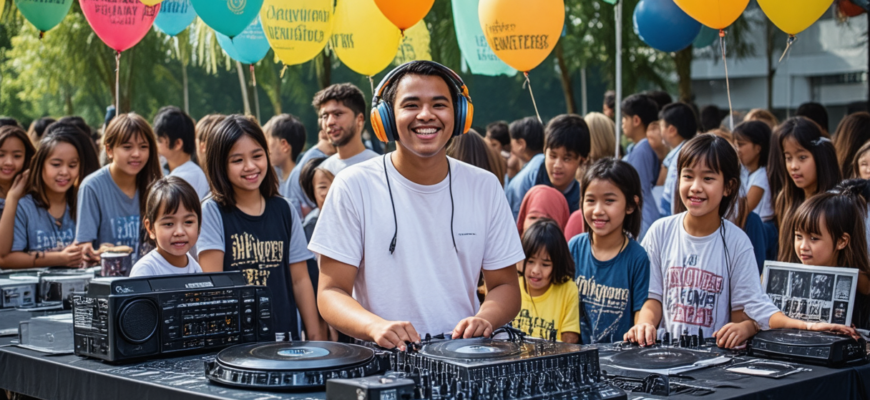
Amateur radio enthusiasts worldwide cherish the anniversaries of their beloved club stations. These milestones are not just about marking the passage of time but also celebrating technical achievements, fostering community spirit, and exploring innovative soundscapes. The upcoming club station anniversary event promises a memorable experience, featuring special sounds, demonstrations, workshops, and activities designed to captivate both seasoned operators and newcomers. This comprehensive guide explores every aspect of the event, highlighting its significance, preparation, and what participants can look forward to.
- Understanding the Significance of Club Station Anniversaries
- Historical Importance of Club Stations in Amateur Radio
- Community Building and Engagement
- Preparation and Planning for the Anniversary Event
- Organizing Committee and Responsibilities
- Venue and Equipment Setup
- Promotion and Outreach
- Event Highlights: Special Sounds and Activities
- Unique Sound Demonstrations
- Workshops and Technical Sessions
- Technical Aspects of Special Sounds in Amateur Radio
- Sound Modulation Techniques
- Audio Signal Processing in Amateur Radio
- Creative Sound Effects and Innovations
- Engaging Activities for Attendees
- Interactive Sound Stations
- Contests and Competitions
- Exclusive QSL Card and Memorabilia Exchanges
- Safety and Technical Tips for Participants
- Radio Frequency Safety
- Technical Preparation for Participants
- Post-Event Engagement and Continuing the Journey
- Sharing Experiences and Highlights
- Further Learning and Certification
- Table of Key Sound Modulation Techniques in Amateur Radio
- Final Thoughts
Understanding the Significance of Club Station Anniversaries
Historical Importance of Club Stations in Amateur Radio
Since the early days of amateur radio, club stations have served as hubs of innovation, collaboration, and education. They symbolize the collective effort of radio enthusiasts uniting to share knowledge, experiment with new technologies, and support emergency communications. Anniversaries celebrate these institutions’ longevity and achievements, reinforcing their vital role in the global amateur radio community.
Community Building and Engagement
Anniversary events act as catalysts for community engagement, attracting members, enthusiasts, and curious newcomers. They foster networking, mentorship, and esprit de corps, essential for the growth and sustainability of amateur radio clubs.
Preparation and Planning for the Anniversary Event
Organizing Committee and Responsibilities
Successful events are rooted in meticulous planning. Typical committees include event coordinators, technical staff, content managers, publicity teams, and logistics coordinators. Their responsibilities encompass scheduling activities, managing technical setups, advertising, and ensuring compliance with safety regulations.
Venue and Equipment Setup
The event often takes place at the club station premises or a dedicated venue, equipped with radio transceivers, antennas, sound systems, and demonstration booths. Proper setup guarantees seamless operation of live demonstrations, sound shows, and interactive zones.
Promotion and Outreach
Creating awareness through social media, local media outlets, and amateur radio mailing lists ensures broad participation. Promoting through visual posters, online banners, and community flyers helps capture interest and maximize attendance.
Event Highlights: Special Sounds and Activities
Unique Sound Demonstrations
The core feature of the anniversary event is a series of sound presentations and demonstrations designed to showcase the diversity and richness of amateur radio signals. These include:
- Historical Signal Reconstructions: Recreating iconic signals from the early days of radio, allowing attendees to hear the evolution of sound transmission technologies.
- High-Resolution Audio Workstations: Showcasing digital modes and their sound profiles, such as FT8, RTTY, and PSK31.
- Special Audio Effects: Utilizing filters and modulation techniques to produce unique sound textures that can only be experienced through amateur radio equipment.
- Live Sound Experiments: Demonstrating sound effects, noise filtering, and frequency shifting in real time to illustrate signal processing skills.
Workshops and Technical Sessions
Educational sessions are integral to the anniversary program, designed to deepen understanding and practical skills:
- Sound Engineering for Radio: Techniques for capturing, processing, and enhancing radio signals’ sounds.
- Digital Mode Masterclasses: Operating and decoding various digital modes, emphasizing sound signatures and signal integrity.
- Antenna Tuning and Optimization: Workshops on building and fine-tuning antennas to improve sound quality and signal clarity.
- Historical Radio Technologies: Exploring old equipment and sound protocols, connecting past innovations with current practices.
Technical Aspects of Special Sounds in Amateur Radio
Sound Modulation Techniques
Sound modulation is fundamental in transmitting audio signals via radio waves. Common techniques include:
| Technique | Description | Common Uses |
|---|---|---|
| Amplitude Modulation (AM) | Varying the amplitude of the carrier wave to encode sound signals. | AM broadcast, aircraft communication, some digital modes. |
| Frequency Modulation (FM) | Varying the frequency of the carrier for sound encoding. | FM radio, mobile radio, some amateur digital modes. |
| Single Sideband (SSB) | Suppressing one sideband and carrier to reduce bandwidth. | Long-distance communication, contesting. |
| Digital Modes | Encoding sound as digital data packets for robust transmission. | FT8, PSK31, RTTY. |
Audio Signal Processing in Amateur Radio
Processing audio signals is crucial for clear communications. Key methods include:
- Filtering: Removing noise or unwanted signals using bandpass or notch filters.
- Compression: Reducing dynamic range for consistent sound quality.
- Equalization: Adjusting frequency response to improve intelligibility.
- Noise Reduction: Techniques such as noise gates or software algorithms to enhance signal clarity.
Creative Sound Effects and Innovations
Amateur radio operators often experiment with innovative sound effects to add flair to transmissions, such as:
- Audio Frequency Shift Keying (AFSK): Producing distinct sound patterns for digital modes.
- Chirp Sound Effects: Used in contests to convey special signals or achievements.
- Echo and Reverb Effects: Applied during live demonstrations to create atmospheric sounds.
- Hybrid Modes: Combining analog and digital signals to generate intriguing sounds.
Engaging Activities for Attendees
Interactive Sound Stations
Participants can experiment with audio equipment, modify signal parameters, and produce their sound effects at dedicated stations. These stations enhance understanding through hands-on experience.
Contests and Competitions
- Sound Identification Challenges: Recognizing radio signals by their sound signatures.
- Best Sound Effect Contest: Creating original sound effects for a chance to win prizes.
- Digital Mode Demonstrations: Competing in decoding messages with various digital modes.
Exclusive QSL Card and Memorabilia Exchanges
Commemorative QSL cards featuring special designs are exchanged among participants, creating lasting mementos of the event. Collectors and hobbyists often find rare and unique cards that reflect the event’s theme and sounds.
Safety and Technical Tips for Participants
Radio Frequency Safety
Proper handling of transmitters and antennas is essential to avoid unintended radiation exposure or interference. Remember to:
- Ensure antennas are correctly grounded and installed.
- Operate within legal transmission power limits.
- Use headphones during demonstrations to protect hearing.
Technical Preparation for Participants
- Test radio equipment and sound systems before the event.
- Bring necessary accessories such as microphones, headsets, and audio interfaces.
- Familiarize with digital modes and sound processing techniques in advance.
Post-Event Engagement and Continuing the Journey
Sharing Experiences and Highlights
Encourage attendees to share photos, videos, and experiences online through social media platforms. Creating a dedicated group or forum helps sustain the community spirit and fosters ongoing learning.
Further Learning and Certification
Participants can enroll in specialized courses on digital sound processing, antenna construction, or advanced radio techniques. Pursuing certifications related to digital modes or advanced sound engineering can elevate amateur radio proficiency.
The anniversary of a club station is a momentous occasion that celebrates history, innovation, and community. The integration of special sounds and audio demonstrations exponentially enhances the event’s appeal, providing educational value and entertainment alike. Whether through exploring the roots of radio sounds, experimenting with digital modes, or creating new sound effects, attendees gain a deeper appreciation for the sonic dimension of amateur radio. Planning meticulously and focusing on engaging activities ensures that this anniversary becomes a memorable milestone in the journey of every active participant.
Table of Key Sound Modulation Techniques in Amateur Radio
| Modulation Type | Principle | Typical Use | Sound Characteristic |
|---|---|---|---|
| Amplitude Modulation (AM) | Variations in signal amplitude encode sound | AM broadcasting, aircraft and maritime communication | Rich bass, characteristic “wobble” |
| Frequency Modulation (FM) | Variations in frequency carry sound information | Mobile radio, broadcast radio | Clear, crisp sound with minimal noise |
| Single Sideband (SSB) | Suppressed carrier, one sideband transmitted | Long-distance communication, contesting | Efficient voice transmission, narrower bandwidth |
| Digital Modes (e.g., PSK31, FT8) | Encoding sound as digital signals | Data transmission, text messaging | Variable, depends on mode; often digital beeps or tone sequences |
Final Thoughts
As amateur radio enthusiasts gear up for the upcoming club station anniversary event, the focus on special sounds and innovative demonstrations underscores the vibrant and creative spirit of the community. These gatherings not only honor the past but also lay the groundwork for future innovations, inspiring new generations of operators to explore the sonic facets of radio communication. With careful planning, diverse activities, and a welcoming environment, such anniversaries become unforgettable landmarks in the ongoing story of amateur radio.
Похожие записи:
 Celebrating a Milestone with My Radio Club: A Journey of Achievement and Community Spirit
  Exclusive Awards and Recognitions for the Annual Digital Communications Contest: Celebrating Excellence in Amateur Radio
  The Most Unique Antenna I Have Ever Installed: A Deep Dive into Innovative Amateur Radio Solutions
  Commemorating a Personal Radio Milestone: Celebrating Your Achievements in Amateur Radio
  The Time My Portable Station Surprised Everyone: A Spectacular Moment in Amateur Radio
  Beginner’s Guide to Operating Portable Ham Radio at Events: Mastering Communication for Event Support
  The Joy of Making Contact During a Rare Propagation Event
  Simple Ways to Improve Your Radio’s Audio Quality: Expert Tips for Better Sound
  The Day I Helped Set Up a Remote Station for a Contest
  Revolutionizing Amateur Radio: How a New Antenna Design Transformed My Station
  Ultimate Guide to Upgrading Your Amateur Radio Station with New Gear: Top Tips and Strategies
  Ultimate Guide: Tips for Setting Up Your Home Radio Station
  Ultimate Guide: Best Practices for Setting Up a Remote Radio Station Accessible Worldwide
  Building a Portable Ham Radio Station for Outdoor Expeditions: The Ultimate Guide
  The Time I Learned Digital Modes From a Fellow Ham: A Deep Dive into Modern Ham Radio Communication
  Join the Virtual Contest Workshops This Weekend: Your Ultimate Guide for Amateur Radio Enthusiasts