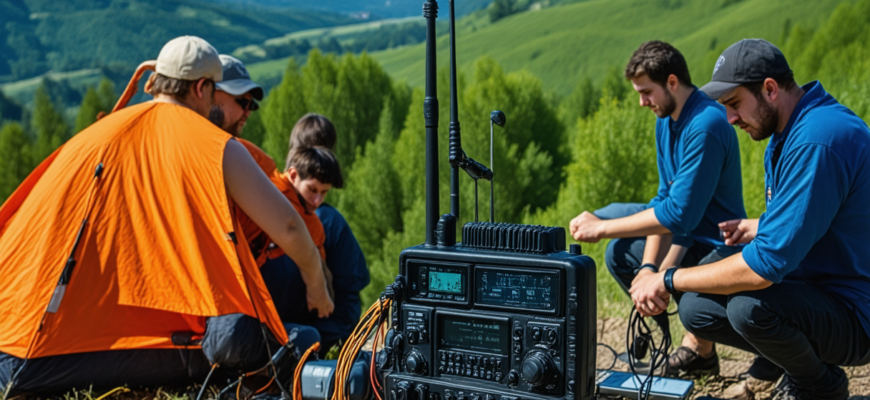
Each year, the amateur radio community eagerly anticipates the exciting prospect of dxpeditions—organized expeditions where radio operators set out to operate from remote, rare, or historically significant locations around the world. These events not only provide unique opportunities for contesting and QSOs (contacts), but also foster international goodwill and cultural exchange among hams. Recently, several prominent dxpedition teams announced new dates for their summer operations, prompting interest and planning among operators worldwide. This comprehensive guide will explore the details of these new schedules, the significance of each dxpedition, and practical tips for maximizing the experience.
- Understanding Dxpeditions and Their Importance
- What Is a Dxpedition?
- Why Are Dxpeditions Significant?
- Recent Announcements: New Summer Dxpedition Dates
- Overview of the Major Dxpeditions
- Detailed Descriptions of Each Dxpedition and Their Significance
- Antarctic Explorer 2023
- Pacific Islands Activation
- Remote Russian Arctic
- South American Jungle Expedition
- Practical Tips for Amateur Radio Operators Planning to Participate
- Pre-Expedition Preparation
- Operational Best Practices
- Propagation and Technical Considerations
- The Science Behind Propagation
- Formulas to Estimate Critical Frequency and Maximum Usable Frequency (MUF)
- Final Thoughts
Understanding Dxpeditions and Their Importance
What Is a Dxpedition?
A dxpedition is a concerted effort by a group of amateur radio operators to establish radio contact from an otherwise inaccessible or rare location. These expeditions are meticulously planned, often involving complex logistics, permits, and equipment arrangements. The main goal is to activate rare entities or locations, thus enabling other operators to work them on various bands and modes for awards and personal achievement.
Why Are Dxpeditions Significant?
- Rare Entity Activation: They bring rare or unactivated locations online, helping station attributions and awards like the Worked All Continents (WAC) or DXCC.
- Cultural and Diplomatic Outreach: Encourages international goodwill through radio communication.
- Technical Innovation: Operate under challenging conditions, pushing the limits of equipment and propagation techniques.
- Community Engagement: Provides learning opportunities for new and seasoned operators alike.
Recent Announcements: New Summer Dxpedition Dates
Overview of the Major Dxpeditions
With the approach of summer, several teams have announced updated or new dates for their upcoming field operations. Key among these are expeditions to previously unactivated islands, remote territories, and significant DXCC entities. Below is a summary of the most anticipated dxpeditions and their new schedules:
| Expedition Name | Original Planned Dates | New Announced Dates | Locations | Equipment Highlights |
|---|---|---|---|---|
| Antarctic Explorer 2023 | June 10–20, 2023 | July 5–15, 2023 | Antarctica | High-power stations, portable antennas, satellite links |
| Pacific Islands Activation | May 25–June 5, 2023 | July 1–10, 2023 | Tokelau, Tuvalu, and Samoa | Multi-band HF and VHF stations, digital modes |
| Remote Russian Arctic | June 15–25, 2023 | July 10–20, 2023 | Russian Arctic Archipelago | Solid-state amplifiers, portable solar power |
| South American Jungle Expedition | June 20–30, 2023 | August 1–10, 2023 | Amazon Rainforest | Satellite communication, lightweight antennas |
Detailed Descriptions of Each Dxpedition and Their Significance
Antarctic Explorer 2023
The Antarctic continent remains one of the most sought-after DX entities due to its extreme conditions and sparse operational activity. The recent shift in dates for this expedition offers more favorable weather conditions and less interference from other polar research activities. Participants will operate from a base station equipped with high-gain antennas and satellite links, allowing worldwide communication with a variety of modes including CW, SSB, and digital protocols like FT8 and FT4.
Operators can expect to test their equipment in sub-zero temperatures, a true challenge for both hardware and operators. The activation will focus on rare grid-square contacts, and the expedition plans to promote QSL card exchanges and digital awards programs.
Pacific Islands Activation
This expedition covers multiple islands in the Pacific, vital for reaching rare oceanic entities. The adjusted dates are designed to coincide with optimal propagation windows and favorable weather, reducing logistical difficulties. Equipment will include multi-band HF antennas, long-wire and vertical setups, and digital operation stations. The expedition aims to maximize QSOs to boost the number of entities worked by operators, especially encouraging new operators to participate in digital modes, which are cost-effective and efficient in challenging conditions.
Remote Russian Arctic
The Russian Arctic is an area of high interest, with few activations over recent decades. Activation during the new dates ensures better logistical support and safety conditions. The team plans to utilize solar power systems due to the lack of traditional infrastructure, and operate across multiple bands, emphasizing long-distance and polar propagation phenomena. This operation promises to provide RARE DXCC status to many participants and foster cooperation between international teams.
South American Jungle Expedition
Set in the heart of the Amazon rainforest, this expedition offers a unique operating environment filled with flora and fauna. Adjusted dates allow for better weather and safer travel conditions. The team intends to use satellite communication for coordination, lightweight portable antennas, and robust digital modes suitable for challenging conditions. The operation encourages contacts via satellite and HF, and may even include meteorological and environmental monitoring broadcasts.
Practical Tips for Amateur Radio Operators Planning to Participate
Pre-Expedition Preparation
- Monitor Expedition Announcements: Stay updated via official expedition websites, social media, and amateur radio forums.
- Gear Testing: Ensure all equipment is properly maintained and suitable for harsh conditions.
- Log and QSL Planning: Prepare digital and paper logging systems, and familiarization with confirming contacts.
- Propagation and Band Planning: Study current solar and geomagnetic conditions to optimize operating times and bands.
Operational Best Practices
- Respect Local and International Regulations: Obtain necessary permits and operate within legal limits.
- Operate in Rotations: To maximize coverage and respect other operators’ QSOs, rotate bands and modes systematically.
- Use Digital Logging and QSLing: Efficiently record contacts and confirm via LoTW, eQSL, or traditional QSL cards.
- Engage with the Community: Share your experiences online, and help new operators get involved.
Propagation and Technical Considerations
The Science Behind Propagation
Understanding radio wave propagation is critical for maximizing contact success during dxpeditions. The key phenomena influencing DXing include:
- Solar Activity: Sunspots and solar flares impact the ionosphere, affecting HF band openings.
- Geomagnetic Conditions: Disturbed magnetic fields can reduce signal quality but also create sporadic E and auroral propagation regions.
- Seasonal and Diurnal Variations: Day/night cycles and seasonal changes influence band availability and optimal operating times.
Formulas to Estimate Critical Frequency and Maximum Usable Frequency (MUF)
Operators often use propagation formulas to determine the best bands for contact:
Critical Frequency (Fc) ≈ 9 × (Frequency at maximum absorption) / (Number of H-Alpha layers)
and for MUF estimation:
MUF = Fo / cos(θ)
where Fo is the F-layer critical frequency, and θ is the angle of incidence of the radio wave.
The recent announcement of new dxpedition dates for the summer presents an exciting opportunity for amateur radio enthusiasts around the world. Participating in or supporting these expeditions enhances the hobby’s appeal and contributes to global goodwill and knowledge sharing. Proper planning, understanding propagation, and respecting operational protocols are essential for making the most of these rare and valuable radio activities. As the summer progresses, staying informed and prepared will ensure that operators can effectively connect with these remote locations and enjoy the many benefits that active dxpeditions offer.
Final Thoughts
With the commitment of dedicated teams and supportive community members, the upcoming summer dxpeditions promise to be memorable and rewarding. Whether you are aiming to add a new entity to your DXCC alphabet or just enjoy the challenge of operating from unique locations, marking the new dates in your calendar, preparing thoroughly, and sharing your experience will enhance your amateur radio journey.
Похожие записи:
 Memories from a Challenging QRP Expedition: Lessons, Triumphs, and Insights
  Mastering DXing: Expert Tips for Contacting Rare Amateur Radio Stations
  Understanding Ham Radio Frequencies and Bands: A Comprehensive Guide for Amateur Radio Enthusiasts
  The Joy of Making Contact During a Rare Propagation Event
  Effective Propagation Analysis Techniques Throughout the Year: Maximizing Ham Radio Performance
  Effective Tips for Organizing Successful Ham Radio Contests: A Comprehensive Guide
  Join the Virtual Contest Workshops This Weekend: Your Ultimate Guide for Amateur Radio Enthusiasts
  Comprehensive Review of the Latest Transceiver Models on the Market: Innovations and Performance for Amateur Radio Enthusiasts
  Getting Started with Digital Modes like FT8 and PSK31: A Complete Guide for Amateur Radio Enthusiasts
  Comprehensive Review of the Latest Mobile Radio Apps and Software for Amateur Enthusiasts
  The Time My Portable Station Surprised Everyone: A Spectacular Moment in Amateur Radio
  Developing Effective Emergency Preparedness Plans with Ham Radio: A Comprehensive Guide for Amateur Radio Enthusiasts
  How to Use Repeater Networks for Better Coverage: A Complete Guide for Amateur Radio Enthusiasts
  Wireless Hotspot and Networking Devices for Remote Stations: Enhancing Connectivity for Amateur Radio Enthusiasts
  Using Software to Enhance Your Amateur Radio Experience: Unlocking New Possibilities
  Experiencing the Magic of a Sporadic E Opening – An Amateur Radio Enthusiast’s Guide