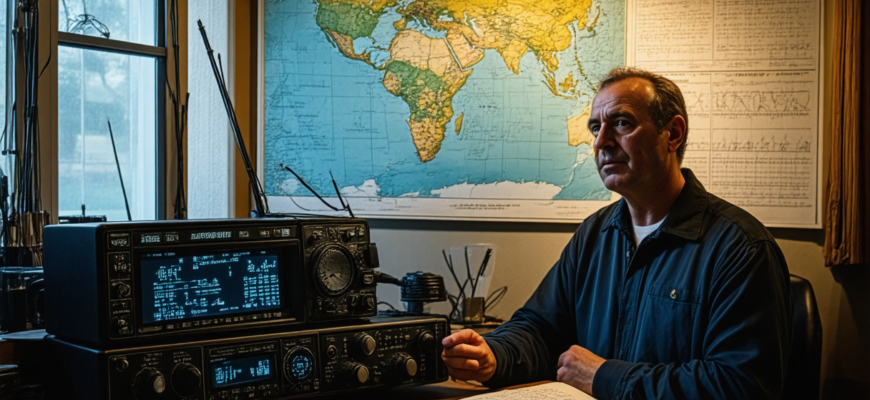
Amateur radio, commonly known as ham radio, is a fascinating hobby that combines technical knowledge, communication skills, and community service. One of the most fundamental aspects of ham radio operation is understanding the spectrum of frequencies and bands allocated for amateur use. This knowledge is crucial for effective communication, operating within legal regulations, and maximizing the potential of your radio equipment.
In this comprehensive guide, we will delve into the intricacies of ham radio frequencies and bands. From frequency ranges and band characteristics to propagation considerations and practical tips, this article aims to equip both novice and seasoned amateur radio operators with a thorough understanding of the spectrum used in the hobby.
- What Are Radio Frequencies and Bands?
- Radio Frequencies
- Radio Bands
- The Amateur Radio Spectrum
- Main Ham Radio Frequency Bands and Their Characteristics
- Propagation Modes and Their Impact on Frequencies
- Ionospheric (Skywave) Propagation
- Line-of-Sight Propagation
- Tropospheric Ducting
- Other Modes
- Legal and Regulatory Considerations
- Allocations in Different Countries
- Practical Tips for Operating on Different Bands
- Tools and Resources for Band and Frequency Management
What Are Radio Frequencies and Bands?
Radio Frequencies
Radio frequencies (RF) are electromagnetic wave signals within specific wavelength ranges used for wireless communication. These frequencies are measured in hertz (Hz), with common units being kilohertz (kHz), megahertz (MHz), and gigahertz (GHz). Each frequency range has unique properties affecting how signals propagate, their range, and their suitability for various applications.
Radio Bands
Radio bands are designated sections of the RF spectrum assigned for specific types of communication, such as amateur radio, commercial broadcasting, military use, and more. Amateur radio bands are allocated within certain frequency ranges by governing bodies like the International Telecommunication Union (ITU) and national agencies.
The Amateur Radio Spectrum
The amateur radio spectrum spans from as low as 1.8 MHz (160 meters) up to 247 GHz in some countries. However, not all frequencies within this range are allocated for amateur use everywhere, and each band has its own characteristics regarding propagation, equipment requirements, and common uses.
Main Ham Radio Frequency Bands and Their Characteristics
Below is a detailed table summarizing the primary amateur radio bands, their approximate frequency ranges, typical uses, and propagation features.
| Band Name | Frequency Range | Wavelength | Common Uses | Propagation Characteristics |
|---|---|---|---|---|
| 160 meters (Top Band) | 1.8 – 2.0 MHz | 160 m | Nighttime local and regional communication, Morse code, contesting | Limited daytime propagation; good for long-distance at night |
| 80 meters | 3.5 – 4.0 MHz | 80 m | Regional voice and digital modes, Morse code | Effective for regional communication; skywave propagation at night |
| 40 meters | 7.0 – 7.3 MHz | 40 m | Nationwide and regional voice, Morse, digital modes | Good for both day and night; moderate propagation distance |
| 20 meters | 14.0 – 14.35 MHz | 20 m | Worldwide voice and data, contesting, DXing | Excellent long-distance propagation during daylight; relies on ionospheric reflection |
| 15 meters | 21.0 – 21.45 MHz | 15 m | Global voice and data modes, contests | Similar to 20 meters, with slightly different propagation conditions |
| 10 meters | 28.0 – 29.7 MHz | 10 m | Local, regional, and worldwide contacts in sunspot periods | Highly dependent on solar activity; supports both FM and SSB modes |
| 6 meters (VHF) | 50 – 54 MHz | 6 m | Local and regional channels, partial world communication | Propagation varies with tropospheric, sporadic E, and meteor scatter |
| 2 meters (VHF) | 144 – 148 MHz | 2 m | Local communications, repeaters, and DX | Line-of-sight; excellent for repeaters and local nets |
| 70 centimeters (UHF) | 420 – 450 MHz | 70 cm | Local, regional, and satellite communications | Line-of-sight, satellite, and tropospheric phenomena |
| 23 centimeters (UHF) | 1200 MHz | 2.3 GHz | Satellite work, digital data, local contacts | Line-of-sight; supports high-speed digital modes |
Propagation Modes and Their Impact on Frequencies
Propagation refers to how radio waves travel through the Earth’s atmosphere and space. Different frequencies employ various propagation modes, influencing their effective range and the types of communication possible.
Ionospheric (Skywave) Propagation
Common in HF bands (below 30 MHz), skywave propagation involves signals bouncing off the ionosphere, enabling long-distance communications. The effectiveness of this mode varies with solar activity, time of day, seasons, and frequency.
Line-of-Sight Propagation
Typical for VHF and UHF bands, where signals travel in a straight line. This mode is suitable for local communications and depends on the height of antennas and obstacles.
Tropospheric Ducting
Occasionally, signals in VHF and UHF bands can be trapped in atmospheric layers, allowing for longer-distance communication via ducting, especially during specific weather conditions.
Other Modes
- Sporadic E: Produces short-term reflection in 6 and 10 meters, allowing for occasional long-distance contacts.
- Meteor Scatter: Uses ionized trails of meteors to bounce signals, effective mainly over short durations and distances.
Legal and Regulatory Considerations
Each country has its own regulatory body governing amateur radio frequencies, such as the FCC in the United States, Ofcom in the UK, or the Russian Federal Service for Supervision of Communications, Information Technology and Mass Media. It is vital to operate within designated bands and adhere to licensing requirements.
Allocations in Different Countries
- The specific frequency ranges allotted for amateur radio can vary, but international agreements generally standardize most hobby-related bands.
- Operators should consult local regulations to ensure compliance and avoid interference with other services.
Practical Tips for Operating on Different Bands
- Choose the Right Band for Your Goals: Use 10 and 15 meters for DXing during sunspot peaks; 40 and 80 meters for regional contacts or nighttime operation.
- Understand Propagation Conditions: Use propagation forecasts and real-time tools to identify the best bands and times for communication.
- Optimize Antennas: Invest in antennas suitable for the band of interest to maximize signal strength and clarity.
- Operate Responsibly: Respect licensing regulations, avoid interference, and follow good operating practices.
Tools and Resources for Band and Frequency Management
- Online Propagation Predictors: Websites and apps like VOACAP, Propquest, and DXAtlas help forecast propagation conditions.
- Repeater Directories: Provide information about available repeaters on various bands and their locations.
- Ham Radio Software: Logging, mode decoding, and digital mode programs assist in managing contacts and analyzing bands.
Understanding the diverse spectrum of ham radio frequencies and bands is fundamental to becoming an effective and responsible amateur radio operator. By mastering the characteristics, propagation modes, and regulations associated with each band, enthusiasts can enhance their communication capabilities, participate in global DXing, and contribute to emergency services and community networks.
Whether venturing into HF bands for long-distance contacts or exploring local VHF/UHF simplex communication, knowledge of frequency allocations and band properties opens a world of possibilities. Continuous learning, experimentation, and adherence to regulations will ensure a rewarding and successful journey in the world of amateur radio.
Похожие записи:
 Basic Antenna Types and Their Uses for Beginners: A Comprehensive Guide for Amateur Radio Enthusiasts
  How to Build a Simple Dipole Antenna at Home: A Comprehensive Guide for Amateur Radio Enthusiasts
  Integrating Software-Defined Radio into Your Daily Operations: A Comprehensive Guide for Amateur Radio Enthusiasts
  Latest Developments in Spectrum Licensing and Frequency Allocations: A Comprehensive Overview for Amateur Radio Enthusiasts
  How to Build Your Own Homemade QRP Transceiver: A Comprehensive Guide for Amateur Radio Enthusiasts
  Mastering Regulatory Changes: A Comprehensive Guide for Amateur Radio Enthusiasts
  Developing Effective Emergency Preparedness Plans with Ham Radio: A Comprehensive Guide for Amateur Radio Enthusiasts
  Top Choices for Budget-Friendly Amateur Radio Equipment: A Comprehensive Guide for Hobbyists
  Comprehensive Review of the Latest Mobile Radio Apps and Software for Amateur Enthusiasts
  Building a Simple, Low-Cost Antenna Tuner at Home: A Comprehensive Guide for Amateur Radio Enthusiasts
  Comprehensive Review of the Latest Transceiver Models on the Market: Innovations and Performance for Amateur Radio Enthusiasts
  Portable Spectrum Analyzers for Field Frequency Testing: A Complete Guide for Amateur Radio Enthusiasts
  Effective Tips for Organizing Successful Ham Radio Contests: A Comprehensive Guide
  How to Choose Your First Amateur Radio Transceiver: Essential Tips for Beginners
  Mastering DXing: Expert Tips for Contacting Rare Amateur Radio Stations
  Essential Tools for Cable and Connection Maintenance: A Complete Guide for Amateur Radio Enthusiasts