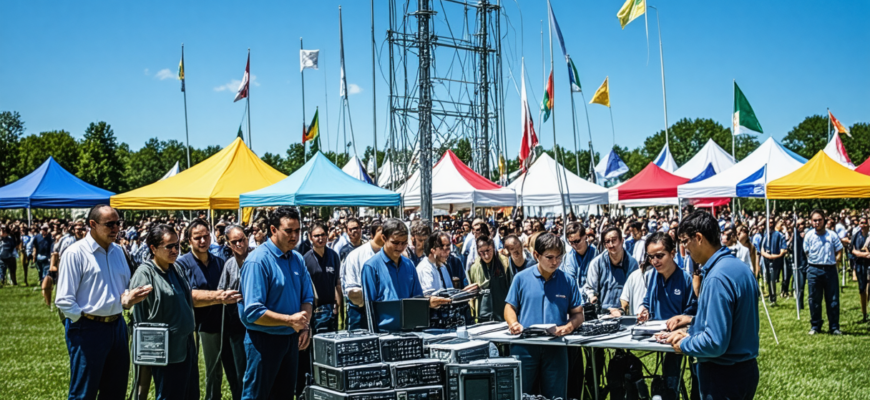
The Amateur Radio community eagerly awaits one of the most significant annual events—International Field Day (I FD). This global gathering not only showcases the technical skills and operational expertise of amateur radio enthusiasts but also fosters international camaraderie, cultural exchange, and emergency preparedness. As the event approaches, organizers have revealed crucial details about the venue, schedule, and participation requirements, fueling anticipation among hams worldwide. In this comprehensive article, all aspects of the upcoming International Field Day will be explored, providing enthusiasts with the information needed to participate, prepare, and enjoy this extraordinary event to its fullest.
- What is International Field Day?
- The Significance of the Event in the Amateur Radio Community
- Details of the Upcoming International Field Day
- Location and Venue
- Event Schedule
- Participation Details
- Technical Aspects and Operating Modes
- Operating Modes
- Power Sources
- Strategies for Effective Participation
- Preparing Your Equipment
- Operating Tips
- Maximizing Contact Opportunities
- The Educational and Community Value of International Field Day
- Workshops and Outreach Programs
- Impact of International Field Day on Emergency Preparedness
- Summary and Final Tips
What is International Field Day?
International Field Day is an annual event organized by amateur radio organizations worldwide. It simulates emergency communication scenarios and promotes skills such as radio operation, technical proficiency, and community service. Participants set up temporary radio stations in outdoor or remote locations, working on various frequency bands to make contact with other stations across the globe. This event emphasizes teamwork, technical experimentation, and fostering relationships within the amateur radio community.
The Significance of the Event in the Amateur Radio Community
Since its inception, International Field Day has become a cornerstone event for hobbyists and professionals alike. It provides an excellent platform to test equipment under field conditions, develop new operational techniques, and prepare for real-world emergency situations. Moreover, it enhances the visibility of amateur radio as a vital communication resource and encourages the younger generation to engage with electronics, wireless technology, and global connectivity.
Details of the Upcoming International Field Day
Location and Venue
For the upcoming edition, the International Field Day will be hosted at the picturesque Sunrise National Park, located in the heart of California, USA. This venue was selected for its expansive open spaces, reliable access to power sources, and scenic environment conducive to outdoor radio operations. The event site spans approximately 50 acres, featuring forested areas, clearings, and nearby access roads to facilitate transportation of equipment.
Event Schedule
| Date & Time | Activity |
|---|---|
| June 24, 2024, 10:00 a.m. – 6:00 p.m. | Station setup and equipment configuration |
| June 25-26, 2024, 2:00 p.m. – 5:00 p.m. | Main operating period (48 hours) |
| June 27, 2024, 10:00 a.m. – 4:00 p.m. | Gear breakdown and site cleanup |
Participation Details
- Eligibility: Open to licensed amateur radio operators worldwide.
- Registration: Participants must register online via the official event portal by June 1, 2024.
- Equipment: Operators are encouraged to bring their own portable stations, antennas, and power sources.
- Safety Protocols: Adherence to local health guidelines and event safety measures is mandatory.
Technical Aspects and Operating Modes
International Field Day encompasses a variety of operating modes and technical challenges designed to test participants’ skills and equipment robustness. Below are some key components:
Operating Modes
- SSB (Single Side Band): The most common mode for voice communication.
- CW (Continuous Wave): Morse code operation, favored for its efficiency and simplicity.
- Digital Modes: Including FT8, JS8Call, RTTY, and PSK31, allowing advanced data transmissions.
- Mixed Mode: Combining multiple modes for maximum contact points and operational diversity.
Power Sources
Participants are encouraged to experiment with renewable energy sources such as solar panels, portable generators, or battery banks. A typical power calculation for portable operations is as follows:
| Device | Power Consumption (W) | Estimated Operating Time (hours) | Battery Capacity (Wh) |
|---|---|---|---|
| Transmitter | 50 | 10 | 500 |
| Amplifier | 150 | 5 | 750 |
| Lights & Accessories | 20 | 8 | 160 |
Strategies for Effective Participation
Preparing Your Equipment
Ensuring your radio gear is in top operational condition is essential. Here are key steps:
- Test all cables and connectors prior to the event.
- Charge batteries and backup power sources.
- Update firmware and software on digital modes.
- Bring spare parts, including tubes, fuses, and connectors.
Operating Tips
- Optimize antenna placement for maximum signal strength and minimal interference.
- Use local climate forecasts to prepare for weather conditions.
- Coordinate with team members to cover different bands and modes efficiently.
- Take regular breaks to maintain alertness and safety.
Maximizing Contact Opportunities
To score higher points and establish a broad station network, consider the following:
- Utilize logging software for accurate record-keeping.
- Engage in contests and challenge modes such as Worked All Continents (WAC) or World Radiosport Team Championship (WRTC).
- Use appropriate call signs, grid locators, and signal reports as per regulations.
The Educational and Community Value of International Field Day
Beyond technical achievements, Field Day serves as an educational platform. It encourages young people, schools, and community groups to discover radio technology, learn about wireless communication, and develop teamwork. Collaborations with emergency services during Field Day also highlight amateur radio’s role in disaster response and public safety.
Workshops and Outreach Programs
Many organizers schedule hands-on workshops, antenna building sessions, and antenna tuning demonstrations. These activities empower newcomers and foster lifelong skills and interests in technical disciplines.
Impact of International Field Day on Emergency Preparedness
Historical data shows that during emergencies such as hurricanes, earthquakes, or other disasters, amateur radio operators often provide vital communication links when infrastructure breaks down. Fields tested during Field Day simulate these emergency conditions, ensuring operators are ready to deploy their skills when necessary.
Summary and Final Tips
Participation in International Field Day is a comprehensive experience that combines technical skill, teamwork, community service, and fun. To maximize the benefits:
- Plan ahead by reviewing event details and preparing equipment in advance.
- Follow safety guidelines to ensure a safe outdoor environment.
- Engage fully with fellow amateurs and share knowledge and experience.
- Document your participation through logs, photos, and reports.
The announcement of the International Field Day location and details marks the beginning of an exciting chapter for amateur radio enthusiasts around the globe. The carefully selected venue, comprehensive schedule, and focus on technical excellence and community service underscore the event’s significance. Whether a seasoned operator or a newcomer, participating in this worldwide event offers invaluable experience, fun, and the opportunity to connect with a vibrant community. Prepare your gear, mark the dates, and get ready to showcase your radio skills in the upcoming International Field Day—an event that truly celebrates the spirit of amateur radio and global fellowship.
Похожие записи:
 Official Announcement for the International QRP Sprint: Everything You Need to Know
  Exciting New Local Contest Series Launching Next Month for Amateur Radio Enthusiasts
  Exciting News: Complete Results of the Recent SSB Fun Run Announced
  Using APRS for Real-Time Location Tracking and Messaging
  Celebrating the Club Station Anniversary: A Special Event with Unique Sounds and Exciting Activities
  Mastering Your Amateur Radio Setup: Essential Guidelines for Field Day and Emergency Drills
  Portable Spectrum Analyzers for Field Frequency Testing: A Complete Guide for Amateur Radio Enthusiasts
  Amateur Radio Emergency Services Drill Scheduled for Next Month: Preparing for Critical Communication Readiness
  Regional Ham Radio Meet Announced for Early November: Everything You Need to Know
  New Contest Rules Published for the Fall QSO Party: What Ham Radio Operators Need to Know
  Award Ceremony Celebrates Last Quarter’s Top Contestant: Recognizing Excellence in Amateur Radio
  License Upgrade Seminar Announced for Beginner Operators: Your Path to Advanced Amateur Radio Certification
  Announcing the Next World Radio Conference Date: What Amateur Radio Enthusiasts Need to Know
  Join the Upcoming Online Ham Radio Lecture Series: Your Comprehensive Guide to Amateur Radio Mastery
  New Contest Logging Software Launch Event Scheduled: The Future of Amateur Radio Competition Management
  Exclusive Awards and Recognitions for the Annual Digital Communications Contest: Celebrating Excellence in Amateur Radio