
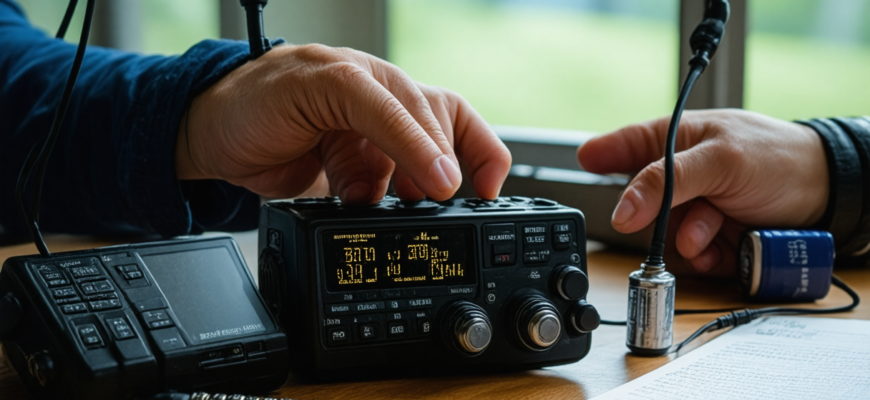
Amateur radio operators often find themselves in remote locations or during long excursions where reliable power sources are limited. Maintaining optimal battery life for radios is crucial to ensure uninterrupted communication and successful operations. Whether you are a seasoned hobbyist or a newcomer to the world of amateur radio, understanding how to extend your radio’s battery life can be a game-changer. This comprehensive guide offers practical tips, technical insights, and best practices to maximize your radio’s battery performance, making sure you stay connected when it matters most.
- Understanding Your Radio’s Power Consumption
- Key Components Affecting Battery Drain
- Practical Tips to Maximize Battery Life
- 1. Use Low Power Settings When Possible
- 2. Enable Power Saving Modes and Sleep Functions
- 3. Minimize Continuous Listening and Use Scan Features Wisely
- 4. Optimize Antenna and Transmission Quality
- 5. Adjust Display Brightness and Disable Non-Essential Features
- 6. Use External Power Sources and Battery Management Accessories
- 7. Implement Efficient Operating Procedures
- Technical Formulas for Power Consumption Optimization
- Power Consumption Formula
- Estimating Battery Life
- Summary of Best Practices
- Additional Resources
- Final Words
Understanding Your Radio’s Power Consumption
Before diving into specific tips, it’s essential to understand how a typical amateur radio consumes power. Radio devices have multiple components contributing to overall power use, including the transmitter, receiver, display, and ancillary modules like Bluetooth or Wi-Fi (if applicable). The primary consumers are usually the transmitter and receiver, which operate at high power levels and require significant energy during operation.
Key Components Affecting Battery Drain
- Transmitter Power Output (Tx): Higher transmission power results in increased battery drain. Using the minimal effective power can significantly extend battery life.
- Receiver Mode (Rx): Continuous listening consumes power, especially if the radio remains on standby for extended durations.
- Display and Backlights: Bright screens and backlit keys draw additional power. Adjusting these can save energy.
- Auxiliary Features: Bluetooth, Wi-Fi, GPS, and other modules may drain batteries if left active unnecessarily.
Practical Tips to Maximize Battery Life
1. Use Low Power Settings When Possible
Most modern amateur radios are equipped with adjustable power levels. Reducing the transmitter output is one of the most straightforward ways to conserve battery life. For example, instead of transmitting at full power (e.g., 100W), dial down to 5-10W during local communications. This not only saves power but also reduces the load on your battery, prolonging operational time.
Tip: Always optimize your power setting to the lowest possible level that maintains clear communication. Use a wattmeter to verify the actual transmitted power, ensuring you’re not exceeding required levels.
2. Enable Power Saving Modes and Sleep Functions
Many handheld and mobile radios have sleep or power-saving modes. These features temporarily shut down non-essential modules when the radio is idling, significantly reducing power consumption. Configure your radio to enter sleep mode after a short period of inactivity, and set it to wake up promptly when needed.
Note: Always test these settings to ensure they do not interfere with your communication requirements.
3. Minimize Continuous Listening and Use Scan Features Wisely
Prolonged continuous listening at high volume or in scanning modes can drain batteries quickly. To mitigate this:
- Use selective scan options to monitor only relevant channels.
- Turn the radio off when not actively listening or transmitting.
- Utilize quick-access keys to switch between priority channels instead of running a constant scan.
4. Optimize Antenna and Transmission Quality
The antenna system significantly influences power usage. A well-matched antenna ensures efficient transmission, meaning less power is needed to reach your target coverage area. Conversely, poor antenna matching causes power losses, forcing higher transmitter output and increasing battery drain.
- Perform standing wave ratio (SWR) measurements regularly.
- Replace damaged or mismatched antennas.
- Use antenna tuners to improve matching when necessary.
5. Adjust Display Brightness and Disable Non-Essential Features
Bright backlights and high-screen brightness settings consume considerable power. Reducing screen brightness or turning off illumination when not needed can extend battery life.
Additionally, disable or deactivate features like Bluetooth, GPS, or Wi-Fi modules when they are not in use.
6. Use External Power Sources and Battery Management Accessories
Supplement your radio’s battery with external power solutions, such as high-capacity power banks suited for radio devices. Employ smart battery management systems that monitor voltage levels, prevent over-discharge, and optimize charging cycles.
| Component | Impact on Battery Life | Recommended Action |
|---|---|---|
| Battery Type | Defines capacity and cycle stability | Use high-quality lithium-ion or lithium-polymer batteries |
| Charging Method | Overcharging damages batteries | Follow manufacturer’s charging guidelines; avoid leaving batteries on charge for extended periods |
| Operational Usage | Constant high-power operation depletes batteries faster | Adjust settings to optimize efficiency |
7. Implement Efficient Operating Procedures
Organizing your operations around energy-saving practices can greatly improve battery longevity:
- Plan Transmission Times: Aim to transmit only when necessary, and keep transmissions short.
- Monitor Battery Voltage: Use your radio’s battery indicator or external tools to track remaining capacity.
- Pre-Set Power Levels: Program presets for different operating scenarios, switching to lower power during routine communication.
- Use External Antennas: As mentioned, better antenna matching reduces power waste.
Technical Formulas for Power Consumption Optimization
Understanding the relationship between power, current, voltage, and operational duration helps in making informed decisions. The fundamental formula connecting these parameters is:
Power Consumption Formula
P (Watts) = V (Volts) x I (Amperes)
Where:
- P is the power used during operation.
- V is the voltage supply to the radio.
- I is the current drawn by the radio during operation.
Estimating Battery Life
Knowing your battery capacity (measured in milliampere-hours, mAh), you can estimate operating time:
T (hours) = (Battery Capacity in mAh) / (Average Current Draw in mA)
For example:
- Battery Capacity: 3000 mAh
- Average Current Draw: 300 mA
Estimated battery life:
T = 3000 / 300 = 10 hours
Summary of Best Practices
| Practice | Description | Benefits |
|---|---|---|
| Lower Transmit Power | Reduce output to minimal effective level | Extends battery life and reduces interference |
| Use Power Saving Modes | Enable sleep modes & autoShutdown on idle | Significant energy savings during inactivity |
| Optimize Antennas | Maintain proper matching & high-quality antennas | Reduces unnecessary power consumption |
| Avoid Unnecessary Features | Disable Bluetooth, GPS, Wi-Fi when not needed | Prevents needless energy drain |
| Manage Display Brightness | Adjust brightness or turn off backlight | Prolongs operational hours per charge |
Maximizing your amateur radio’s battery life is a combination of technical understanding, thoughtful operation, and use of available features. By strategically adjusting transmit power, utilizing power-saving modes, maintaining your equipment, and adopting efficient operating procedures, you can significantly extend operational time and ensure reliable communication in the field. Proper planning and routine maintenance go hand in hand with practical adjustments to optimize battery performance. Implementing these tips will provide hobbyists and professionals alike with greater confidence to operate their radios in remote or prolonged situations without the worry of unexpected power failures.
Additional Resources
Final Words
Effective battery management is integral to successful amateur radio operations. By applying the outlined strategies, enthusiasts can enjoy extended communication sessions, improve equipment longevity, and enjoy their hobby with fewer technical constraints. Remember—small adjustments can lead to substantial gains in operational efficiency. Happy communicating!
Похожие записи:
 Advances in Battery Technology for Portable Ham Radio Use: Powering the Future of Amateur Radio
  Ultimate Guide: Tips for Setting Up Your Home Radio Station
  Ultimate Guide to Upgrading Your Amateur Radio Station with New Gear: Top Tips and Strategies
  Portable Antenna Analyzers for Precise Tuning: The Ultimate Guide for Amateur Radio Enthusiasts
  Mastering Multiple Frequency Programming: The Ultimate Guide for Amateur Radio Enthusiasts
  Building a Portable Ham Radio Station for Outdoor Expeditions: The Ultimate Guide
  Top Microphone and Speaker Combos for Clear Audio: The Ultimate Guide for Amateur Radio Enthusiasts
  How to Choose Your First Amateur Radio Transceiver: Essential Tips for Beginners
  Rugged Radios for Adventurers and Fieldwork: The Ultimate Guide to Reliable Communication
  Portable Spectrum Analyzers for Field Frequency Testing: A Complete Guide for Amateur Radio Enthusiasts
  Basic Antenna Types and Their Uses for Beginners: A Comprehensive Guide for Amateur Radio Enthusiasts
  Top Weather-Resistant Microphones for Outdoor Use: The Ultimate Guide for Amateur Radio Enthusiasts
  How to Use Repeater Networks for Better Coverage: A Complete Guide for Amateur Radio Enthusiasts
  Build Your Own Portable Solar Power Setup for Radio Operations: A Comprehensive Guide
  Top 10 Portable Ham Radios for On-the-Go Enthusiasts
  Getting Started with Digital Modes like FT8 and PSK31: A Complete Guide for Amateur Radio Enthusiasts