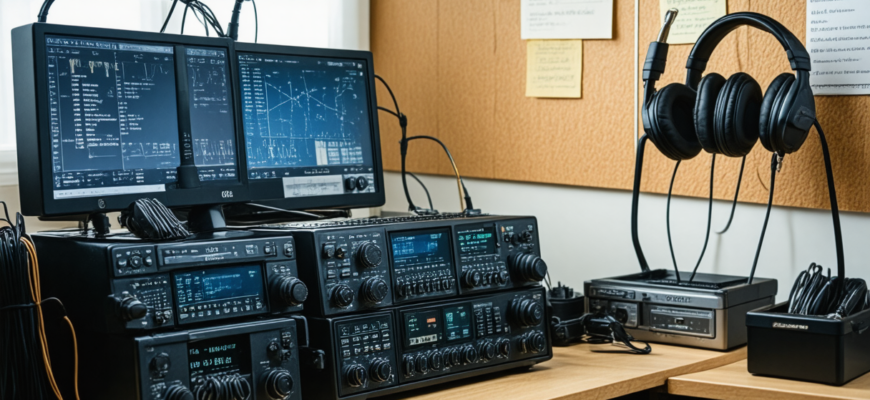
If you are passionate about amateur radio, you likely own a wide array of accessories—microphones, antennas, cables, batteries, and more. Managing this collection efficiently can significantly improve your operating experience, reduce frustration, and extend the lifespan of your equipment. Staying organized isn’t just about aesthetics; it’s about functionality, safety, and ensuring you’re always ready for your next radio session. This comprehensive guide offers practical tips and strategies to help amateur radio enthusiasts maintain a tidy, accessible, and well-cared-for collection of radio accessories.
- Why Organization Matters in Amateur Radio
- Assessing Your Radio Accessories Collection
- Strategies for Organizing Radio Accessories
- 1. Create Dedicated Storage Spaces
- 2. Utilize Labeling and Color Coding
- 3. Implement a Maintenance Schedule
- 4. Use Organizing Containers and Racks
- 5. Prioritize Accessibility for Frequently Used Items
- Organizing Tips Specific to Radio Accessories
- Handling Cables and Connectors
- Managing Batteries and Power Supplies
- Storing Antennas for Easy Deployment
- Tools and Resources to Enhance Your Organization System
- Formulas and Calculations for Effective Storage Planning
- Calculating Space Requirements
- Cost-Benefit Analysis of Storage Solutions
- Common Pitfalls and How to Avoid Them
- Maintaining an Organized System Over Time
- Making Organization a Habit
Why Organization Matters in Amateur Radio
Proper organization impacts several aspects of amateur radio operation:
- Efficiency: Easy access to equipment when needed speeds up setup and troubleshooting.
- Safety: Proper storage prevents damage and reduces risks associated with electrical components and batteries.
- Longevity: Well-organized accessories are less likely to be lost, misplaced, or improperly stored, extending their usable life.
- Preparation: Ensures readiness for emergencies, contests, or portable operations at any time.
Assessing Your Radio Accessories Collection
A crucial first step in effective organization is to assess what you possess. Make a comprehensive inventory of all your accessories:
- Identify all equipment: microphones, headphones, antennas, cables, connectors, batteries, chargers, cases, tools, and accessories.
- Categorize items by type, use, or frequency of use.
- Determine the condition of each item—are they in working order, need repair, or replacement?
This assessment helps tailor an organizational system suited to your needs and ensures nothing is overlooked.
Strategies for Organizing Radio Accessories
1. Create Dedicated Storage Spaces
Designating specific areas for different categories of accessories streamlines operations. Consider implementing the following storage solutions:
- Shelving Units: Use sturdy shelves to store large equipment like antennas or radio units.
- Drawers and Cabinets: Small parts such as connectors, batteries, and cables should be stored in labeled drawers or compartments to prevent tangling and loss.
- Portable Storage Cases: For accessories used in portable operations, invest in toolkits, backpack organizers, or storage boxes.
2. Utilize Labeling and Color Coding
Clear labeling simplifies finding and returning items to their designated spots. Use labels or color-coded tags to distinguish between categories or frequently used items. For example:
- Red labels: Power supplies
- Blue labels: Microphones and headphones
- Green labels: Antennas and mounting hardware
Labeling also prevents mix-ups and ensures everyone involved in operation or maintenance can easily identify components.
3. Implement a Maintenance Schedule
Regular check-ups help detect wear and tear, clean dust, and ensure parts are functioning correctly. For example:
- Inspect cables and connectors for damage monthly.
- Test batteries and power supplies quarterly.
- Clean accessories and storage areas biannually.
Maintain logs to track repairs, replacements, and inspections for each item.
4. Use Organizing Containers and Racks
Proper containers prevent damage and keep accessories organized during storage and transport. Options include:
- Small parts organizers with compartments for screws, adapters, and connectors.
- Padded racks or foam inserts inside cases for fragile items like microphones and radios.
- Velcro straps or cable ties to bundle cables neatly.
5. Prioritize Accessibility for Frequently Used Items
Store the accessories you often need in easy-to-reach locations. Reserve less-used equipment in higher or lower shelves. This approach saves time and effort during setup and troubleshooting.
Organizing Tips Specific to Radio Accessories
Handling Cables and Connectors
Cables are among the most tangled and mislaid accessories. To manage them effectively:
- Use cable organizers, such as spiral wraps or Velcro straps, to prevent tangling.
- Roll cables carefully and secure with Velcro or reusable ties.
- Label each cable with its port or device designation for quick identification.
Managing Batteries and Power Supplies
Batteries, especially rechargeable ones, require special care:
- Store batteries in a designated charging station with proper ventilation.
- Label batteries with their charge cycles and last replacement date.
- Use battery cases that prevent accidental discharges or short circuits.
Storing Antennas for Easy Deployment
Antennas can be stored efficiently by:
- Installing wall-mounted racks or hooks to hang antennas vertically.
- Using specialized antenna storage tubes or rolls for longer elements.
- Labeling each antenna for quick identification based on type or frequency range.
Tools and Resources to Enhance Your Organization System
| Organizational Tool | Description | Benefits |
|---|---|---|
| Label Maker | For creating clear, durable labels for all accessories | Easy identification, quick organization updates |
| Stackable Storage Bins | Modular containers for categorizing small parts | Efficient space utilization, easy access |
| Cable Management Strips | Velcro or plastic strips to bundle cables | Reduces clutter, prolongs cable lifespan |
| Portable Toolkits | Compact sets of essential tools for field radio work | Convenient, all-in-one access for repairs and adjustments |
Formulas and Calculations for Effective Storage Planning
Calculating Space Requirements
To determine the storage capacity needed, consider:
- Total number of accessories (N)
- Average space per item (S), based on dimensions or size categories
The total storage volume (V) can be estimated as:
V = N × S
Use this calculation to select appropriately sized containers, shelves, or racks.
Cost-Benefit Analysis of Storage Solutions
Evaluate organization investments by comparing costs (C) with benefits (B), such as time savings, protection, and usability:
- Net Benefit = B – C
This helps prioritize organizational tools that offer maximum efficiency for minimum expense.
Common Pitfalls and How to Avoid Them
- Overcrowding: Avoid cramming accessories into small spaces; plan for expansion.
- Lack of Labeling: Leads to confusion and lost time; label meticulously.
- Neglecting Regular Maintenance: Equipment deteriorates or becomes inefficient; schedule routine checks.
- Using Inappropriate Storage: Fragile or sensitive equipment stored improperly may be damaged; select padded or secure containers.
Maintaining an Organized System Over Time
Organization is an ongoing process. To keep your system effective:
- Reassess your inventory periodically—at least semi-annually.
- Update labels and storage configurations as your collection evolves.
- Encourage consistent habits: always return accessories to their designated spots.
- Document your organizational system and procedures for future reference or for others assisting with operations.
Making Organization a Habit
For amateur radio enthusiasts, staying organized with accessories isn’t a one-time effort but a continuous process that enhances performance, safety, and enjoyment. Implementing practical storage solutions, routine maintenance, labeling, and planning ensures that every accessory is ready when needed and preserved for the long term. By adopting these tips, operators can experience smoother, more efficient, and more enjoyable radio sessions, whether at home, in the field, or during emergency communications.
Remember, a well-organized amateur radio station is not only about cleanliness; it’s about creating a system that supports your passion and enhances your capabilities as a radio operator.
Похожие записи:
 Ultimate Guide: Tips for Setting Up Your Home Radio Station
  Ultimate Guide: Tips to Extend Your Radio’s Battery Life for Amateur Radio Enthusiasts
  Ultimate Guide to Upgrading Your Amateur Radio Station with New Gear: Top Tips and Strategies
  Mastering Multiple Frequency Programming: The Ultimate Guide for Amateur Radio Enthusiasts
  Top Accessories to Maximize Your Performance in Digital Mode Amateur Radio Operations
  Top Weather-Resistant Microphones for Outdoor Use: The Ultimate Guide for Amateur Radio Enthusiasts
  Essential Tools for Cable and Connection Maintenance: A Complete Guide for Amateur Radio Enthusiasts
  Building a Portable Ham Radio Station for Outdoor Expeditions: The Ultimate Guide
  Top Microphone and Speaker Combos for Clear Audio: The Ultimate Guide for Amateur Radio Enthusiasts
  How to Build a Simple Dipole Antenna at Home: A Comprehensive Guide for Amateur Radio Enthusiasts
  Portable Antenna Analyzers for Precise Tuning: The Ultimate Guide for Amateur Radio Enthusiasts
  Ultimate Guide: Best Practices for Maintaining and Extending the Lifespan of Your Radio Equipment
  Ultimate Guide to the Best Connectors and Adapters for RF Systems
  Harnessing Your Smartphone as a Radio Control and Logging Device: A Comprehensive Guide for Amateur Radio Enthusiasts
  How to Choose Your First Amateur Radio Transceiver: Essential Tips for Beginners
  Ultimate Guide: How to Stay Safe While Operating Outdoors with Amateur Radio